Google Messages for Web: Setup, Encryption & Full Guide
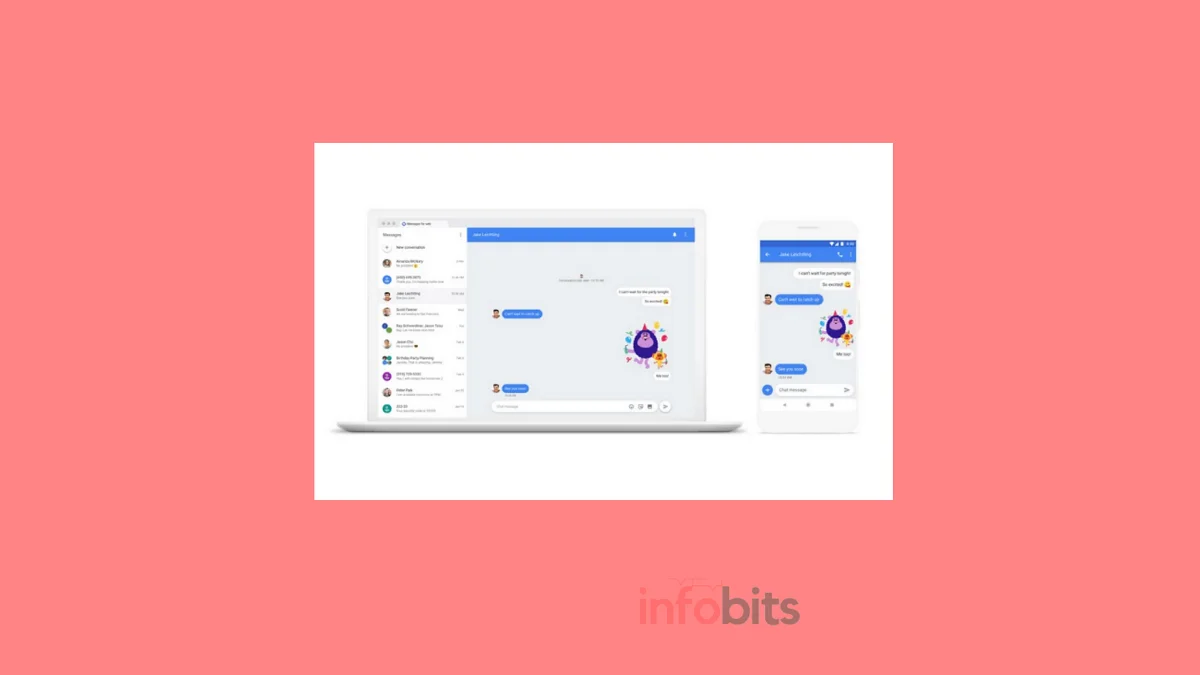
If you’ve ever wanted to reply to a text without picking up your phone mid-task, Google Messages for Web solves that. It mirrors your Android phone’s messages onto your browser, so you can read and reply from your computer while your phone stays in your bag or across the room.
This has been around for a few years now, but two things changed recently that make it worth revisiting even if you set it up before: the sign-in method is changing, and cross-platform texting with iPhones just got a genuine security upgrade. Both are covered below, along with the full setup process.
Quick answer: Open messages.google.com/web on your computer, open the Google Messages app on your Android phone, go to the three-dot menu and tap Device pairing, then scan the QR code or sign in with your Google account to link the two. Your phone needs to stay connected to the internet for messages to keep syncing.
What Google Messages for Web Actually Is
It’s a browser-based version of the Google Messages app; not a separate messaging service, just your existing phone conversations mirrored onto a bigger screen. Your phone still does the actual sending and receiving; the browser is just a window into it.
With it, you can:
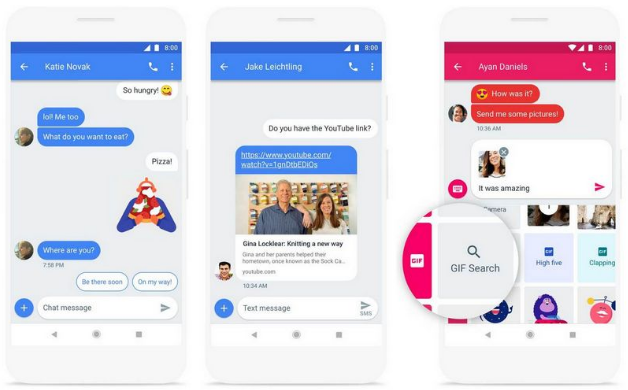
- Send and receive SMS and MMS messages
- Use full RCS chat features; read receipts, typing indicators, reactions, high-res media
- View and reply to conversations on a larger screen, including on Android tablets
- Share images, GIFs, and other attachments
- Manage message settings without touching your phone
Because it runs through your phone’s connection rather than an independent internet service, your phone needs to stay online for anything to sync. If your phone loses signal or Wi-Fi, the web interface stops updating until it reconnects.
What You Need Before You Start
- An Android phone with the Google Messages app installed and set as your default messaging app
- A computer with a modern web browser
- Both devices connected to the internet
- A Google account, if you plan to use the newer sign-in method (more on that below)
How to Set Up Google Messages for Web
Step 1: Open the Messages Web Page
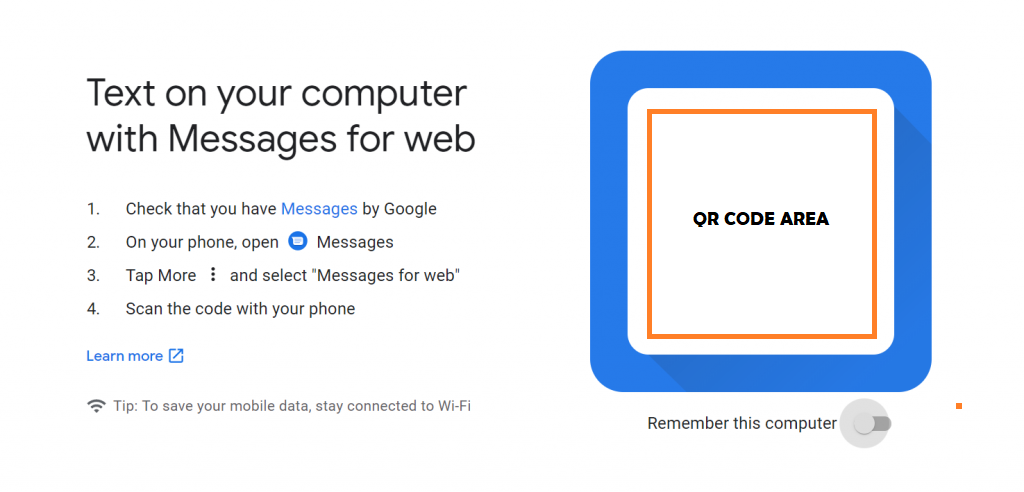
On your computer, go to messages.google.com/web. You’ll see a QR code on screen.
Step 2: Start Pairing from Your Phone
Open the Google Messages app on your Android phone and tap the three-dot menu in the top corner. Tap Device pairing.
Step 3: Link the Two Devices
From here, you have two options, and which one you should use depends on how recently Google has updated your account (more below):
Option A: QR code scanner: Tap QR code scanner, then point your phone’s camera at the code on your computer screen. The devices connect automatically once the scan registers.
Option B: Google Account sign-in: If you’re prompted to sign in with your Google account instead of scanning a code, do that. Enter your credentials if needed, then confirm the pairing by selecting the matching emoji shown on both your phone and your browser.
Step 4: Stay Signed In (Optional)
Tick Remember this computer before you finish pairing if you don’t want to reconnect every time you close the browser tab.
Once paired, your full message history appears in the left panel, with the open conversation on the right. The layout will feel immediately familiar if you’ve used WhatsApp Web or Telegram Web before.
Important: QR Code Pairing Is Being Phased Out
Here’s the update that matters most if you set this up a while ago and haven’t touched it since: Google is retiring QR code pairing in favour of Google Account sign-in.
If you open Messages for Web today, you may already see a prompt asking you to sign in with your Google account instead of scanning a code, with a message explaining that QR pairing is going away.
The sign-in process itself is simple. Enter your Google account credentials if you’re not already signed in on that browser, and you’ll be shown an emoji that you need to select on your phone to confirm the pairing.
It’s one extra tap compared to the old QR flow, but it ties the connection to your account rather than a one-time scan, which Google frames as a more secure and consistent way to link devices.
If your setup suddenly stops working or asks you to re-pair, this is almost certainly why; not a bug.
Using Messages for Web Day to Day
Replying to an existing conversation: Click it in the history list on the left to open it on the right.
Starting a new conversation: Click Start Chat at the top of the message list, then type a name, number, or email address. Google will surface matching contacts as you type.
Sending a message: Type in the text box at the bottom right. You can attach emojis, stickers, GIFs, and files just as you would on your phone, then press the arrow button or hit Enter to send.
Switching SIMs: If your phone has dual SIM support, a dropdown next to the text entry box lets you choose which SIM to send from.
Muting a conversation: Click the bell icon at the top of an open chat, or use the overflow menu for more options.
Dark mode: Available from the settings menu if you prefer it over the default light interface.
Related: What is UPI and How Does UPI Work?
RCS Between iPhone and Android Just Got a Real Security Upgrade
This is worth calling out on its own, because it changes something people have quietly worried about for years.
As of iOS 26.5 (released May 2026), RCS conversations between iPhone and Android are now end-to-end encrypted– something that previously only worked for iMessage-to-iMessage or Android-to-Android RCS chats.
Apple and Google worked together, along with the GSM Association, to build this into RCS Universal Profile 3.0, using the same Messaging Layer Security protocol that underpins several other encrypted messaging standards. In practice, this means:
- You’ll see a small lock icon in a conversation once it’s encrypted.
- Encryption switches on automatically for both new and existing eligible conversations. There’s nothing to configure.
- Both sides need to be on supported software: iOS 26.5+ on a supported carrier for iPhone, and the latest Google Messages app on Android.
- If the conversation drops back to plain SMS at any point. For instance, if one person’s connection is poor, the lock disappears, since encryption only applies to RCS, not traditional SMS.
If you’re texting a mix of Android and iPhone contacts, it’s worth checking that both your phone and Google Messages app are fully updated so you actually get the encrypted connection rather than falling back to unencrypted RCS or plain SMS.
Google Messages for Web vs. WhatsApp Web: What’s Actually Different
The interface will feel similar if you’ve used WhatsApp Web, but the underlying mechanics are genuinely different, and it affects things like data usage and reliability.
| Google Messages for Web | WhatsApp Web | |
|---|---|---|
| How messages are delivered | Via your phone’s SMS/RCS connection (carrier + internet) | Fully over the internet |
| Works without your phone’s carrier | No; SMS specifically depends on carrier signal | Yes, works over Wi-Fi alone |
| Carrier charges | Can apply for SMS, same as sending from your phone | None; data/Wi-Fi only |
| iPhone support | No native app, but iPhone contacts can now be reached with encrypted RCS | Full iPhone and Android support |
| Message types supported | SMS, MMS, RCS | WhatsApp messages only |
The practical takeaway: if your phone has no signal at all, Messages for Web won’t be able to send SMS even if your computer has a strong internet connection, since it’s relaying through your phone rather than replacing it.
Related: How to Secure Your WhatsApp Account and Chats: 2026 Guide
Common Issues and Fixes
Messages aren’t syncing. Check that your phone has an active internet connection. Wi-Fi or mobile data both work, but the phone needs to be online for the web interface to update.
Pairing keeps failing. Make sure both the Google Messages app and your phone’s software are fully updated. If QR scanning isn’t working, switch to Google Account sign-in instead. It’s becoming the primary method regardless.
“Remember this computer” isn’t sticking. This setting is tied to browser cookies; if you regularly clear cookies or use a private/incognito window, the pairing won’t persist between sessions.
You want to disconnect a device. Open Google Messages on your phone, go to Device pairing, select the connected computer from the list, and tap Unpair.
If you’re setting up a dedicated workspace and plan to keep Messages for Web open alongside other apps, a second monitor ( see the best-selling monitors on Amazon)makes multitasking between chats and your main work noticeably easier, worth considering if you don’t already have one.
Related: SIM Not Provisioned Error: How to Fix It on Jio, Airtel, Vi & BSNL
Expert Tips
- Pin the tab. Since Messages for Web relies on an active browser tab, pinning it in your browser keeps it from accidentally closing along with a batch of other tabs.
- Use Smart Reply for quick responses. Suggested replies appear beneath incoming messages. This feature is useful for quick acknowledgements without breaking your typing flow on a work task.
- Check the lock icon before sending anything sensitive. With encrypted RCS now live for iPhone-Android chats, glancing for the lock icon tells you at a glance whether a conversation is protected before you type something you wouldn’t want intercepted.
Frequently Asked Questions
It’s a browser-based version of the Google Messages Android app, letting you send and receive SMS, MMS, and RCS messages from your computer while your phone stays connected in the background.
Yes, the web interface itself is free. Standard SMS carrier charges may still apply, just as they would when sending from your phone directly.
Yes. Your phone must stay connected to the internet for messages to sync. The web interface relays through your phone rather than working independently.
Not as a sender or recipient of the web interface itself; that requires an Android phone. However, iPhone contacts can now be reached with fully encrypted RCS messages from Google Messages, following the iOS 26.5 update.
Google is phasing out QR code pairing in favour of Google Account sign-in as the primary method. If you see this prompt, it’s part of that rollout, not an error.
Yes, as of iOS 26.5 (May 2026), RCS conversations between iPhone and Android are end-to-end encrypted by default when both devices support it, indicated by a lock icon in the chat.
Yes, the same web interface functions as a messaging client on Android tablets, appearing as a Progressive Web App rather than a native tablet-specific app.
Yes, you can pair multiple devices, and each can be managed or unpaired individually from the Device pairing menu on your phone.
This usually happens after a Google account sign-out, a cleared browser cookie, or Google’s periodic re-authentication as part of the shift away from QR-only pairing.
For SMS specifically, yes. It uses your carrier connection just as sending from your phone would. RCS messages typically use internet data instead of carrier SMS allowances.
Yes, including GIF search built directly into the interface, without needing a separate keyboard app.
Open Google Messages on your phone, go to Device pairing, select the paired computer, and tap Unpair.
Messages for Web relies on your phone’s SMS/RCS carrier connection, so it can incur carrier charges and needs a phone signal. WhatsApp Web works entirely over the internet and doesn’t depend on carrier SMS.
Avoid enabling “Remember this computer” on shared machines, and always manually unpair the session when you’re done to prevent someone else from accessing your messages later.
Yes, if your phone has dual SIM, you can choose which SIM to send a message from directly within the web interface.
The web interface stops updating and can’t send new messages until your phone reconnects, since it relies on your phone’s active connection rather than working independently.
Yes, Google Messages shows previews of shared links directly within the conversation, without needing to open them separately.
Yes, suggested quick replies and emoji reactions appear beneath incoming messages, letting you respond without typing a full message.
Yes, group conversations, including RCS group features like mentions, sync the same way individual conversations do.
Since Google is actively phasing out QR-only pairing, expect to be prompted to switch to account sign-in eventually. It’s best to make the switch when prompted rather than waiting for the old method to be removed entirely.
We hope you are interested in this article and consider following our Facebook and Twitter pages for regular updates.
Subscribe to our free newsletter so that you will get regular updates directly in your Email.
Also, request to share this article with your friends and relatives.