
How to Lock WhatsApp with Fingerprint (App Lock & Chat Lock Guide)
Someone borrows your phone for two minutes to check a cricket score, and suddenly they’re scrolling past your WhatsApp chats without meaning to. It happens more than anyone likes to admit.
But don’t worry. WhatsApp has built-in tools to stop it, and none of them cost anything or needs a third-party app.
This guide covers the current steps for both Android and iPhone, plus something most tutorials still miss: WhatsApp actually gives you two separate lock features now, not one, and using the right one for your situation makes a real difference.
Quick Answer:
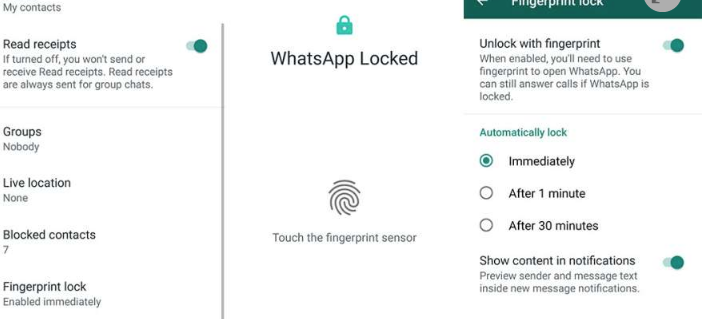
Open WhatsApp, go to your profile icon or the three-dot menu (depending on your app version), then Settings > Privacy > App Lock. Turn on “Unlock with Biometric,” confirm your fingerprint or face, and choose when it should lock – immediately, after 1 minute, or after 30 minutes. That’s App Lock, and it protects your entire WhatsApp.
If you only want to hide a handful of specific conversations rather than the whole app, use Chat Lock instead. Open the individual chat, tap the contact’s name, and toggle Chat Lock. We’ll walk through both below, along with when to use which.
Before You Start
A few quick requirements, since skipping these is the most common reason people get stuck:
- Update WhatsApp to the latest version from the Google Play Store or App Store first. Older versions may show a different menu layout or lack Chat Lock entirely.
- Set up your device’s fingerprint or face unlock in your phone’s system settings before touching WhatsApp. The app borrows your phone’s existing biometric setup rather than storing its own copy of your fingerprint.
- Android 6.0 or later is required. A small number of older Samsung models (Galaxy S5, Note 4, Note 8) don’t support this feature at all, regardless of Android version.
Related: Secure Your WhatsApp Account and Chats
How to Enable WhatsApp App Lock on Android
WhatsApp has been gradually rolling out a redesigned navigation where the old Settings gear or three-dot menu is replaced by a profile icon (called the “You” tab) in the bottom-right corner.
Not everyone has received this update yet, so both sets of steps are below. Check which one matches your screen.
If you see a profile picture icon in the bottom-right corner:
- Open WhatsApp and tap your profile icon at the bottom right.
- Tap Privacy.
- Scroll down and select App Lock.
- Toggle on Unlock with Biometric.
- Confirm using your phone’s fingerprint sensor or face recognition when prompted.
If you still see the classic three-dot menu:
- Open WhatsApp and tap the three-dot menu in the top-right corner.
- Tap Settings > Privacy.
- Scroll to the bottom and select App Lock (this used to be called “Fingerprint Lock” on older app versions; same feature, updated name).
- Turn on the Unlock with Biometric toggle.
- Verify your identity with your registered fingerprint or, on supported phones, your face.
Once enabled, you’ll be asked to authenticate every time you open WhatsApp, based on the timing you choose next.
Choosing When App Lock Kicks In
After enabling App Lock, WhatsApp lets you pick how long the app stays open before it re-locks:
- Immediately – locks the moment you leave the app, even briefly. Best if you regularly hand your phone to others.
- After 1 minute – a small grace period for quickly switching apps and coming back.
- After 30 minutes – the most relaxed option, useful if you’re the only one who ever touches your phone.
You can also choose whether message content stays visible in notifications even while App Lock is active.
Turning this off means you’ll see that a message arrived, but not who sent it or what it says, until you unlock the app; a genuinely useful extra layer if your phone’s lock screen notifications are visible to people around you.
Related: How to Recover Deleted WhatsApp Photos
How to Enable WhatsApp App Lock on iPhone
- Open WhatsApp and go to Settings (or tap your profile icon, depending on your app version).
- Tap Privacy.
- Select App Lock (previously labelled “Screen Lock” on older iOS versions).
- Turn on Require Face ID or Require Touch ID, depending on your iPhone’s hardware.
- Choose your preferred timing: immediately, after 1 minute, or after 30 minutes.
If Face ID or Touch ID ever fails to recognise you, WhatsApp automatically falls back to your iPhone’s system passcode, so you’re never permanently locked out.
Chat Lock: Locking Individual Conversations Instead
App Lock protects your entire WhatsApp behind one layer of authentication, but it’s an all-or-nothing setting. Everyone with access still sees the full chat list, contact names, and notification previews for anything you haven’t specifically hidden.
Chat Lock, a separate and newer feature, solves that by letting you hide specific conversations individually.
How to lock a single chat:
- Open the chat you want to protect.
- Tap the contact or group name at the top of the screen.
- Scroll down and tap Chat Lock.
- Toggle it on and confirm with your fingerprint, face, or device passcode.
Once locked, that conversation disappears from your main chat list entirely and moves into a separate Locked Chats folder.
To reach it, swipe down on your main Chats screen and tap Locked Chats, then authenticate again.
Notifications from a locked chat also hide the sender’s name and message preview, showing only a generic “new message” alert instead.
Group chats can be locked the same way; open the group, tap its name, and toggle Chat Lock.
Secret Code: An Extra Layer for Locked Chats
WhatsApp also lets you set a Secret Code for your Locked Chats folder. A custom passcode, separate from your regular device lock, that can even hide the folder from appearing at all unless someone types that exact code into the search bar.
You’ll find this option inside Chat Lock settings after locking your first chat. It’s a genuinely useful option if you’d rather the existence of a locked chat folder not be obvious at all.
App Lock vs. Chat Lock vs. Secret Code: Which Should You Use?
| Feature | What It Protects | Best For |
|---|---|---|
| App Lock | The entire WhatsApp app | Phones frequently shared with family, kids, or coworkers |
| Chat Lock | Specific individual or group chats | Hiding a few sensitive conversations without locking everything |
| Secret Code | Makes the Locked Chats folder itself hidden | Maximum discretion. Even the folder’s existence stays hidden |
They’re not mutually exclusive. In fact, layering them gives you the strongest protection.
App Lock stops casual access to WhatsApp as a whole, while Chat Lock and a Secret Code add a second, more targeted layer for your most private conversations, even if someone else is logged into an already-unlocked phone.
Troubleshooting: Fingerprint Lock Not Working?
If WhatsApp isn’t recognising your fingerprint or face, work through these in order:
- Test your phone’s regular screen lock first. Try unlocking your phone itself with the same fingerprint or face. If that fails too, the problem is in your device settings, not WhatsApp. Re-register your fingerprint under your phone’s Settings > Security.
- Restart the WhatsApp app. Force-close it completely and reopen it, then try App Lock again.
- Restart your phone. This clears out minor software glitches that can interfere with biometric sensors.
- Update WhatsApp. An outdated version can occasionally lose sync with newer Android or iOS biometric APIs.
- Clean the fingerprint sensor. A smudged or wet sensor is a surprisingly common cause of repeated failures. Wipe it and your finger dry, then try again.
- Use your device passcode as a fallback. Both Android and iOS let you fall back to a PIN or passcode if biometrics genuinely won’t cooperate, so you’re never locked out of your own chats.
Why This Actually Matters
It’s easy to think “nobody’s reading my WhatsApp anyway,” but a few real scenarios make the case better than a feature list:
Shared or borrowed phones. Handing your phone to a friend to look up directions shouldn’t mean they can also scroll your chat history if the app happens to still be open in the background.
Lost or stolen phones. Your phone’s own lock screen is the first barrier, but App Lock adds a second one specifically for WhatsApp.This is meaningful if someone gets past your device lock through a stolen fingerprint mould, a shoulder-surfed PIN, or simply because the phone was unlocked when it was taken.
Payments and financial chats. With WhatsApp Pay and UPI-linked payments increasingly common in India, some of your chats may include payment confirmations, bank details, or transaction screenshots worth protecting specifically.
Shared family devices. In households where a single phone or tablet gets passed between family members, Chat Lock lets you keep specific private conversations out of view without locking the whole app behind a barrier the rest of the family also has to deal with.
Common Mistakes to Avoid
- Setting App Lock to “Immediately” and forgetting about it, then getting frustrated re-authenticating every time you switch briefly to another app. Try “After 1 minute” first and adjust from there.
- Assuming App Lock also hides notification previews by default. It doesn’t unless you specifically turn that option off. Check it separately if privacy in public is your main concern.
- Relying only on Chat Lock and skipping App Lock entirely. Chat Lock protects specific chats, but anyone who opens WhatsApp still sees your full regular chat list unless App Lock is also on.
- Forgetting that Chat Lock uses your device’s biometrics, not a separate WhatsApp-only fingerprint. If your phone’s own lock screen is compromised, both App Lock and Chat Lock are at risk too.
- Not checking Linked Devices. App Lock only protects your phone. If you’re logged into WhatsApp Web or Desktop on a shared computer, check Settings > Linked Devices regularly and log out of anything you don’t recognise.
A Few More Security Steps Worth Taking
While you’re in the Privacy settings, two more features pair well with App Lock and Chat Lock:
- Two-Step Verification (Settings > Account > Two-Step Verification) adds a PIN requirement when someone tries to register your phone number on a new device. It is useful protection against account takeover, separate from chat privacy.
- Linked Devices (Settings > Linked Devices) shows every device currently logged into your WhatsApp. Review this occasionally and log out of anything unfamiliar, especially after using WhatsApp Web on a public or shared computer.
Conclusion
WhatsApp App Lock takes less than a minute to set up. It adds an extra layer of privacy if you share your phone or lend it to others. You can also use Chat Lock for specific conversations. A Secret Code can add another layer of protection. This lets you protect private chats without locking the entire WhatsApp app.
Turn on App Lock today, layer Chat Lock on top for anything genuinely sensitive, and take two extra minutes to check your Linked Devices list while you’re in there. It’s the kind of five-minute setup you’ll be glad you did the first time someone else picks up your phone.
Frequently Asked Questions
Go to your profile icon or the three-dot menu, then Settings > Privacy > App Lock, and turn on “Unlock with Biometric.” Confirm using your phone’s fingerprint sensor.
First, check whether your phone’s regular fingerprint unlock works at all. If it does, try restarting the WhatsApp app, restarting your phone, or updating WhatsApp to the latest version. A dirty or wet fingerprint sensor is also a common, easily fixed cause.
App Lock protects your entire WhatsApp app with one authentication step. Chat Lock protects individual conversations, moving them into a separate Locked Chats folder that requires its own authentication, even if the main app is already open.
Yes, and it’s genuinely a good idea. App Lock stops casual access to WhatsApp overall, while Chat Lock and a Secret Code add a more targeted layer for your most sensitive conversations.
Yes. The feature was originally called “Fingerprint Lock” on Android and “Screen Lock” on iOS. Both are now labelled “App Lock” in current versions of the app, with the same underlying functionality.
Only if you enable that option separately within App Lock settings. By default, message previews may still appear in your notification shade even with App Lock turned on.
Yes. Open the group, tap its name at the top, and toggle Chat Lock the same way you would for a one-on-one conversation.
No. Locking a chat is entirely private to your device. The other person receives no notification and sees no change on their end.
Locked chats are included in backups but remain locked after restoration. You’ll need to authenticate again to view them on the new device.
No. Voice and video calls from a contact still ring and appear normally, even if your chat with them is locked. Chat Lock only affects the message thread itself.
Not in a single action. WhatsApp requires you to lock each chat individually through its own settings, which takes just a few seconds per conversation.
Secret Code adds an extra passcode specifically for your Locked Chats folder and can hide the folder’s existence entirely unless someone types that exact code into WhatsApp’s search bar, a step beyond simply requiring biometric authentication.
No. App Lock only applies to the WhatsApp app on your phone. For linked devices like WhatsApp Web, check Settings > Linked Devices and remove any sessions you don’t recognise, and note that WhatsApp Web can be separately password-protected in your browser.
A small number of older models, including the Samsung Galaxy S5, Galaxy Note 4, and Galaxy Note 8, don’t support this feature regardless of their Android version.
Yes. Both Android and iOS versions of WhatsApp automatically fall back to your device’s system passcode if biometric authentication fails, so you won’t be locked out permanently.
No. App Lock and Chat Lock are both entirely built into WhatsApp and use your phone’s existing biometric hardware; no third-party app or subscription is required.
Your phone’s lock screen is your first layer of protection, but App Lock adds a meaningful second one specifically for WhatsApp. If your phone is ever unlocked and handed to someone else, or if your device’s lock is bypassed, App Lock is what stands between them and your chats.
Potentially, yes, since both App Lock and your device passcode ultimately rely on the same underlying phone security. For genuinely sensitive chats, Chat Lock with a separate Secret Code adds protection that isn’t automatically defeated by someone knowing your phone’s unlock code.
Please follow our Facebook and Twitter pages for regular updates.
If you feel this article is helpful, please share it with your friends and relatives.
If you want to get quality information directly in your email, please subscribe here for free updates.
Subscribe to be the first to learn about new information
Disclosure: If you follow our links to a retailer’s website and make a purchase, we will get an affiliate commission on some, but not all, of the items or services we promote. This will cause no price change for you.