
Soundbar vs Home Theatre: Which Is Best for Your Home?
You’ve finally got a TV with a gorgeous 4K or even 8K screen. Then someone speaks in a movie, and you have to rewind because you missed half the dialogue over the background score.
Sound familiar? That’s the moment most people start Googling “soundbar vs home theatre”, and honestly, it’s the right question to ask, because today’s TVs are built thin and sleek, and thin TVs simply don’t have room for decent speakers.
This guide breaks down everything you actually need to know before spending your money. This includes sound quality, room size, wiring, price, and which one fits your specific situation. No fluff, no confusing jargon. By the end, you’ll know exactly what to buy.
Quick Answer:
If you want a fast decision, go with a soundbar if you live in an apartment, have a budget under ₹20,000, or just want better sound without dealing with wires and speaker placement. Go with a home theatre system if you have a dedicated living room or media space, a budget above ₹25,000–₹30,000, and you genuinely care about cinema-grade surround sound for movies, sports, or gaming.
There’s no universally “better” option here. Only the one that’s better for your room and your habits. Let’s get into the details so you can be sure.
Soundbar vs Home Theatre: The Basics
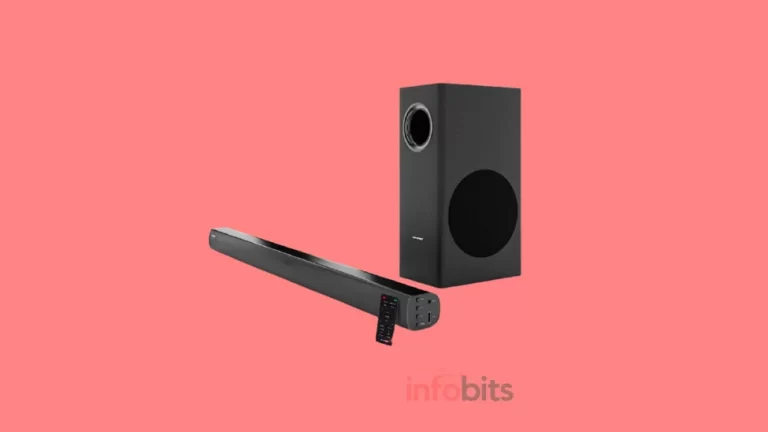
A soundbar is a single, slim speaker unit, usually 80–110 cm long, that sits below or above your TV. Inside that one bar are multiple small drivers angled to fake a sense of width and, on better models, height.
Many soundbars ship with a separate subwoofer (wired or wireless) to handle bass, and pricier ones add small wireless rear satellite speakers for genuine surround.
A home theatre system is built from separate components: a soundbar or front speakers, a subwoofer, and dedicated rear/surround speakers, sometimes tied together by an AV receiver.
Each speaker handles its own channel and is physically placed around the room: front-left, front-right, centre, rear-left, rear-right, and a subwoofer for bass.
The single biggest difference comes down to this: a soundbar simulates a surround sound feeling using one unit (or one unit plus a sub), while a home theatre system creates it using physically separated speakers around you.
That difference shows up in sound, space, price, and setup time; all of which we’ll unpack below.
Related: Dolby Atmos vs DTS:X: Which Surround Sound Tech Is Right for Your Home
Soundbar vs Home Theatre: Full Comparison Table
| Factor | Soundbar | Home Theatre System |
|---|---|---|
| Typical price in India (2026) | ₹3,000 – ₹30,000 | ₹10,000 – ₹2,50,000+ |
| Setup time | 10–15 minutes, plug and play | 1–3 hours, needs planning |
| Space needed | Minimal; fits under any TV | A proper living room or media room |
| Best room size | Up to ~200 sq ft | 200 sq ft and above |
| Wiring | Mostly wireless, one HDMI cable | Multiple speaker cables or wireless rear units |
| Sound type | Mostly virtual/simulated surround | True channel-based surround |
| Dialogue clarity | Very good with a centre channel | Excellent with a dedicated centre speaker |
| Bass | Good with a wired/wireless subwoofer | Excellent, larger subwoofer enclosures |
| Upgrade flexibility | Limited, mostly a fixed unit | High, swap individual speakers later |
| Aesthetics | Sleek, minimal, wall-mountable | Visible speakers and cabling |
| Ideal for | Apartments, rentals, casual viewers | Dedicated home theatre rooms, audiophiles, gamers |
Soundbar: Pros and Cons
Why People Love Soundbars
Compact and quick to set up: Most soundbars need nothing more than a power socket and one HDMI cable (preferably into your TV’s ARC or eARC port). You can go from unboxing to watching in under 15 minutes; no drilling, no running wires behind walls, no calling an installer.
Genuinely good dialogue clarity: If you’ve ever turned subtitles on just to follow what people are saying on TV, a soundbar with a dedicated centre channel fixes that almost instantly. This is one of the most underrated reasons people upgrade.
Doesn’t dominate your room: A soundbar sits quietly under the TV and can usually be wall-mounted to disappear into the décor. It is ideal if you live in a rented apartment or don’t want speaker wires running across your living room.
Wide budget range. You can get a noticeable upgrade over TV speakers for as little as ₹3,000–₹5,000, and genuinely impressive 5.1-channel Dolby Atmos performance by the ₹15,000–₹20,000 mark.
Where Soundbars Fall Short
Simulated surround has limits: Most affordable soundbars use software processing, bouncing sound off your walls, to fake a surround feeling. It works reasonably well in smaller, squarer rooms, but it’s not the same as having actual speakers behind you.
In large or oddly shaped rooms, this illusion breaks down.
Less room to tweak: A home theatre receiver lets you adjust each channel individually. A soundbar usually limits you to a handful of preset sound modes (Movie, Music, News, Game).
High volumes can distort: Because all the drivers are crammed into one slim cabinet, pushing a budget soundbar to its limit can introduce distortion that a larger multi-speaker system handles more gracefully.
Home Theatre Systems: Pros and Cons
Why Enthusiasts Swear By Them
Real, physical surround sound: With dedicated speakers placed around the room, sound effects genuinely move from front to back and side to side. A helicopter flying overhead in a movie actually sounds like it’s passing over you, not just simulated by clever audio processing.
Better dynamic range and loudness: More drivers working together means the system can get louder with less strain, and individual speakers can specialise. The centre channel for dialogue, the subwoofer purely for bass, the rears purely for ambience.
Built to grow with you: Many home theatre setups, especially receiver-based ones, let you replace or add components over time: a better subwoofer this year, upgraded rear speakers next year, without throwing away the whole system.
Where Home Theatres Get Tricky
They need space and planning: Rear speakers ideally sit behind or beside your seating position, which is hard to manage in a one-room apartment or a living-cum-dining space.
Setup takes real effort: Running speaker wire, positioning the subwoofer, and calibrating channel levels takes time. Also, if you get the placement wrong, you won’t get the sound quality you paid for.
Higher total cost: Beyond the speakers themselves, you may need an AV receiver, additional cabling, and possibly wall-mounting hardware, all of which add up quickly.
If you’re leaning toward a wired setup, investing in a good set of in-wall speaker cable clips (see on Amazon) or a cable management kit (available on Amazon)early on will save you from a messy, trip-hazard living room later, worth picking up alongside your speakers.
Understanding Channel Numbers (2.1, 5.1, 7.1 – Explained Simply)
This is the part that confuses most first-time buyers, so let’s make it simple. The first number tells you how many regular speakers/channels there are.
The number after the dot tells you how many subwoofers. A third number (when present) tells you how many height/up-firing speakers there are for formats like Dolby Atmos.
| Configuration | What It Means | Best For |
|---|---|---|
| 2.0 / 2.1 | Left + right speakers (2.1 adds a subwoofer) | Music lovers, casual TV viewing, and tight budgets |
| 3.1 | Adds a dedicated centre channel for dialogue | Anyone who struggles to hear speech clearly |
| 5.1 | Front-left, front-right, centre, two rears, subwoofer | True surround sound for movies and shows |
| 5.1.2 | 5.1 setup plus 2 up-firing height speakers | Entry-level Dolby Atmos experience |
| 7.1 / 7.1.4 | Adds two more side/rear speakers, plus height channels | Large rooms, serious home theatre enthusiasts |
A quick myth to bust here: a soundbar that “claims” 5.1 channels but ships with no physical rear speakers is using virtual processing to simulate those channels. It’s not the same as a true 5.1 system with actual rear units.
Always check whether the rear channels are physical speakers or software-simulated before comparing two products on channel count alone.
Sound Quality: What Actually Matters
Virtual Surround vs True Surround
Soundbars rely heavily on virtual surround sound and depth from a single unit. It’s gotten remarkably good in the last few years, especially with Dolby Atmos-enabled bars that use up-firing drivers to bounce sound off the ceiling for a sense of height.
Home theatre systems use true, channel-based surround, where each speaker physically sits where the sound is supposed to come from. This is inherently more accurate, especially in larger or irregularly shaped rooms where reflected sound doesn’t behave predictably.
Dolby Atmos, Dolby Digital, and DTS: What’s the Difference?
You’ll see these terms on almost every box, and they’re often used loosely by marketing teams:
- Dolby Digital / Dolby Audio: the standard, widely supported surround format found on most streaming content and broadcasts.
- Dolby Atmos: the premium tier that adds height channels, so sound can come from “above” you, not just around you. This needs actual up-firing drivers (or ceiling speakers) to be fully effective; without them, you’re hearing a processed approximation.
- DTS:X: a competing format to Dolby Atmos that’s more flexible with irregular room shapes, though it has more limited streaming support in India currently.
For a deeper breakdown of which surround format suits your room best, check out our detailed comparison: Dolby Atmos vs. DTS: X.
One thing worth double-checking before you buy: your TV needs HDMI eARC (not just ARC) to pass the full, uncompressed Dolby Atmos or DTS:X signal through to your soundbar or receiver.
If your TV only has standard HDMI ARC, you’ll still get surround sound, but the format gets compressed along the way. A detail almost nobody mentions until you’re already disappointed with the sound after buying an “Atmos” soundbar.
Space and Room Size: Which One Fits Your Home?
This is where Indian homes specifically come into play, since apartment sizes here tend to run smaller than in many Western buying guides you’ll find online.
| Your Room Type | Recommended System |
|---|---|
| 1BHK / studio apartment | Soundbar (2.1 or 3.1) |
| 2BHK living room (~150–200 sq ft) | Soundbar with rear satellites (5.1) |
| Independent house living room (200–350 sq ft) | Home theatre (5.1) |
| Dedicated media room/home theatre room | Home theatre (5.1.2 or 7.1.4) |
| Bedroom with TV | Compact 2.1 soundbar |
| Rented apartment | Soundbar (avoids wall-drilling and wiring) |
A soundbar’s biggest practical advantage in Indian homes isn’t really about sound quality at all. It’s about not having to drill into rented walls or run cables across a shared living space.
That single factor pushes a lot of buyers toward soundbars even when budget isn’t a concern.
Connectivity and Compatibility
Soundbars generally offer broader, more convenient connectivity for everyday use: Bluetooth (5.0 and above is good; 5.3 is noticeably more stable), HDMI ARC/eARC, optical, AUX, and USB.
This makes it easy to stream from your phone, laptop, or smart speaker without touching any wires.
Home theatre systems lean more on wired connections for reliability. Especially between the receiver and the satellite speakers, though most modern systems also include wireless rear speaker options to cut down on visible cabling.
Receivers typically give you more input ports for connecting a Blu-ray player, a gaming console, and a set-top box simultaneously, with the added benefit of being able to switch between them from one remote.
If you’re connecting multiple devices like a streaming box, a gaming console, and a set-top box, a home theatre receiver’s extra HDMI inputs will save you from constantly unplugging and replugging cables behind your TV.
Price and Value in India
Here’s roughly what you can expect to spend at each tier:
Soundbars
- ₹3,000–₹8,000: Basic 2.0/2.1 setups, decent for casual TV/music upgrade
- ₹8,000–₹15,000: 3.1/5.1 configurations, Dolby Audio support, wired subwoofer
- ₹15,000–₹30,000: Genuine Dolby Atmos with up-firing drivers, wireless rear satellites, HDMI eARC
Related: Best Soundbars Under 10000 in India
Home theatre systems
- ₹10,000–₹25,000: Entry 5.1 systems with basic receivers or all-in-one bar+sub+satellite kits
- ₹25,000–₹70,000: Proper AV receiver-based setups with better-quality individual speakers
- ₹70,000 and above: Premium Atmos/DTS:X home theatre setups with high-end receivers and tower speakers
If you’re shopping in the ₹10,000–₹15,000 bracket and want real (not simulated) 5.1 channel sound with Dolby Audio, it’s worth comparing a couple of value-for-money 5.1 soundbar packages on Amazon before deciding.
The difference between “true channels” and “virtual surround” at this price point is genuinely noticeable in person.
Watch out for inflated wattage claims; a “600W total system output” figure is not the same as 600W RMS (the more honest, sustained-output measurement).
Two products with similar wattage numbers on the box can sound very different in your room. When comparing, prioritise RMS wattage, real channel count, and HDMI eARC support over the headline number on the package.
Related: Best Soundbars in India (2026 Edition)
Common Mistakes to Avoid
- Buying based on wattage alone: A well-tuned 3.1 soundbar can outperform a poorly tuned 5.1 system in the same room. Total wattage is a marketing number, not a sound-quality guarantee.
- Ignoring your TV’s HDMI port type: If your TV only has HDMI ARC (not eARC), you won’t get the full benefit of a premium Atmos soundbar; check your TV’s spec sheet first.
- Assuming “5.1” always means physical rear speakers: Many budget soundbars simulate 5.1 sound from a single bar. Confirm whether rear satellites are included in the box.
- Skipping room measurement: A home theatre system bought for a small bedroom will feel overwhelming and bounce sound oddly off close walls. Match the system to the actual room size.
- Overlooking the subwoofer type: A built-in subwoofer is convenient but usually weaker than a separate wired or wireless unit. This matters a lot for movie-watching and gaming.
- Forgetting about the app/remote control quality: Cheaper systems sometimes have clunky companion apps or remotes that make switching sound modes a hassle; it’s worth checking reviews on this specifically.
Related: Tips to Consider When Buying A Soundbar for TV | Soundbar Buying Guide
Myth vs Fact
| Myth | Fact |
|---|---|
| “More channels always mean better sound” | A well-tuned lower-channel system can sound better than a poorly tuned higher-channel one |
| “Dolby Atmos on the box means height speakers” | Many budget products only simulate height through processing, with no actual up-firing drivers |
| “Soundbars can’t do real surround sound” | Higher-end soundbars with wireless rear satellites do deliver genuine, physical surround channels. |
| “Home theatres are always too complicated to install” | Many modern home theatre-in-a-box kits use wireless rear speakers, cutting setup time significantly |
| “Higher wattage always means louder, better sound” | Unverified “total output” figures often overstate real-world performance versus true RMS ratings |
Decision Guide: Which Should You Buy?
Ask yourself these questions in order:
- Do you live in a rented apartment or a small flat? → Soundbar. You’ll avoid wall-drilling and wiring headaches entirely.
- Is your main complaint that you can’t hear dialogue clearly? → A soundbar with a dedicated centre channel solves this directly, often better than people expect.
- Do you have a dedicated media room or a large, separate living room? → A home theatre system will use that space properly and reward you with noticeably better immersion.
- Is your budget under ₹20,000? → Stick with a soundbar; you’ll get more genuine value per rupee than a budget home theatre kit.
- Are you a serious movie buff, gamer, or audiophile who wants the absolute best possible sound? → A home theatre system, ideally with a proper AV receiver, is the only way to get true, accurate channel separation.
- Do you want the flexibility to upgrade individual parts later? → Home theatre systems (especially receiver-based ones) let you do this; soundbars generally don’t.
There’s genuinely no wrong answer here; just a mismatch if you pick the wrong one for your room and habits.
Setting Up Each System: What to Expect
Setting up a soundbar usually takes three steps: connect the HDMI cable from your TV’s ARC/eARC port to the soundbar, plug in the subwoofer (wired or pair it wirelessly), and run the quick setup process on your remote. Most people are watching something for 15 minutes.
Setting up a home theatre system takes more planning. You’ll want to measure your room first, decide where each speaker will sit (ideally symmetrical relative to your main seating position), run or hide the wiring, and then use the receiver’s auto-calibration microphone (if included) to balance the channels for your specific room.
If you’re working with a tight budget, our guide on setting up a budget home theatre system in India walks through this step by step.
Final Verdict
If you want our honest, no-nonsense take after weighing all of this, most Indian households in apartments and smaller living rooms are better served by a good soundbar with a wired or wireless subwoofer.
It solves the real problem: tinny, unclear TV audio, without demanding space, wiring, or a big upfront investment.
But if you have a proper living room or media space, genuinely care about cinematic sound, and don’t mind the extra setup effort, a home theatre system delivers an experience a soundbar simply can’t match, no matter how advanced the virtual processing gets.
Whichever you choose, both are a massive step up from your TV’s built-in speakers, and once you’ve heard the difference, there’s really no going back.
Frequently Asked Questions
No, soundbars are normally intended for simple installation and can be set up by most people without the aid of a professional. They are frequently packaged with simple instructions and are intended to be plug-and-play devices.
For most everyday viewing, TV shows, OTT content, casual movie nights, yes, a good soundbar covers the need well. For dedicated home theatre rooms or serious surround-sound enthusiasts, a true multi-speaker system still offers a more accurate, immersive experience.
Yes, especially mid-range and premium soundbars with Dolby Atmos and a separate subwoofer. They won’t match a full 7.1.4 home theatre setup, but they’re more than sufficient for the vast majority of viewers.
It’s optional but strongly recommended. Most soundbar drivers can’t reproduce deep bass on their own, so a wired or wireless subwoofer noticeably improves movies, music, and gaming audio.
If your TV supports HDMI eARC and the soundbar has real up-firing drivers, yes, it adds a genuine sense of height and immersion. If your TV only has standard HDMI ARC, the benefit is reduced.
Both let audio pass from your TV back to your soundbar over a single HDMI cable. eARC supports higher-quality, less-compressed audio formats, including full Dolby Atmos and DTS: X. ARC compresses these formats.
Generally, yes, since they require multiple speakers and often a separate receiver. However, entry-level home theatre-in-a-box kits can sometimes cost similarly to a premium soundbar.
Some soundbar brands sell compatible wireless rear satellite speakers as an add-on, but this only works if your specific soundbar model supports it. Check compatibility before buying the bar.
Most soundbars connect via HDMI ARC/eARC, optical, or Bluetooth, which makes them compatible with virtually any TV brand. Some smart features (like one-remote control) work best when the soundbar and TV are from the same brand.
As a rough guide, anything above 200 sq ft of living space gives you enough room to properly separate front, centre, and rear speakers for accurate surround sound.
The “5” refers to five regular speakers (front-left, front-right, centre, rear-left, rear-right), and the “1” refers to one subwoofer for bass.
Not necessarily. Total wattage figures on the box are often inflated or measured differently between brands. Real channel count, build quality, and RMS power ratings matter more than the headline wattage number.
Yes, this is one of the strongest reasons to buy one. A soundbar with a dedicated centre channel significantly improves speech clarity compared to a TV’s built-in speakers.
Not strictly, but proper speaker placement and wiring benefit from some planning. Many systems include guided setup or auto-calibration microphones to simplify the process for DIY installation.
For casual and competitive gaming, a soundbar with low audio latency and a dedicated “Game” mode usually works very well. For deeply immersive, story-driven titles on a large screen, a home theatre system’s true surround channels can add real positional advantage and atmosphere.
It can, but its virtual surround effect weakens as the room gets bigger or more irregularly shaped. In larger spaces, a soundbar with physical wireless rear speakers performs noticeably better than a basic single-bar unit.
Dolby Audio (which includes Dolby Digital and Dolby Digital Plus) is the standard surround format used widely across streaming and broadcast. Dolby Atmos is the premium tier that adds height channels for three-dimensional, overhead sound.
Yes, both soundbars and home theatre receivers typically offer multiple HDMI, optical, and USB inputs, though receivers usually offer more total ports for juggling several devices at once.
If music listening is your main priority, a good stereo setup or a 2.0/2.1 soundbar often delivers better value than a full home theatre system, which is primarily optimised for movie-style surround sound. Our guide on choosing a good stereo amplifier is worth a look if music is your main focus.
With normal use, both typically last 7–10 years before components like drivers or subwoofers start to degrade noticeably, though build quality and usage habits affect this significantly.
Match the system to your room size and budget first, then prioritise a dedicated centre channel for dialogue clarity, a separate subwoofer for bass, and HDMI eARC support if you plan to stream Dolby Atmos content.
We hope this guide helped clear up the soundbar vs home theatre decision for your home. Follow us on Facebook, Instagram, and Twitter for more buying guides, or subscribe to our newsletter for updates straight to your inbox.
Also, share this article with your friends and relatives. Bookmark this page for future reference.
Subscribe to be the first to learn about new information
Disclosure: If you follow our links to a retailer’s website and make a purchase, we will get an affiliate commission on some, but not all, of the items or services we promote. This will cause no price change for you.