How to Get a Ham Radio License in India (2026): Complete ASOC Guide
If you’ve ever wondered how people talk to strangers on the other side of the planet using nothing but a radio and a wire antenna, that’s ham radio, and getting licensed for it in India is more straightforward than most people expect.
You don’t need an engineering degree, you don’t need to be an adult, and the whole process now runs entirely online.
This guide walks through exactly how the licensing process works under India’s current rules, what the exam actually covers, what it costs, and what you can (and can’t) do once you’re licensed.
Quick answer: Anyone aged 12 or older who’s an Indian citizen can apply through the Saral Sanchar portal, pass the Amateur Station Operator’s Certificate (ASOC) exam, pay the licence fee, and be on air within a few months. The two licence grades are Restricted and General; Restricted needs no Morse code, General does.
What Is Ham Radio, Exactly?
Ham radio, officially amateur radio, is a licensed hobby and service that lets individuals build, own, and operate their own radio stations for self-training, technical experimentation, and non-commercial communication with other licensed operators. The people who do this are called Hams, and in India they’re identified by call signs starting with VU.
It’s a genuinely global community. Estimates put the worldwide ham radio population at around three million people, and India’s numbers have grown substantially in recent years. Current estimates suggest somewhere in the range of 35,000 to 38,000 licensed operators nationally, up from roughly 15,000 just a decade or so ago.
Hams communicate through voice, Morse code, and increasingly through digital modes that bridge radio with computers and the internet, things like automated GPS position reporting, internet-linked repeater networks, and even amateur satellite communication.
Why Ham Radio Still Matters in the Internet Age
It’s a fair question. Why bother with radio when everyone has a smartphone? The honest answer is resilience. Every modern communication method you use daily, from mobile calls to broadband, depends on a service provider sitting between you and whoever you’re talking to.
When that provider’s network fails, during a cyclone, an earthquake, or simply a regional outage, your ability to communicate fails with it.
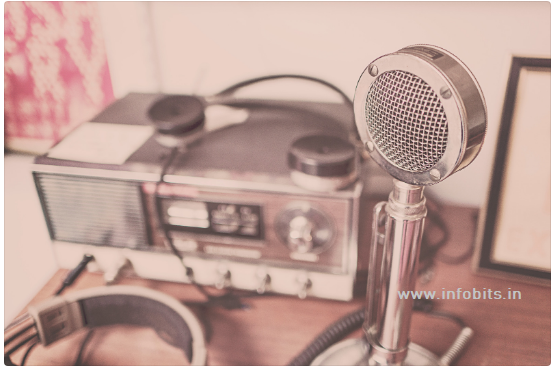
Ham radio doesn’t have that single point of failure. There’s no carrier, no cell tower, no ISP standing between transmitter and receiver. Just two licensed stations talking directly.
That’s precisely why Hams have repeatedly stepped in during floods, earthquakes, and cyclones across India to provide emergency communication when conventional networks went down, and why disaster-response agencies continue to value trained amateur operators as a backup communication layer.
There’s also a technical-skills angle worth mentioning: most licensed Hams develop a genuinely practical understanding of radio electronics, which makes troubleshooting their own equipment second nature rather than a specialist task.
What You Can (and Can’t) Do With a Ham Radio Licence
Permitted activities:
- Long-distance (HF) communication with other licensed Hams anywhere in the world.
- Local contact with nearby Hams using VHF/UHF handheld or base-station transceivers.
- Building your own transceivers and antennas, a niche within the hobby known as homebrewing.
- Slow Scan Television (SSTV). Sending and receiving still images over amateur bands.
- Amateur satellite communication, using orbiting satellites as long-distance relays.
- Participating in contests and award programs run by ham radio clubs and societies.
- Volunteering communication support during emergencies and disasters.
Not permitted:
- Any commercial or business-related discussion over amateur frequencies.
- Broadcasting music or news to the general public.
- Transmitting messages on behalf of unlicensed individuals.
- Deliberately interfering with other stations on the amateur bands.
- Using offensive or abusive language on air.
Restricted vs General Grade: Quick Comparison
| Restricted Grade | General Grade | |
|---|---|---|
| Exam duration | 1 hour | 2 hours |
| Questions | 25 (Part A) + 25 (Part B) | 50 (Part A) + 50 (Part B) |
| Morse code test | Not required | Required (8 words per minute, send and receive) |
| Passing marks | 40% per section, 50% overall | 50% per section, 60% overall |
| Transmitter power allowed | Medium power | Higher power |
| Best for | First-time applicants, VHF/UHF local use | Long-distance HF communication, serious hobbyists |
Step-by-Step: How to Get Your ASOC and Licence
Since a Department of Telecommunications notification effective August 2020, every step of this process happens online through the Saral Sanchar portal, and this remains the official channel for ASOC applications under the current Telecommunications (Amateur Services) Rules, 2024. Here’s the full sequence.
1. Check your eligibility
Any Indian citizen aged 12 or older can apply. Foreign nationals can, in specific circumstances, also sit the exam or have an equivalent certificate from their home country recognised, subject to central government clearance.
A detail that’s worth knowing if you’re a foreign resident in India interested in the hobby, though it’s a manual, case-by-case process rather than a standard online application.
2. Register and apply on Saral Sanchar
- Visit saralsanchar.gov.in and register for an account.
- Fill out the ASOC application form, selecting your preferred grade (Restricted or General).
- Upload the required documents, which include a recent passport-size photograph, proof of age (birth certificate, school leaving certificate, or similar), and identification.
- Pay the applicable exam fee via the Bharatkosh (NTRP) payment portal and link the receipt to your application.
3. Application review
The WPC Wing (Wireless Planning & Coordination, under the Department of Telecommunications) reviews your submitted documents, photograph, and payment.
If anything needs correction ( a re-upload, a fee discrepancy, missing information), you’ll be notified by SMS or email, and you can track every update through your Saral Sanchar dashboard.
4. Receive your admit card and sit the exam
Once your application clears review, you’ll get a hall ticket and be notified of your exam date and centre via SMS.
Exams are conducted periodically once there’s a sufficient number of candidates at a given centre. Larger cities like Delhi, Mumbai, Chennai, and Kolkata typically see exams more frequently than smaller towns.
On exam day, carry your admit card along with original ID and age proof documents for verification.
5. Apply for your licence after passing
Passing the ASOC exam doesn’t automatically issue your operating licence. You need to submit a separate licence application on Saral Sanchar within two years of clearing the exam, along with the licence fee.
Once approved, your certificate and call sign become available for download from your Saral Sanchar dashboard.
ASOC Exam Pattern and Syllabus
The exam is split into two parts for both grades:
- Part A: Basic Electronics: covers fundamentals of radio circuits, semiconductors, transmitters, receivers, antennas, and wave propagation.
- Part B: Radio Regulations: covers the rules governing amateur radio operation, permitted frequency bands, station identification, and operating etiquette.
General Grade candidates additionally need to pass a Morse code test at 8 words per minute, covering both sending and receiving. This is the one component that intimidates most first-timers, though it’s genuinely learnable with a few weeks of regular practice.
Fees Breakdown
| Item | Fee |
|---|---|
| ASOC exam (per grade) | Approx. ₹100 |
| Licence – 20-year validity | ₹1,000 per grade |
| Licence – lifetime validity (up to age 80) | ₹2,000 per grade |
| Licence amendment (permanent address/location change) | ₹200–₹1,000 depending on type |
All payments are routed through the Bharatkosh Non-Tax Receipt Portal (NTRP), and receipts must be linked to your Saral Sanchar application before it’s considered complete.
Fees are periodically reviewed by the WPC Wing, so it’s worth double-checking the current figures on the official portal before you pay.
How to Prepare for the Exam
You genuinely don’t need a formal electronics background to pass the Restricted Grade exam. A few weeks of focused self-study covers most people. That said, a background in electronics (an Engineering Diploma or B.Tech in the field, for instance) makes the technical section noticeably easier.
- Self-study: Focus especially on radio receiver and transmitter circuits, propagation basics, and operating regulations. Numerous free study guides and past question banks circulate among the ham community online.
- Recommended reading: Principles of Electronics by V.K. Mehta (available on Amazon) remains a solid foundation text for the electronics section. For something written specifically for the Indian ASOC syllabus, Gateway to Ham Radio by Joseph Mattappally (VU2JIM) covers the fundamentals a first-time applicant actually needs.
- Local ham radio clubs: Many cities have active amateur radio societies running study classes and mock tests ahead of ASOC exams. A good club can also mentor you through Morse code practice, which is genuinely easier to learn with a study partner than alone.
- Morse code practice: Free online Morse trainers and mobile apps let you build speed gradually; most people who commit to short daily sessions reach the 8 wpm threshold within a month or two.
Common Mistakes First-Time Applicants Make
- Applying without checking document requirements first. Incomplete or incorrectly formatted uploads are the most common reason applications bounce back for correction, adding weeks of delay.
- Waiting until the last minute to apply for the licence after passing. You have two years from your exam pass date, but there’s no benefit to delaying. Start the licence application as soon as your result is out.
- Skipping Morse code practice until close to the General Grade exam. It’s a skill that builds with consistent short sessions over weeks, not last-minute cramming.
- Assuming the Restricted Grade is a permanent ceiling. Plenty of operators start with Restricted Grade and upgrade to General later once they’re comfortable with the hobby and want HF access.
- Not joining a local club early. Community study groups and mentorship from experienced Hams meaningfully improve both pass rates and post-licence confidence on air.
Myth vs Fact
Myth: “You need an engineering degree to pass the ASOC exam.” Fact: The exam tests foundational electronics and regulations, not degree-level engineering. Most motivated beginners pass the Restricted Grade with a few weeks of focused study.
Myth: “You can start transmitting as soon as you pass the exam.” Fact: Passing the ASOC exam only qualifies you to apply for the operating licence. You need the licence and an assigned call sign before you can legally transmit.
Myth: “Ham radio is a dying hobby that’s been replaced by the internet.” Fact: India’s licensed operator base has more than doubled over the last decade, and Hams remain an active part of emergency-response networks precisely because radio doesn’t depend on internet infrastructure.
Expert Tips
- If you’re only interested in local, city-level communication, the Restricted Grade covers virtually everything you’ll need. There’s no requirement to pursue General Grade unless you specifically want long-distance HF contact.
- Once licensed, spend time simply listening to other stations before you start transmitting regularly. It’s the fastest way to pick up on-air etiquette and local repeater conventions.
- A basic VHF/UHF handheld transceiver, such as the widely used Baofeng UV-5R, is a common and affordable starting point available on Amazon for new Restricted Grade operators.
- Keep your Saral Sanchar login details secure and check the dashboard regularly during the application window. Most delays happen because applicants miss an SMS or email notification asking for a correction.
Conclusion
Getting licensed for ham radio in India is a genuinely accessible process for anyone curious about the hobby. Getting an amateur radio licence in India is not as difficult as it may seem. You need to complete the application, prepare for the exam, and pay the required fee.
If you are new to the hobby, you can start with the Restricted Grade licence. If you want to aim for the General Grade, consider joining a local amateur radio club. It can help you prepare for the exam and practise Morse code. Study well, but do not put too much pressure on yourself.
With proper preparation, you can clear the exam and get your own call sign. Most first-time applicants who commit a few consistent weeks of study pass comfortably.
Once you’re licensed, the real learning starts on air. Spend time listening before transmitting, find your local repeater community, and you’ll pick up the culture of the hobby faster than any guide can teach it.
Frequently Asked Questions
Ham radio is another name for amateur radio. A licensed hobby and service where individuals use radio equipment to communicate with other licensed operators for self-training, technical experimentation, and non-commercial purposes.
Yes. You can legally listen to and monitor ham radio frequencies without a licence, but transmitting requires both a valid licence and an assigned call sign.
Yes, ham radio is fully legal and regulated under the Telecommunications (Amateur Services) Rules, 2024. Anyone aged 12 or older who passes the ASOC exam and obtains a licence can legally operate a station.
The minimum age is 12 years, and there’s no upper age limit.
The ASOC exam costs approximately ₹100 per grade, and the licence itself costs ₹1,000 for 20-year validity or ₹2,000 for lifetime validity, per grade.
Not for the Restricted Grade. Morse code ( sending and receiving at 8 words per minute) is required only for the General Grade licence.
It varies by exam centre and how quickly your documents clear review, but most applicants can expect the full process ( application, exam, and licence issuance) to take a few months from start to finish.
All applications go through the official Saral Sanchar portal (saralsanchar.gov.in), which is the Department of Telecommunications’ designated platform for ASOC exam and licence applications.
Yes, in specific circumstances, foreign nationals can apply to sit the exam with central government clearance, and certificates from certain recognised countries may be accepted for reciprocal consideration. This is a more involved, manual process compared to the standard citizen application.
Restricted Grade allows medium-power transmission and doesn’t require a Morse code test, making it the more accessible entry point. General Grade allows higher-power transmission for long-distance HF communication but requires passing an additional Morse code test.
No. Operating a transmitting station without a valid licence is not permitted. You’re free to receive and listen to amateur transmissions without one, but transmitting requires a licence and call sign.
Current estimates put the number at roughly 35,000 to 38,000 licensed operators nationally, a substantial increase from around 15,000 just a decade or so ago.
Yes. There’s no requirement to stop at Restricted Grade. Many operators start there and later sit the General Grade exam (including the Morse code component) once they want access to long-distance HF bands.
A basic VHF/UHF handheld transceiver is the most common and affordable starting point for new Restricted Grade operators, with HF equipment typically coming later for those pursuing General Grade and long-distance communication.
Lifetime licence validity runs up to age 80, after which renewal terms may differ. It’s worth confirming current terms directly with the WPC Wing if this applies to your situation.
The name traces back to 1908, when a group of amateur wireless operators at Harvard ( Hyman, Almy, and Murray ) set up one of the earliest amateur radio stations, informally called “Hyman-Almy-Murray,” which was later shortened to “Ham.”
Have questions about your own ASOC application, or a tip that helped you pass? Share it in the comments below, and don’t forget to share it with your relatives and friends who are interested in this hobby.
Also, consider following our Facebook and Twitter pages for regular updates.
Subscribe to our free newsletter so that you will get regular updates directly in your Email.
Subscribe to be the first to learn about new information
Disclosure: We will receive an affiliate commission on some, but not all, of the products or services we recommend if you follow our links to a retailer’s website and make a purchase.
You May Be Interested in Reading
- Exploring the Rise of Community Radio in India: A Voice for the Voiceless
- Best Radios in India | How to Select the Best FM Radio?
- The New BSNL Speed Test Tool And Tips To Improve Your Internet Speed.
- BSNL WiFi plans, and how are we able to get them?
- Know about Attractive BSNL Broadband plans and FTTH plans.