Best GPS Tracker for Kids in India (2026): Real-Time School Commute Trackers
Even when we keep a close eye on our children, there’s always that stretch of the day we can’t see is the walk from the school gate to the bus stop, the auto-rickshaw ride home, the ten minutes between the school bell and the front door. A dedicated tracker for kids exists precisely to cover that gap.
Most schools in India restrict smartwatches and smart gadgets on campus, so this guide deliberately skips GPS smartwatches. Instead, we’re covering compact, low-profile trackers small enough to sit inside a school bag pocket, pencil pouch, or blazer lining, while still reporting a genuinely usable location back to a parent’s phone.
Before you buy anything, there’s one distinction that matters more than any spec sheet: not every “tracker” gives you real-time location.
Some devices use an actual GPS chip and a mobile SIM to report live location, the same way a cab-hailing app tracks a driver. Others are Bluetooth item-finders, built primarily for keys and luggage, that only reveal a location when another nearby phone on the same network happens to detect them.
Both categories are useful, but only one is built to reliably track a child’s commute to school. We explain exactly which is which below.
In a hurry? For most parents, the Onelap GO Portable GPS (View on Amazon) remains the strongest all-around pick for tracking a child’s actual commute. It’s a true 4G-SIM GPS device with live location, geofencing, and voice monitoring, not a Bluetooth accessory.
Quick Picks: Best GPS Trackers for Kids
Best Overall (True GPS): Onelap GO Portable GPS
Best Budget True GPS Tracker: Acumen Track GF-06
Best for Long Battery Life: Ajjas GO
GPS Tracker vs. Bluetooth Tracker: Why This Distinction Decides Everything
This is the single most important section in this guide, so read it before the product list.
True GPS trackers (Onelap GO, Ajjas GO, Acumen Track GF-06 in this list) have their own GPS chip and a SIM card. They connect to the mobile network directly, the same way your phone does, and report location continuously.
They are typically updating every 10–30 seconds, regardless of whether anyone else’s phone is nearby. This is what makes them suitable for tracking a school commute: geofencing around your home and school, live location during the ride, and full-day travel history.
Bluetooth item finders (JioTag Go, JioTag Air, UGREEN FineTrack, eufy SmartTrack Link, in this list) have no SIM card and no independent connection to the internet. They broadcast a Bluetooth signal, and their location is only updated when a stranger’s phone, running Apple’s Find My network or Google’s Find Hub network, happens to walk past and silently relays that signal back to you.
There is no live, continuous tracking. In a car, a school bus, or a low-foot-traffic area, these devices may not update for long stretches because there’s no compatible phone nearby to relay the signal.
Our recommendation: if the primary goal is reliably tracking your child’s route from home to school and back, prioritise a true SIM-based GPS tracker as the main device. Bluetooth tags can be a reasonable, low-cost backup, clipped inside a bag as a second layer, particularly for an older child who also carries a phone, but they should not be your only safety device for the commute itself.
Best GPS Trackers for Kids in India: Quick Picks
| Category | Tracker | Why it wins this category |
|---|---|---|
| Best Overall (True GPS) | Onelap GO Portable GPS | Live 4G tracking, geofencing, voice monitoring, huge battery |
| Best Budget True GPS Tracker | Acumen Track GF-06 | Genuine SIM-based real-time tracking at the lowest price here |
| Best for Long Battery Life | Ajjas GO | Up to 50 days of standby on a single charge in saver mode |
| Best Bluetooth Backup Tag (Android) | JioTag Go | Works with Google’s Find Hub network, no subscription |
| Best Bluetooth Backup Tag (iPhone) | JioTag Air | Apple Find My integration, loud 120dB alarm |
| Best Budget Bluetooth Tag (iPhone) | UGREEN FineTrack Smart Finder | Apple Find My certified at a lower price than JioTag Air |
| Best Multi-Bag Bluetooth Pack (Android) | UGREEN 4-Pack FineTrack G | Rechargeable, Google Find Hub certified, four tags for multiple bags |
| Best Bluetooth Tag with Loudest Alarm | eufy SmartTrack Link | Very loud alarm, water-resistant, simple Apple Find My setup |
1. Onelap GO Portable GPS (with 4G SIM Recharge)
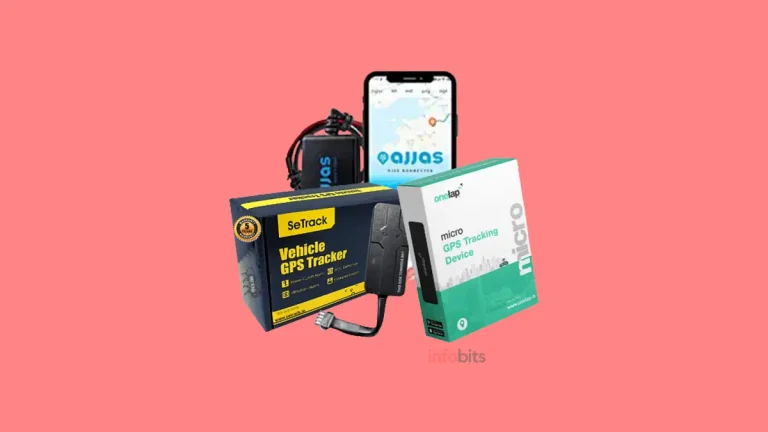
The Onelap GO remains our top overall pick, and for the specific job of tracking a child’s commute, it’s hard to beat. It’s a genuine GPS tracker, not a Bluetooth accessory, built with a sensitive GPS chip that reports live location to Onelap’s cloud servers via a pre-installed, pre-activated 4G SIM.
You get a full year of data and app access bundled in, so there’s no separate SIM recharge to manage in the first 12 months.
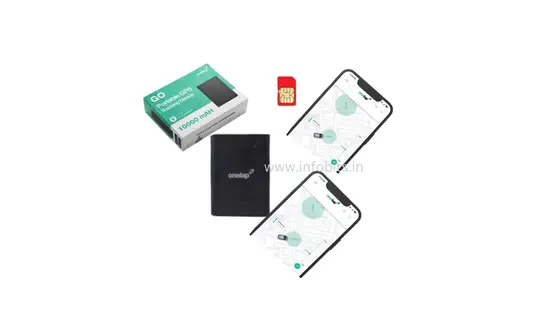
The stand-out feature for this use case is a 10,000mAh rechargeable battery. This is dramatically larger than anything else on this list, which means far less anxiety about the tracker dying halfway through the school day.
It supports geofencing (get an alert the moment your child enters or leaves the school or home zone), full-day travel history, and voice monitoring, which lets you call in and listen to the surroundings if needed.
It’s a genuinely Indian product (Made in India), with doorstep replacement warranty and WhatsApp-based support, a meaningful advantage over most imported alternatives when something goes wrong.
Pros: True live GPS tracking · Huge 10,000mAh battery · Geofencing and voice monitoring · Indian brand with local support
Cons: Bulkier than Bluetooth tags · SIM recharge required after the first year · Marketed broadly for vehicles too, so it isn’t purpose-built exclusively for kids.
Who should buy this: Parents who want one dependable, high-battery-life tracker as the single source of truth for their child’s daily commute.
Who should avoid this: If your child’s bag is very small or you need something ultra-discreet, its size (larger than a Bluetooth tag) may be a consideration. Then, Acumen Track GF-06 is more compact.
2. Acumen Track GF-06 Mini Wireless GPS Tracker
The GF-06 is the most budget-friendly true GPS tracker on this list, and it doesn’t cut corners on the core function. It uses an actual SIM-based connection to deliver real-time location, not a crowd-sourced Bluetooth relay.
Reviewers specifically mention using it to track children’s walks to the school bus stop, which is exactly the use case this guide is built around.
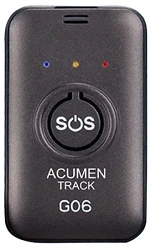
It includes an SOS button for emergencies, geo-fencing alerts, and a genuinely useful voice-monitoring feature. By this feature, dial the number on the inserted SIM, and the call auto-answers, letting you listen in on the surroundings.
At 850mAh, the battery is much smaller than the Onelap GO’s, so expect roughly a day of continuous tracking rather than several days, which is reasonable for a device that gets charged nightly, like a phone.
It ships with an inactive Airtel M2M SIM that needs a recharge (roughly ₹999–1,199/year for data, or a calling-enabled SIM if you want the voice-monitoring feature) to start working. Consider this in the real cost before buying.
Pros: True SIM-based real-time tracking · SOS button · Voice monitoring · Very compact and affordable Cons: Smaller battery needs more frequent charging · SIM recharge is a recurring cost · Basic build quality compared to the Onelap GO
Who should buy this: Budget-conscious parents who still want genuine real-time GPS tracking rather than a Bluetooth item finder.
Who should avoid this: If you want multi-day battery life without nightly charging, look at the Ajjas GO or Onelap GO instead.
3. Ajjas GO (with 4G SIM) – Wireless GPS Tracker
The Ajjas GO plays in the same league as the Onelap GO, a true 4G-SIM GPS tracker with a large 10,000mAh battery. Its headline feature is battery efficiency.
Ajjas rates it for up to 30 days of active use, or as much as 50 days in a lower-frequency “saver” mode, which is a genuine advantage if you’d rather not charge a device every night.
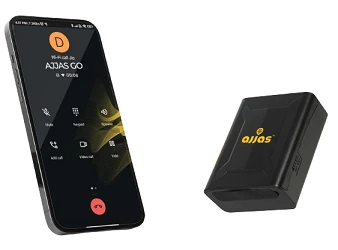
Location updates arrive as frequently as every 10 seconds on 4 G. Geofencing lets you define safe zones around home and school. The voice-monitoring feature works the same way as the Acumen tracker.
Call the inserted SIM number and listen in live (a calling-enabled SIM is required for this specific feature). A strong magnet on the body means it can also double as a family vehicle tracker when it isn’t in a school bag.
The pre-installed Airtel SIM needs an annual recharge (around ₹699 for the first year via the Ajjas app), and Ajjas provides WhatsApp and phone support for setup, which is helpful for less tech-savvy parents.
Pros: Excellent battery life in saver mode · True 4G live tracking · Geofencing and voice monitoring · Strong magnetic mount Cons: Similar bulk to the Onelap GO · Annual SIM recharge required · Voice monitoring needs a separate calling-enabled SIM
Who should buy this: Parents who want a true GPS tracker but would rather charge it every few weeks instead of every night.
Who should avoid this: If you specifically need the smallest, most discreet form factor, this is a similar size to the Onelap GO rather than a slim tag.
4. JioTag Go – Bluetooth Tracker (Android)
The JioTag Go is Reliance Jio’s Bluetooth item tracker for Android phones, and it’s worth understanding clearly before treating it as a child-safety device: it has no SIM card, and it does not provide continuous live tracking.
Instead, it pairs with Google’s Find Hub network (formerly Find My Device), when your child’s tagged bag passes near any Android phone with the network enabled, that phone anonymously relays the tag’s location back to your account.
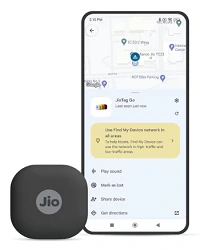
For a country with India’s enormous base of Android users, that network can be reasonably dense in busy areas. But it’s fundamentally different from a GPS tracker’s guaranteed update cycle, and coverage will be patchier on a quiet school-bus route or in a car.
It requires no SIM or subscription, runs on a replaceable CR2032 battery rated to last around a year, and offers a loud alert tone to help locate it within Bluetooth range.
At roughly under ₹1,499, it’s an inexpensive way to add a second layer of tracking to a bag. But it should not be relied on as the sole way to track a daily commute.
Pros: No SIM or subscription needed · Long ~1-year battery life · Loud find alert · Very affordable
Cons: Not real-time tracking · Depends on nearby Android device density · Android only, doesn’t work with iPhones
Who should buy this: Android households who want a low-cost, low-maintenance backup tag in addition to a real GPS tracker, or for occasional item-finding beyond just the school bag.
Who should avoid this: Anyone expecting continuous, live location updates during the commute itself. This isn’t what Bluetooth trackers are built for.
5. JioTag Air – Bluetooth Tracker (iOS)
The JioTag Air is functionally the iPhone counterpart to the JioTag Go, built around Apple’s Find My network instead of Google’s.
Once paired with the JioThings app and added to Find My, it relies on the huge global base of iPhones, iPads, and Macs to relay its location whenever one passes nearby. Again, not a continuous, guaranteed update as a SIM-based tracker provides.
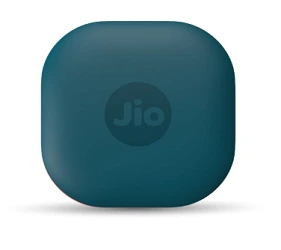
It shares the same core specs as the Go variant: no SIM required, Bluetooth 5.3, a claimed 12-month battery life, and a genuinely loud 120dB sound to help locate it within Bluetooth range.
Customer reviews are mixed on real-world reliability. Some report it working well for tracking a child’s location, others note the JioThings companion app can be inconsistent, and a minority report short effective range or connectivity drops.
Priced the same as the JioTag Go at around ₹1,499, it’s a reasonably low-cost addition for an iPhone household, but the same caution applies: it’s a supplementary safety layer, not a substitute for a live GPS tracker on the actual school run.
Pros: Deep integration with Apple’s Find My app · No subscription · Loud 120dB alert · ~1-year battery
Cons: Not real-time tracking · Mixed reliability reports in reviews · iOS only
Who should buy this: iPhone-owning families who want a low-maintenance backup tag that leans on Apple’s Find My network.
Who should avoid this: If your child doesn’t otherwise carry a device and you need guaranteed live tracking, a SIM-based tracker should be the primary purchase instead.
6. UGREEN FineTrack Smart Finder (iOS, Apple Find My)
The UGREEN FineTrack Smart Finder is a lower-cost alternative to the JioTag Air, aimed at the same Apple Find My ecosystem.
It’s UL4200A childproof-certified (a legitimate safety consideration if a younger child might handle it directly), uses a replaceable CR2032 battery rated for around two years, notably longer than the JioTag Air’s claimed one year, and produces an 80dB alert tone for close-range finding.
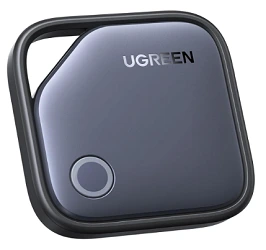
Like every device in this Bluetooth section, it has no SIM card and depends entirely on nearby Apple devices to relay location data through the Find My network; there is no live tracking feed.
Where it’s genuinely useful is as a set-and-forget backup layer: clip it inside a school bag alongside your primary GPS tracker, and it becomes a second way to locate the bag specifically (as opposed to the child) if it’s ever misplaced or left behind, using Apple’s “left-behind” reminder feature.
At roughly ₹1,665 (often discounted further), it typically undercuts JioTag Air while offering a longer-rated battery. A reasonable value pick within the Bluetooth-tag category, specifically.
Pros: Longer 2-year battery than most rivals · Childproof CR2032 casing · Competitive pricing · Left-behind alerts
Cons: Not real-time tracking · iOS only · Depends on Apple device density nearby
Who should buy this: Budget-focused iPhone households who want a Find My-compatible backup tag with strong long-term battery life.
Who should avoid this: Parents looking for their primary, guaranteed real-time tracking device.
7. UGREEN 4 Pack FineTrack G Smart Finder (Android, Google Find Hub)
This is the Android-focused, Google Find Hub-certified sibling to the FineTrack above, sold as a 4-pack. This is useful if you want to tag several things at once: the school bag, a lunch box, a sibling’s bag, and a set of house keys, for instance.
Unlike the CR2032-battery FineTrack, this variant is USB-C rechargeable, with a claimed battery life of around 12 months per charge.
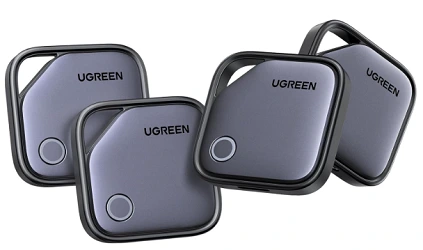
It works exclusively through Google’s Find Hub app on Android 9.0 and above, relaying location via nearby Android devices rather than a live cellular connection. The same fundamental limitation as every other tracker in this section.
Worth noting from real-world teardown and forum reports: a handful of specific Android phone models have reported compatibility hiccups with UGREEN’s tags, so it’s worth checking your own phone model against UGREEN’s current compatibility list before buying, especially if you’re on a newer Pixel device.
The 4-pack format makes the per-tag cost genuinely reasonable, and rechargeability (versus disposable coin-cell batteries) is a meaningful convenience if you’re tagging multiple items long-term.
Pros: Four tags for the price of roughly one single-tag competitor · USB-C rechargeable · Google Find Hub certified
Cons: A few reported device-compatibility quirks · Not real-time tracking · Android only
Who should buy this: Android households who want to tag multiple bags or belongings at once as a backup layer, and prefer rechargeable over coin-cell tags.
Who should avoid this: If you only need one tag, the single JioTag Go is simpler, and again, this isn’t a substitute for real-time tracking.
8. eufy Security SmartTrack Link (iOS, Apple Find My)
The eufy SmartTrack Link rounds out the Bluetooth category as the pick for parents who specifically want the loudest, easiest-to-locate tag at close range.
It integrates with Apple’s Find My app the same way as the JioTag Air and UGREEN FineTrack, and independent reviews consistently note it’s genuinely loud enough to hear through a covered bag or from another room.
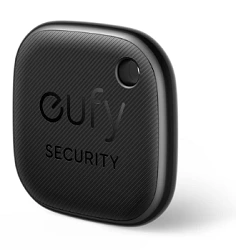
This is useful for the specific job of finding a bag misplaced somewhere in the house or car, rather than tracking a live commute.
It adds a couple of practical extras: free left-behind alerts (your phone nudges you if you walk away without the tagged bag), a QR code on the device itself so a good Samaritan who finds a lost bag can see your shared contact details without exposing your exact identity, and water resistance for durability in a school bag that inevitably gets rained on or spilt in.
Like every device in this section, there’s no SIM, no live tracking feed, and coverage depends entirely on nearby Apple devices, so it belongs in the same “backup layer” category as the rest, not as a primary commute tracker.
Pros: Very loud alarm · Free left-behind alerts · Water resistant · QR code for lost-and-found · No subscription
Cons: Not real-time tracking · iOS only · IPX4 rating is lower than the closest rival’s IP67
Who should buy this: iPhone households who want a reliable, loud, water-resistant backup tag with useful left-behind alerts.
Who should avoid this: Anyone who needs guaranteed, continuous tracking during the actual commute. Pair this with a true GPS tracker rather than using it alone.
Quick Comparison Table
| Tracker | Tracking Type | Connectivity | Live/Real-Time? | Best For |
|---|---|---|---|---|
| Onelap GO | True GPS | 4G SIM | Yes | Daily school commute, primary tracker |
| Acumen Track GF-06 | True GPS | 4G SIM | Yes | Budget-conscious buyers who still need live tracking |
| Ajjas GO | True GPS | 4G SIM | Yes | Parents who don’t want to charge often |
| JioTag Go | Bluetooth item finder | Google Find Hub network | No (crowd-sourced) | Android backup tag, older kids with a phone |
| JioTag Air | Bluetooth item finder | Apple Find My network | No (crowd-sourced) | iPhone-owning families, backup tag |
| UGREEN FineTrack Smart Finder | Bluetooth item finder | Apple Find My network | No (crowd-sourced) | Budget backup tag for iPhone households |
| UGREEN 4-Pack FineTrack G | Bluetooth item finder | Google Find Hub network | No (crowd-sourced) | Tagging multiple bags/items for Android households |
| eufy SmartTrack Link | Bluetooth item finder | Apple Find My network | No (crowd-sourced) | Loudest alarm, simple backup tag for iPhone households |
What to Look for in a GPS Tracker for Kids
Real-time vs. crowd-sourced location. As covered above, this is the first filter, not an afterthought. If tracking the actual commute matters to you, a SIM-based GPS tracker should be your primary device.
Battery life vs. size trade-off. True GPS trackers with large batteries (Onelap GO, Ajjas GO) are bulkier than Bluetooth tags, precisely because a live cellular connection draws more power. Decide how much bag space you’re willing to give up in exchange for guaranteed live updates.
Recurring costs. SIM-based trackers need an annual data recharge once any bundled free period ends (typically ₹699–1,200/year across the trackers in this list). Consider this in the real cost of ownership, unlike Bluetooth tags, which have no recurring fee.
Geofencing. Look for the ability to set a virtual boundary around home and school, so you’re alerted automatically the moment your child arrives or leaves either zone, instead of having to check the app manually.
Voice monitoring, used responsibly. Several trackers here let you dial in and listen to the surroundings. This can be reassuring in an emergency, but it’s worth having an age-appropriate conversation with your child about when and why you might use this feature to maintain trust.
Durability and discretion. A school bag takes a beating. Look for a tracker that can survive drops, spills, and general rough handling, and consider whether your child would be upset by a visibly obvious tracker versus a more low-key design.
Local support and warranty. Indian brands like Onelap and Ajjas offer doorstep replacement and WhatsApp support, which tends to be faster than resolving an issue with an imported device.
Related: Best GPS Trackers for Cars & Bikes in India
Why We Excluded GPS Smartwatches From This List
As we specified, this guide does not include GPS-enabled smartwatches for kids. Beyond your own requirement, there’s a broader, practical reason worth mentioning.
Most Indian schools now explicitly prohibit smart devices, including smartwatches, on campus. So a watch-based tracker is frequently confiscated or simply left at home on school days, defeating its own purpose.
A low-profile tag or tracker hidden inside a bag avoids this problem entirely.
How We Selected These Trackers
We evaluated each device primarily on one question: Does it provide genuinely usable, real-time location data suitable for tracking a child’s route to and from school, or is it a supplementary item-finder?
We verified each product’s underlying technology (SIM-based GPS vs. Bluetooth/crowd-sourced network) directly from manufacturer specifications and cross-checked real-world reliability against independent reviews and verified buyer feedback, rather than relying on marketing copy alone.
Why You Can Trust This Guide
This guide is based on manufacturer specifications, verified customer reviews, and current Indian marketplace listings, cross-referenced for accuracy.
We have no financial relationship with Onelap, Ajjas, Acumen, Jio, UGREEN, or eufy that influences these rankings.
Some links on this page are affiliate links, and we may earn a small commission if you purchase through them, at no extra cost to you. This does not affect which products we recommend or how we rank them.
Common Mistakes to Avoid
- Assuming any “tracker” gives live location. As this guide covers at length, Bluetooth item finders and true GPS trackers work fundamentally differently. Check which category a device falls into before buying it for commute tracking specifically.
- Forgetting the recurring SIM cost. A SIM-based tracker’s advertised price often doesn’t include the annual data recharge. Budget for it as an ongoing cost, not a one-time purchase.
- Skipping the battery-life reality check. A tracker with an 850mAh battery needs charging roughly as often as a phone; if you’re not confident you’ll charge it nightly, a larger-battery option is the safer choice.
- Not testing the geofence radius before relying on it. Set up and test geofencing around your home and school for a few days before trusting it fully. GPS accuracy in dense urban areas can occasionally drift by tens of metres.
- Hiding the tracker from your child entirely. Most child-safety and privacy guidance recommends being transparent with your child about the tracker’s purpose, appropriate to their age, rather than concealing it. This builds trust rather than eroding it.
Related: Best Security Cameras for Home or Office in India
Expert Tips
- Pair a primary GPS tracker with a Bluetooth backup tag on the same bag for redundancy. If one fails or runs out of charge, the other still gives you some signal.
- Charge on a fixed routine, like every night before bed, rather than waiting for a low-battery alert. This avoids the tracker being dead exactly when you need it most.
- Test the SOS/voice-monitoring feature with your child once, in a calm setting, so they know what to expect if you ever need to use it for real.
- Review the app’s location history weekly for the first month to confirm the geofence and route data genuinely match your child’s real commute, and adjust the geofence radius if you’re getting false alerts.
Quick Picks Summary
| Product | Category |
|---|---|
| Onelap GO Portable GPS | Best Overall (True GPS) |
| Acumen Track GF-06 | Best Budget True GPS Tracker |
| Ajjas GO | Best for Long Battery Life |
| JioTag Go | Best Bluetooth Backup Tag (Android) |
| JioTag Air | Best Bluetooth Backup Tag (iPhone) |
| UGREEN FineTrack Smart Finder | Best Budget Bluetooth Tag (iPhone) |
| UGREEN 4-Pack FineTrack G | Best Multi-Bag Bluetooth Pack (Android) |
| eufy SmartTrack Link | Best Bluetooth Tag with Loudest Alarm |
Frequently Asked Questions
A GPS tracking device uses satellite navigation to determine and report the geographic location of whatever it’s attached to, in this case, typically clipped or slipped inside a child’s school bag.
Parents can’t personally supervise a child during the commute to and from school. A dedicated tracker fills that gap, giving visibility into the child’s location and route without requiring a phone or smartwatch, which many schools don’t allow on campus.
Yes. The trackers in this guide use standard, widely used technology, GPS positioning, cellular data, and Bluetooth, the same underlying technology found in smartphones.
This varies significantly by device. True GPS trackers with large batteries, like the Onelap GO or Ajjas GO, can go days to weeks between charges. Smaller GPS trackers, like the Acumen Track GF-06, may need nightly charging similar to a phone. Bluetooth tags typically last many months to a couple of years on a single charge or battery, since they don’t maintain a live cellular connection.
Geofencing lets you draw a virtual boundary around your home, your child’s school, or both, and receive an automatic alert the moment the tracker enters or exits that zone, without needing to check the app manually.
Only as a supplementary layer, not as a primary solution. These devices have no SIM card and no independent connection to the internet. They rely entirely on other nearby phones (Apple’s Find My network or Google’s Find Hub network) to relay their location. For genuine, continuous tracking during a commute, a SIM-based GPS tracker is the appropriate primary device.
Accuracy varies with signal strength, satellite visibility, and the surrounding environment. Dense urban areas with tall buildings can occasionally cause a drift of a few tens of metres. SIM-based GPS trackers are generally far more consistent for this purpose than Bluetooth item finders, which depend on the chance presence of a compatible nearby phone.
These devices are designed primarily for safety. Being open and age-appropriately transparent with your child about why you’re using a tracker, and what it does and doesn’t monitor, tends to build trust rather than undermine it, and is generally recommended over concealing the device entirely.
No. Only the true GPS trackers (Onelap GO, Ajjas GO, Acumen Track GF-06) need an active SIM with a data plan. The Bluetooth item finders (JioTag Go/Air, UGREEN FineTrack, eufy SmartTrack Link) need no SIM or subscription at all, but trade that convenience for the lack of live tracking.
We hope you found this information useful. If it helped you, please share it with your friends and family. If you have used a GPS tracker or know of a good model, share your experience in the comments.
You can also recommend any reliable child tracking device that you have used. Your suggestions may help other readers choose the right device.
We hope you are interested in our articles similar to this and consider following our Facebook, Instagram, and Twitter pages for regular updates.
Also, subscribe to our free newsletter so that you will get regular updates, informational ebooks, and the latest deals & offers directly in your Email.
Subscribe to be the first to learn about new information
Disclosure: If you follow our links to a retailer’s website and make a purchase, we will get an affiliate commission on some, but not all, of the items or services we promote.