Best GPS Trackers for Cars & Bikes in India 2026 (Tested Picks + Buying Guide)
A GPS tracker becomes truly useful when you need it the most. It can help you find your bike if it is stolen or goes missing. It lets you check whether your driver is following the correct school route. You can also track a family member who is travelling alone. This gives you peace of mind and helps you worry less.
This guide is written for personal vehicle owners: car and bike owners, parents monitoring a driver, and small business owners with one or two vehicles.
If you run a commercial fleet, taxi, or vehicle under a permit, skip ahead to the AIS-140 section below. The rules and the right device are genuinely different for you.
We tested and evaluated these picks on tracking accuracy, alert reliability, app usability, installation ease, and real ownership cost, including the subscription most trackers don’t mention loudly on the box.
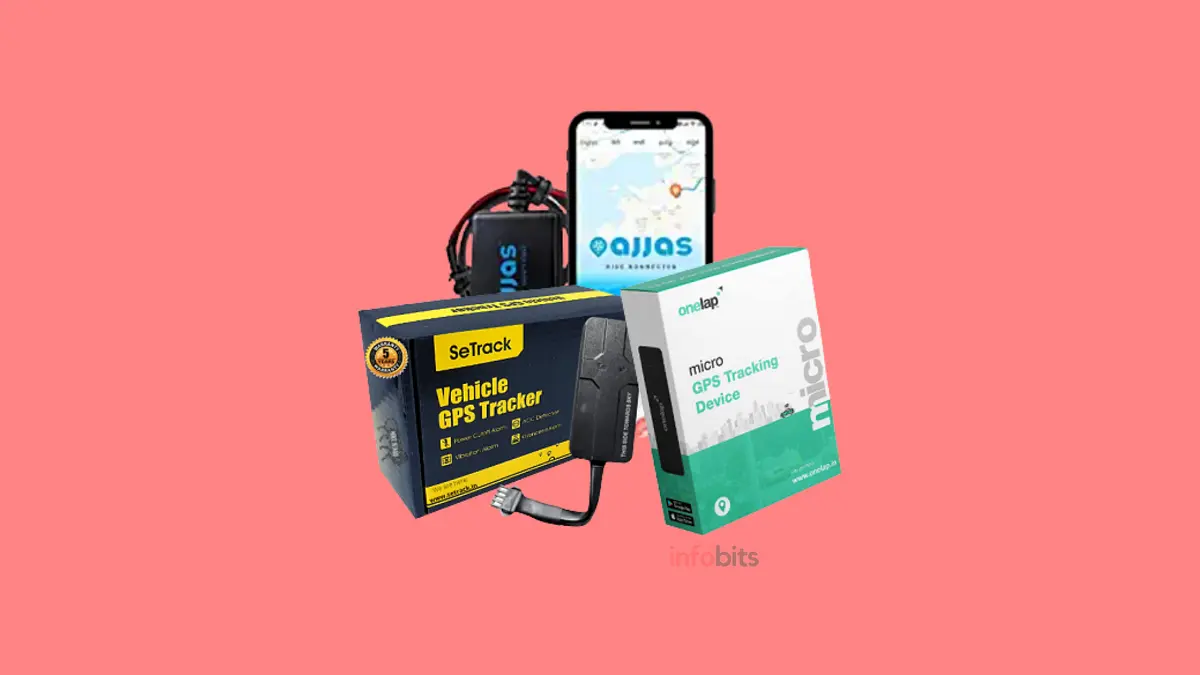
Quick Picks: Best GPS Trackers at a Glance
| Product | Best For | Price Range |
|---|---|---|
| Onelap Micro | Best Overall | ₹2,500 – ₹3,500 + annual plan |
| SeTrack GPS Tracker | Best Value for Money | ₹1,800 – ₹2,800 + annual plan |
| Ajjas Waterproof GPS Tracker | Best for Two-Wheelers & Accident Alerts | ₹2,000 – ₹3,000 + annual plan |
| J&P Technologies Prime Plus | Best for Fastest Location Refresh | ₹2,200 – ₹3,200 + annual plan |
| Fleettrack 4G Wired GPS Tracker | Best for Remote Engine Lock | ₹2,400 – ₹4,000 (variant-dependent) |
1. Onelap Micro: Best Overall
The Onelap Micro remains our top overall pick, and for good reason: it’s a genuinely compact, wired GPS tracker that hides easily in almost any car, bike, or scooter, and it doesn’t ask you to manage a separate charging routine since it draws power from the vehicle’s own battery.
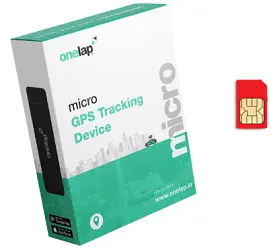
Setup is straightforward. A specialist installs the connecting wire once, and from that point on, the Onelap cloud app gives you live location and a full day’s driving history without further intervention.
The anti-theft alarm is the standout feature here: it flags ignition-on events and detects towing or pushing, which covers the two most common ways a parked vehicle actually gets stolen.
Geofencing works well in practice. You can mark your home, office, or school as a safe zone and get an alert the moment the vehicle leaves or re-enters it, along with an overspeeding alert if you set a limit.
It’s water-resistant, works on both keyed and keyless vehicles, and its small size means installers can tuck it somewhere non-obvious, which matters if visible deterrents aren’t your goal.
Pros: Compact and easy to hide; draws power directly from the vehicle, no separate charging; strong anti-theft and towing detection; works on keyed and keyless vehicles; comes with 12 months of SIM data bundled in.
Cons: Requires professional wiring for installation, so it’s not a plug-and-play setup; subscription renewal cost after year one adds to long-term ownership cost.
Who should buy this: Car owners who want a set-and-forget tracker with strong theft-detection features and don’t mind a one-time professional installation.
2. SeTrack GPS Tracker Device: Best Value for Money
SeTrack offers excellent value for money. It comes with several useful features, including remote lock and unlock, parking mode, anti-theft alerts, and geofencing.
Despite offering these features, it is usually priced lower than many other GPS trackers with similar capabilities. This makes it a great choice for budget-conscious buyers.
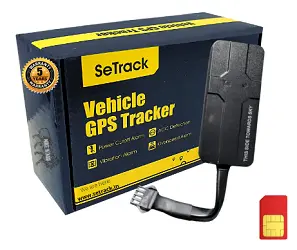
The 3-month driving history stored in the app is shorter than Onelap’s, but for most personal-use buyers checking recent trips rather than building a long-term log, this is rarely a practical limitation.
SeTrack’s app works across Android, iOS, and desktop/tablet browsers, which is a nice touch if you occasionally want to check location from a laptop rather than reaching for your phone.
One detail worth knowing upfront: the bundled SIM software is free for the first year and billed afterwards. But unlike some trackers that lock you into their SIM, SeTrack explicitly allows using your own SIM card if you’d rather manage data separately.
The remote lock/unlock function adds a genuinely useful layer most budget trackers skip entirely, giving you a way to immobilise the vehicle remotely if it’s ever taken without permission.
Pros: Competitive pricing for the feature set; supports your own SIM card instead of a locked-in one; remote lock/unlock is a rare feature at this price; cross-platform app support.
Cons: Shorter driving history window (3 months) compared to some competitors; alerts can lag slightly in low-signal areas based on user feedback.
Who should buy this: Budget-conscious buyers who still want remote lock/unlock and don’t want to be tied to one specific SIM provider.
3. Ajjas GPS Tracker: Best for Two-Wheelers & Accident Alerts
Ajjas stands out because it offers a unique safety feature. It can automatically call up to three pre-set emergency contacts if it detects an accident.
None of the other GPS trackers on this list provides this feature. It is especially useful for two-wheeler riders, who face a higher risk of serious injuries during a road accident.
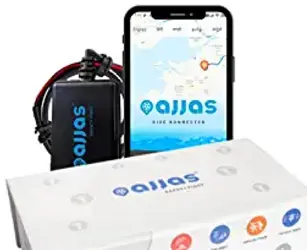
Apart from its emergency calling feature, this GPS tracker also offers all the essential safety features. It comes with a tamper alarm, ignition-on alert, and power-disconnect alert. It also has a built-in backup battery.
This keeps the tracker working even if someone disconnects the vehicle’s main power supply. This is important because thieves often cut the power first to disable a GPS tracker.
One important limitation to flag clearly: this tracker draws power from the vehicle’s battery and does not work with electric vehicles.
If you’re shopping for an EV specifically, this isn’t the right pick; look at a battery-powered or OBD-style tracker instead. It ships with a pre-activated SIM, one month of free data, and a one-year on-site warranty, and supports both Android and iOS.
Pros: Automatic accident-alert calling is a genuine safety feature; battery backup survives power tampering; strong theft-detection alerts; one-year on-site warranty.
Cons: Not compatible with electric vehicles; only one month of free data bundled, shorter than competitors.
Who should buy this: Bike and scooter owners who specifically want the accident-alert calling feature, and any petrol/diesel vehicle owner prioritising tamper detection.
4. J&P Technologies Prime Plus: Best for Fastest Location Refresh
If real-time precision is your priority, say, you’re tracking a driver’s actual route rather than just confirming the vehicle is parked safely, the J&P Prime Plus is built around exactly that.
It refreshes location and address data every 10 seconds, noticeably faster than the 30-60 second refresh common on budget trackers, so there’s minimal lag between where the vehicle actually is and what your app shows.
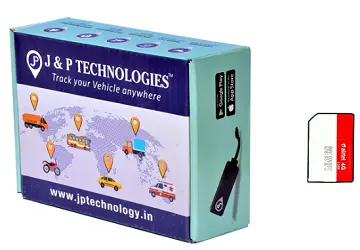
Geofencing here comes with a timestamped log of every entry and exit from your defined safe zones, which is genuinely useful if you want a record, not just an alert, of when a driver arrived at or left a specific location.
This is one of the more practical features for parents monitoring a school run or a small business tracking a delivery vehicle’s schedule adherence.
The tracker communicates directly with a sensitive onboard GPS chip to cloud servers, and the companion smartphone app is built around live location plus full-day driving history, similar in spirit to Onelap’s approach but with the faster refresh rate as its clear differentiator.
Pros: 10-second refresh rate is genuinely faster than most competitors; timestamped geofence entry/exit logs; straightforward live tracking app.
Cons: Limited retailer availability (Amazon only, no Flipkart listing at review time); fewer independent long-term reviews compared to the other three picks.
Who should buy this: Buyers who specifically need near-real-time location updates. For example, tracking a driver’s live route rather than just periodic check-ins.
5. Fleettrack GPS Tracker: Best for Remote Engine Lock
Fleettrack stands apart from the other picks on this list with one specific feature: an optional remote engine lock. With a compatible relay installed (Fleettrack offers universal, Bajaj-specific, and Royal Enfield-specific relay options), you can remotely immobilise the vehicle from the app if it’s ever stolen.
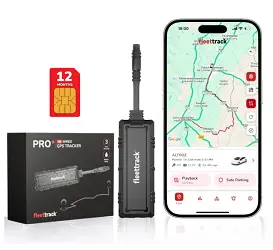
This isn’t a feature to take lightly. Fleettrack itself flags that using the lock feature carries a real risk. If you trigger it in an area with poor network coverage, the vehicle can potentially get stuck in a locked state until connectivity returns.
It’s genuinely useful as a last-resort anti-theft measure, but worth understanding fully before enabling it, and it’s offered as an optional add-on rather than a default setting.
Beyond that headline feature, it covers familiar ground well: live GPS tracking with full-day driving history, ignition alerts, geofencing with overspeeding alerts, and a “Safe Parking Call” feature that rings you directly if the vehicle is moved or tampered with while parked.
It’s built to work with both keyed and push-button-start vehicles, across cars, bikes, scooters, and even trucks and buses.
One genuinely useful engineering detail: Fleettrack advertises unusually low current draw thanks to a sleep/wake power design, which matters for a wired tracker permanently connected to your vehicle’s battery.
It ships with a 12-month prepaid SIM and 4G connectivity, and includes 24/7 WhatsApp support plus a door-to-door replacement warranty service. This is a genuinely convenient touch if something goes wrong and you don’t want to find a service centre yourself.
Pros: Remote engine lock is a genuine differentiator none of the other picks here offers; low current draw is battery-friendly for long-term wired use; responsive 24/7 support with door-to-door warranty service; wide vehicle compatibility, including trucks and buses.
Cons: The remote lock feature carries a real risk of the vehicle getting stuck if triggered with poor network coverage, so it needs to be used thoughtfully; pricing varies widely by variant (relay, SIM, recharge plan), so check exactly what’s included before buying.
Who should buy this: Buyers who specifically want a remote immobilisation option as a last-resort anti-theft measure, and are comfortable understanding its limitations before relying on it.
Buy Fleettrack GPS on Amazon | Buy Fleettrack GPS on Flipkart
Comparison Table: All 5 GPS Trackers at a Glance
| Product | Price Range | Best For | Key Differentiator | EV Compatible |
|---|---|---|---|---|
| Onelap Micro | ₹2,500 – ₹3,500 + annual plan | Best Overall | Strong towing/ignition anti-theft detection | Yes |
| SeTrack GPS Tracker | ₹1,800 – ₹2,800 + annual plan | Best Value for Money | Remote lock/unlock; supports your own SIM | Yes |
| Ajjas Waterproof GPS Tracker | ₹2,000 – ₹3,000 + annual plan | Best for Two-Wheelers & Accident Alerts | Automatic emergency calling in case of an accident | No |
| J&P Technologies Prime Plus | ₹2,200 – ₹3,200 + annual plan | Best for Fastest Location Refresh | 10-second location refresh | Yes |
| Fleettrack 4G Wired GPS Tracker | ₹2,400 – ₹4,000 (variant-dependent) | Best for Remote Engine Lock | Optional relay-based remote immobilisation | Yes |
If You Run a Commercial Vehicle, Taxi, or Fleet: A Different Set of Rules Applies
This is genuinely new information worth knowing before you buy anything. If your vehicle carries a yellow commercial number plate, taxis, cab-aggregator vehicles, school buses, goods carriers, or any vehicle operating under a permit, none of the consumer trackers above satisfies your legal requirement.
The Ministry of Road Transport and Highways mandates AIS-140 certified devices (technically called VLTDs – Vehicle Location Tracking Devices) for these vehicle categories.
An AIS-140 device isn’t just a location tracker; it must transmit data simultaneously to two government-approved servers, include a certified emergency panic button, carry at least four hours of independent battery backup, and pass ARAI/BIS tamper-resistance and durability testing.
A standard consumer GPS tracker, including every product reviewed above, does not meet this standard, no matter how good it is at location tracking.
If you own a commercial vehicle, choose an AIS-140 or ARAI-certified GPS tracker. Also, make sure it is compatible with your state’s Vahan portal. The device usually costs between ₹3,500 and ₹12,000.
You should also budget around ₹1,000 to ₹2,500 per year for SIM recharge and platform renewal. Using a non-compliant tracker can create legal problems. It may lead to rejection of your fitness certificate, fines from the RTO, or even suspension of your vehicle permit.
For commercial vehicle owners, this is a legal requirement, not just an optional feature.
Private, non-commercial cars and personal bikes are not covered by this mandate. The four consumer trackers reviewed above remain the right choice for that use case.
Related: Best GPS Tracker for Kids in India to Track Your Child Efficiently
Do GPS Trackers Get You an Insurance Discount?
Worth knowing before you buy: Several insurers in India now offer premium discounts on comprehensive car and two-wheeler policies for vehicles fitted with a certified anti-theft/GPS tracking device.
The discount and eligible device list vary by insurer, so check with your specific insurance provider whether your shortlisted tracker qualifies before assuming the discount applies automatically.
Things to Consider When Selecting a Good GPS Tracker
a) Purpose of the GPS Tracker
Decide what you’re actually solving for before comparing specs. Anti-theft recovery, monitoring a driver, keeping tabs on a teen’s driving habits, and accident-alert safety are different priorities, and they point to different features being non-negotiable versus nice-to-have.
b) Total Cost, Not Just the Sticker Price
Almost every GPS tracker on this list bundles a limited free data period, after which you pay an annual subscription to keep the tracking service active.
Factor this recurring cost into your decision. A cheaper device with a pricier annual plan can cost more over three years than a slightly pricier device with cheaper ongoing data.
c) Installation Type: Wired vs Battery-Powered vs OBD
Wired trackers (like Onelap and Ajjas above) tap into the vehicle’s electrical system and never need charging, but require a one-time professional installation. Battery-powered trackers are easier to place and move, but need periodic recharging.
OBD-port trackers plug directly into your car’s diagnostic port, the fastest to install, but only available on cars with an accessible OBD-II port, which is standard on most cars sold in India since 2020, but not universal on older vehicles or most bikes.
d) SOS Button and Accident Alerts
An SOS button, or automatic accident-alert calling, as Ajjas offers, is one of the genuinely life-relevant features on this list. This feature is worth prioritising if the tracker is going on a vehicle used by a solo rider, elderly family member, or anyone travelling alone regularly.
e) Mobile App Quality
A tracker is only as good as its app. Check whether the app is actively maintained (recent update history), supports both Android and iOS if your household uses both, and lets you manage geofences and alerts without needing to call support for basic changes.
f) Water and Dust Resistance
For two-wheelers especially, water resistance isn’t optional. The tracker is exposed to monsoon rain, road spray, and washing far more than a device tucked inside a car’s dashboard.
g) Alert Types and Sensitivity
Beyond simple location, look for tamper alerts, ignition-on notifications, geofence entry/exit alerts, and overspeeding warnings. A tracker that only tells you “where” without alerting you to “something unusual just happened” misses much of the point of owning one.
h) Network Coverage
The tracker’s data rides on a cellular SIM connection, so coverage quality in the areas you actually drive matters more than the brand name.
If you frequently travel through remote or low-connectivity areas, ask specifically about the tracker’s network partner and offline/last-known-location behaviour.
i) Battery Life (for Battery-Powered Trackers)
If you’re choosing a battery-powered tracker rather than a wired one, check the manufacturer’s stated standby time under real usage, not just best-case lab figures.
Most decent units last at least a week between charges, but usage patterns (frequent alerts, poor signal areas forcing higher power draw) can shorten this meaningfully.
Common Mistakes to Avoid
- Assuming a personal GPS tracker satisfies AIS-140 requirements for a commercial vehicle. It doesn’t. The certification and hardware requirements are genuinely different.
- Ignore the annual subscription cost when comparing prices. The cheapest hardware isn’t always the cheapest tracker over two or three years.
- Buying a battery-powered EV-incompatible tracker for an electric vehicle. Confirm compatibility explicitly, since several popular trackers (including one reviewed above) specifically don’t support EVs.
- Skipping the insurance conversation. If a discount is available on your policy for a certified device, it can offset a meaningful chunk of the tracker’s cost over its lifetime.
Conclusion
A good GPS tracker turns a stressful “where is my vehicle right now” moment into a glance at your phone.
For personal cars and bikes, the five trackers above cover the range from feature-complete (Onelap Micro), to budget-friendly (SeTrack), to safety-focused for two-wheelers (Ajjas), to fastest-refresh tracking (J&P Prime Plus), to remote immobilisation as a last-resort anti-theft option (Fleettrack).
If you’re running a commercial or permit vehicle instead, none of these substitutes for an AIS-140 certified device.
That’s a separate purchase with real legal consequences for getting it wrong. Match the tracker to your actual use case, factor in the ongoing subscription cost, and check with your insurer before you finalise a purchase.
Quick Picks Summary
| Product | Category |
|---|---|
| Onelap Micro | Best Overall |
| SeTrack GPS Tracker Device | Best Value for Money |
| Ajjas Waterproof GPS Tracker | Best for Two-Wheelers & Accident Alerts |
| J&P Technologies Prime Plus | Best for Fastest Location Refresh |
| Fleettrack 4G Wired GPS Tracker | Best for Remote Engine Lock |
Frequently Asked Questions
It receives signals from GPS satellites to calculate the vehicle’s exact position, then sends that data to a cloud server over a mobile network, which you access through a smartphone app or web dashboard in real time.
It depends on the type. Wired trackers draw continuous power from the vehicle and don’t rely on an internal battery for normal operation. Standalone battery-powered trackers typically last from a few days up to a few weeks between charges, depending on usage and signal strength.
Check that it’s securely connected to its power source and has a clear signal, try resetting the device, and check for a firmware update through its companion app. If the issue persists, contact the manufacturer’s support with your device’s serial number.
A well-installed, compact tracker is difficult to notice casually, but someone specifically looking, checking under the dashboard, monitoring unexpected battery drain, or watching for electronic interference, can potentially find one. Professional installation reduces this risk considerably.
No. AIS-140 certification is mandated only for commercial vehicles, taxis, buses, and vehicles operating under a permit. Private, non-commercial cars and personal bikes are not covered by this requirement.
Possibly; several insurers offer a discount for vehicles fitted with a certified anti-theft/tracking device, but eligibility and the discount amount vary by insurer. Confirm directly with your insurance provider before assuming it applies.
Wired trackers are generally more reliable for bikes since they draw continuous power and don’t need recharging, but they do require a one-time professional installation. Battery-powered options are easier to install yourself, but need periodic charging.
Not all of them; some trackers draw power specifically from a conventional vehicle battery and explicitly don’t support EVs. Always confirm EV compatibility before buying if that’s your use case.
We hope you are interested in our articles and consider following our Facebook, Instagram, and Twitter pages for regular updates.
Subscribe to our free newsletter to get similar articles and regular updates directly in your Email Inbox.
Also, share this article with your friends and relatives. Bookmark this page for future reference.
Disclosure: We will get an affiliate commission on some, but not all, of the products or services we recommend if you follow our links to a retailer’s website and make a purchase. This does not affect your pricing.
Subscribe to be the first to learn about new information
Disclosure: We will receive an affiliate commission on some, but not all, of the products or services we recommend if you follow our links to a retailer’s website and make a purchase.