
Dolby Atmos vs DTS:X in India: Which Surround Format Actually Matters for You
Here’s the question nobody asks before buying a soundbar in India: does it actually matter which of these two logos is on the box?
For most Indian households, the honest answer is less than you’d think, and for reasons that have nothing to do with which technology sounds “better.”
Both Dolby Atmos and DTS:X do the same fundamental job: they treat individual sounds like a footstep, a gunshot, a helicopter overhead, as objects placed freely in 3D space, rather than locking them to a fixed speaker channel.
The real decision for Indian buyers comes down to something more practical: what you actually watch, on what platform, and what your soundbar or receiver supports out of the box.
Quick Answer:
If you mostly stream movies and shows on Netflix or Prime Video, Dolby Atmos is the format that matters. It’s the one Indian OTT platforms actually support. If you collect 4K Blu-rays or play games on an Xbox, DTS:X earns its keep as a genuine bonus. It is interesting to know that most soundbars sold in India today, even budget ones, now support both formats in the same box, so for most buyers this isn’t really an either/or purchase decision anymore. It’s about the price tier and channel count you can afford.
What Dolby Atmos and DTS:X Actually Are
Both formats belong to a category called object-based audio. Older surround formats like 5.1 and 7.1 assign each sound to a fixed channel; front-left, rear-right, centre, and so on.
Object-based audio instead treats each sound as an independent object with its own position data, letting your receiver or soundbar place it anywhere in the room, including overhead.
Dolby Atmos, launched in 2012, adds height as a dimension using ceiling speakers or upward-firing drivers that bounce sound off your ceiling to simulate overhead effects. It has a fixed, well-defined speaker-layout philosophy ( Dolby specifies exact height and surround positions ), which is part of why hardware built for it tends to behave predictably across brands.
DTS:X, launched in 2015, pursues the same object-based idea but with a more flexible, less prescriptive approach to speaker placement. It doesn’t strictly require height speakers to deliver its effect, and it can, in principle, support a much larger number of simultaneous audio objects than Atmos’s object ceiling. Though in practice, real-world content rarely pushes either format to its theoretical limit.
The India-Specific Reality: Content Availability
This is the part most comparison articles skip, and it’s the single biggest factor for Indian buyers.
Dolby Atmos has a clear, practical lead on Indian streaming. Netflix offers Atmos on a meaningful slice of its catalogue, though you generally need the higher-tier plan and a compatible device to get it. Prime Video includes some Atmos-mixed originals and licensed titles as well. JioHotstar, by contrast, has historically streamed most content in plain stereo rather than full surround, regardless of format.
DTS:X, meanwhile, is close to absent from Indian OTT platforms. You’ll find it primarily on 4K Blu-ray discs and select games rather than in your Netflix queue, which matters a lot if your “home theatre” is really a streaming setup rather than a disc collection.
This asymmetry is the real reason to lean Atmos-first if streaming is your main use case. It’s not that DTS:X sounds worse; it’s that there’s currently very little Indian streaming content mixed for it at all.
Gaming: Xbox vs PlayStation Changes the Calculus
If gaming is a big part of why you want immersive audio, console choice matters more than format preference. Xbox Series X|S has supported Dolby Atmos for gaming since launch and has built up a large library of Atmos-mixed titles, with support extending to Dolby Vision for picture as well.
PlayStation 5 takes a different route. It leans on Sony’s own Tempest 3D AudioTech engine for spatial gaming audio rather than treating Dolby Atmos as its primary spatial format, so the “which format wins” question looks different depending on which console sits under your TV.
Related read: Soundbar vs Home Theatre: Which Is the Best Audio System?
Sound Quality and Immersion: The Practical Differences
On paper, both formats promise a similarly enveloping “dome of sound,” and in well-set-up systems, most listeners find it genuinely difficult to tell them apart on the same content. The differences that do show up in daily use are more about implementation than raw sound quality:
- Dolby Atmos tends to feel more consistent across brands because Dolby enforces a stricter speaker-layout specification. A 5.1.2 Atmos soundbar from one brand behaves predictably like a 5.1.2 from another.
- DTS:X adapts more gracefully to irregular rooms and non-standard speaker placement, since it doesn’t mandate a specific layout. This is useful if your room has an awkward shape or you can’t mount speakers at height.
- DTS:X also tends to emphasise dialogue clarity as a distinct feature, letting some receivers let you boost vocal levels independently of the rest of the mix. Handy for late-night viewing at lower volumes.
Neither advantage is dramatic enough to be a deciding factor on its own. Content availability and your existing hardware matter more in practice.
Setup and Speaker Configuration
Both formats are described using a three-number shorthand: main channels, subwoofers, and height speakers. A 5.1.2 soundbar has five main channels, one subwoofer, and two up-firing height drivers. A full 7.1.4 AV receiver setup can drive eleven speaker positions, including four height channels.
For Dolby Atmos, getting the full overhead effect generally means either ceiling-mounted speakers or Atmos-enabled up-firing drivers, plus a receiver or soundbar that explicitly decodes Atmos.
For DTS:X, you can often get most of the benefit from your existing 5.1 or 7.1 speaker layout without adding height channels at all. A real practical advantage if you already own a surround system and don’t want to touch the wiring again.
Either way, check that your TV supports HDMI eARC (Enhanced Audio Return Channel) if you plan to pass high-resolution audio from streaming apps or a connected Blu-ray player through to your soundbar or receiver. Without it, you’ll lose the full-quality audio signal even if every other piece of hardware supports the format.
Cost Considerations for Indian Buyers
The good news for budget-conscious buyers is that dual-format support (both Atmos and DTS:X in the same box) has become common even at entry-level prices in India, so you rarely have to choose one format over the other when shopping.
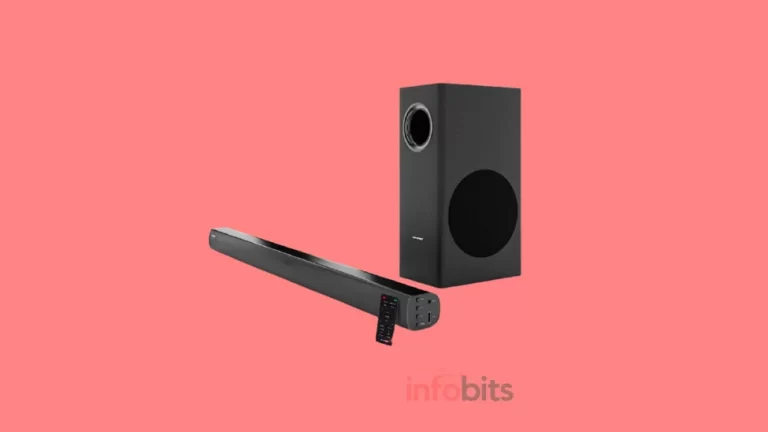
- Entry-level, true Atmos + DTS:X (~₹15,000): Several budget Indian-brand soundbars now pack a genuine 5.1-channel layout with wireless subwoofer and rear satellites, supporting both formats natively. A real step up from “virtual surround” bars that only simulate the effect through processing. The Zebronics Juke Bar 9710C is a newer model in this category. It is worth considering if you want a modern soundbar. The model is also available on Amazon.
- Mid-range, virtual surround only (~₹22,000): Some well-regarded compact soundbars in this range support Dolby Atmos but substitute DTS Virtual: X, a software-simulated height effect rather than true object-based DTS: X. It is worth checking the spec sheet closely if the distinction matters to you. You can consider the Sony HT-S40R if you are looking for a 5.1-channel soundbar with a dedicated subwoofer and rear speakers. It is a good option in this category and is also available on Amazon.
- Upper-mid, full dual-format (~₹40,000–₹45,000): At this tier, look for true 5.1-channel Atmos and DTS:X together, along with a sizeable wireless subwoofer and app-based streaming support. This is typically where both formats are implemented without compromise.
- Complete surround system (~₹50,000): A handful of all-in-one packages now bundle a soundbar, wireless subwoofer, and wireless rear speakers for a genuine 5.1-channel cinema setup supporting both Atmos and DTS:X, aimed at larger living rooms that would otherwise need a full AV receiver and separate speaker wiring. The Sony HT-S2000 is a good option in the 5.1-channel Dolby Atmos home theatre system category. It comes with a wireless subwoofer and rear speakers for a more immersive surround sound experience. It is also available on Amazon.
Related read: How to Set Up a Budget Home Theatre System in India
Which One Should You Actually Buy?
Rather than treating this as a format war, use this simple decision path:
- If you mainly stream Netflix or Prime Video: prioritise Dolby Atmos support. It’s the format your content is actually mixed for.
- If you own a 4K Blu-ray collection or play a lot on Xbox: DTS:X support becomes genuinely useful, not just a checkbox.
- If your budget allows it: buy a soundbar or receiver that supports both. The price gap between Atmos-only and dual-format hardware has narrowed enough in 2026 that there’s rarely a strong reason to settle for one.
- If your room is irregularly shaped or you can’t mount speakers at height, lean toward a system with strong DTS:X or DTS Virtual:X implementation, since it tolerates non-ideal speaker placement better.
Comparison at a Glance
| Dolby Atmos | DTS:X | |
|---|---|---|
| Best for | Streaming (Netflix, Prime Video) | 4K Blu-ray, gaming collections |
| Indian OTT support | Meaningful and growing | Very limited |
| Speaker layout | Stricter, more standardised | More flexible, adapts to odd rooms |
| Height speakers needed | Generally yes, for full effect | Not strictly required |
| Typical India entry price | ~₹15,000 (soundbar, true 5.1) | Usually bundled with Atmos at similar price |
| Console strength | Xbox Series X|S | Works across most AV receivers |
| Dialogue clarity focus | Standard | Often a dedicated feature |
Checklist: Before You Buy
- [1] Confirmed your TV has HDMI eARC, not just ARC
- [2] Checked whether the soundbar has true DTS:X or only DTS Virtual:X
- [3] Confirmed your main streaming platforms actually support the format you’re buying for
- [4] Checked whether your room can accommodate height speakers, if going for full Atmos
- [5] Verified your gaming console’s actual spatial-audio approach, if gaming matters to you
- [6] Compared dual-format options in your budget before settling for single-format hardware
Related read: Best Soundbars Under 10000 in India [2026]: Tested Picks
Common Mistakes to Avoid
- Buying based on the logo alone without checking whether your streaming habits actually use that format.
- Confusing DTS Virtual:X with true DTS: X. The “Virtual” version simulates height through processing rather than dedicated drivers, and it’s worth knowing which one you’re getting.
- Assuming PS5 works like Xbox for spatial audio – Sony’s Tempest 3D engine isn’t a direct Dolby Atmos equivalent, so don’t assume feature parity across consoles.
- Skipping the eARC check – even Atmos-capable hardware won’t deliver full-quality audio over a standard ARC connection.
- Over-investing in height speakers for a room where you mostly watch stereo-only content from platforms without Atmos mixing.
Myth vs Fact
Myth: DTS:X objectively sounds better than Dolby Atmos because it supports more audio objects. Fact: Real-world content rarely approaches either format’s theoretical object limit, so this technical advantage is mostly irrelevant to everyday listening.
Myth: You need ceiling speakers for either format to work at all. Fact: DTS:X in particular can deliver a strong surround experience through your existing 5.1/7.1 layout without any height channels. Atmos generally benefits more from them, but up-firing drivers built into a soundbar can substitute reasonably well.
Myth: If your soundbar has the Atmos or DTS:X logo, all your content will play in that format. Fact: The content itself has to be mixed in that format, and your streaming plan or connected device has to support delivering it. The logo on your hardware is necessary but not sufficient.
Expert Tips
- Check your specific streaming plan’s terms for Atmos requirements. Some platforms gate it behind a premium tier rather than including it by default.
- If you’re buying a soundbar primarily for movies, prioritise a genuine 5.1-channel layout with a real subwoofer over chasing the Atmos/DTS:X logo alone. Channel count and subwoofer quality affect daily listening more than format choice.
- For gaming-first buyers, match your console to your audio priorities before matching your soundbar to a format. An Xbox with an Atmos-first soundbar is a more coherent combination than assuming any format works identically across consoles.
Related read: Best Audio Interface for Home Studio in India (2026 Guide)
Troubleshooting Common Issues
Atmos isn’t triggering even though my soundbar supports it: Check that your streaming app, HDMI cable, and TV settings all support passthrough. A missing link anywhere in that chain (app plan tier, cable bandwidth, or an ARC-only port instead of eARC) silently drops back to standard surround or stereo.
DTS:X isn’t detected on my receiver despite a supported Blu-ray: Confirm the disc menu audio track is actually set to DTS:X rather than a standard DTS-HD Master Audio track. Many discs ship with multiple audio options and don’t default to the object-based track.
My PS5 games don’t show a Dolby Atmos indicator: This is expected in many cases. Sony’s Tempest 3D engine handles spatial audio differently, and Atmos support on PS5 has been more limited and inconsistent than on Xbox.
The Bottom Line
For the vast majority of Indian households, this isn’t really a Dolby Atmos vs DTS:X decision at all. It’s a decision about how you actually consume content.
If streaming dominates your viewing, chase Atmos support and a genuine 5.1-channel soundbar first; DTS:X compatibility is a welcome bonus that’s increasingly bundled in anyway.
If you’re a disc collector or an Xbox-first gamer, DTS:X earns a more active role in your buying decision. Either way, prioritise a real subwoofer, actual rear channels, and HDMI eARC over chasing a specific logo on the box.
Related read: Wi-Fi vs Bluetooth Speakers: Which is Best for You
Frequently Asked Questions
Neither is objectively better in terms of raw sound quality. The practical difference for Indian buyers comes down to content availability, and Dolby Atmos currently has far stronger streaming support in India.
Yes, on a meaningful portion of its catalogue, though it typically requires a higher-tier plan along with a compatible device and audio system.
Historically, JioHotstar has streamed most of its content in standard stereo rather than full surround formats, regardless of your hardware’s capabilities.
Not strictly. Soundbars with upward-firing drivers bounce sound off your ceiling to simulate the effect without needing permanently installed ceiling speakers, though a dedicated ceiling install gives a more precise result.
DTS:X is the true object-based format, typically requiring appropriate channel decoding. DTS Virtual:X simulates a similar height/width effect through software processing on hardware without dedicated height or wide channels; a reasonable substitute, but not identical.
It depends heavily on your console. Xbox Series X|S has strong native Dolby Atmos support across a large game library. PlayStation 5 primarily uses Sony’s own Tempest 3D AudioTech engine rather than treating either Dolby or DTS format as its main spatial-audio approach.
Yes, particularly with DTS:X, which is designed to work reasonably well with your existing 5.1 or 7.1 speaker layout. Dolby Atmos benefits more from dedicated height speakers but can still work through soundbar up-firing drivers.
eARC (Enhanced Audio Return Channel) carries significantly more audio bandwidth than standard ARC, which is necessary to pass full-quality Dolby Atmos or DTS:X signals from your TV’s apps or connected devices to your soundbar or receiver.
In most cases, yes. Dolby Atmos on Netflix typically requires the platform’s higher-tier plan along with Ultra HD streaming and a compatible device.
Yes, several Indian-brand soundbars now offer true 5.1-channel layouts with both Dolby Atmos and DTS:X support at this price point. A significant improvement over the “virtual surround only” options that dominated this segment a few years ago.
It’s rare. DTS:X content in India is mostly found on 4K Blu-ray discs and select games rather than mainstream OTT platforms, which is the core reason Atmos is the more practical everyday choice for most Indian households.
Both matter. Your TV needs to pass the audio signal through correctly (via eARC), and your soundbar or receiver needs to decode it. A mismatch anywhere in that chain means you won’t get the full effect even with otherwise capable hardware.
It denotes five main channels, one subwoofer, and two height/up-firing channels for overhead effects. The number after the second decimal point always refers to height channels.
Yes, most modern receivers and soundbars that support both formats switch automatically based on what the source content is mixed in. You don’t need to manually select a mode for most everyday use.
Only if you specifically watch 4K Blu-rays or game on a console/PC combination where DTS:X adds real value. For a purely streaming-focused household, the extra cost is harder to justify given the format’s limited Indian OTT footprint.
They improve immersion and directional audio cues noticeably in supported titles, though the competitive gameplay advantage is smaller than marketing suggests. Sony’s Tempest 3D system on PS5 aims for a similar practical benefit through a different technical approach.
Sometimes, but not always. Check your specific receiver model’s official support page rather than assuming a firmware update will add the feature, since some hardware limitations can’t be resolved through software alone.
Yes, generally; Atmos content typically requires Ultra HD-tier streaming, which consumes more bandwidth than standard-definition or HD-only streams.
We hope you are interested in our articles and consider following our Facebook, Instagram, and Twitter pages for regular updates.
Subscribe to our free newsletter to get similar articles and regular updates directly in your Email Inbox.
Also, share this article with your friends and relatives. Bookmark this page for future reference.
Subscribe to be the first to learn about new information
Disclosure: If you follow our links to a retailer’s website and make a purchase, we will get an affiliate commission on some, but not all, of the items or services we promote. This will cause no price change for you.