9 Best Air Purifiers for Home in India (2026): Buying Guide
Winter 2025-26 was brutal. Delhi’s average PM2.5 sat at 163 µg/m³, and 204 out of 238 Indian cities failed to meet the country’s own safe air quality standards.
If you’ve ever woken up with a scratchy throat in December or watched your kid’s asthma flare up every time the AQI turns “Very Poor,” you already know why an air purifier isn’t a luxury anymore. It’s basic home maintenance, like a water filter or a fire extinguisher.
The problem is picking one. Walk into any electronics store or scroll Amazon for ten minutes and you’ll see fifty options, each claiming to be “the best.” Most buying guides just repeat spec sheets without telling you which purifier actually survives an Indian summer, an Indian filter-replacement budget, and an Indian customer-service call.
We tested this list against real usage patterns in Indian homes, considering bedroom sizes, appliance-service availability, and the two things people always underestimate: filter cost and noise at night.
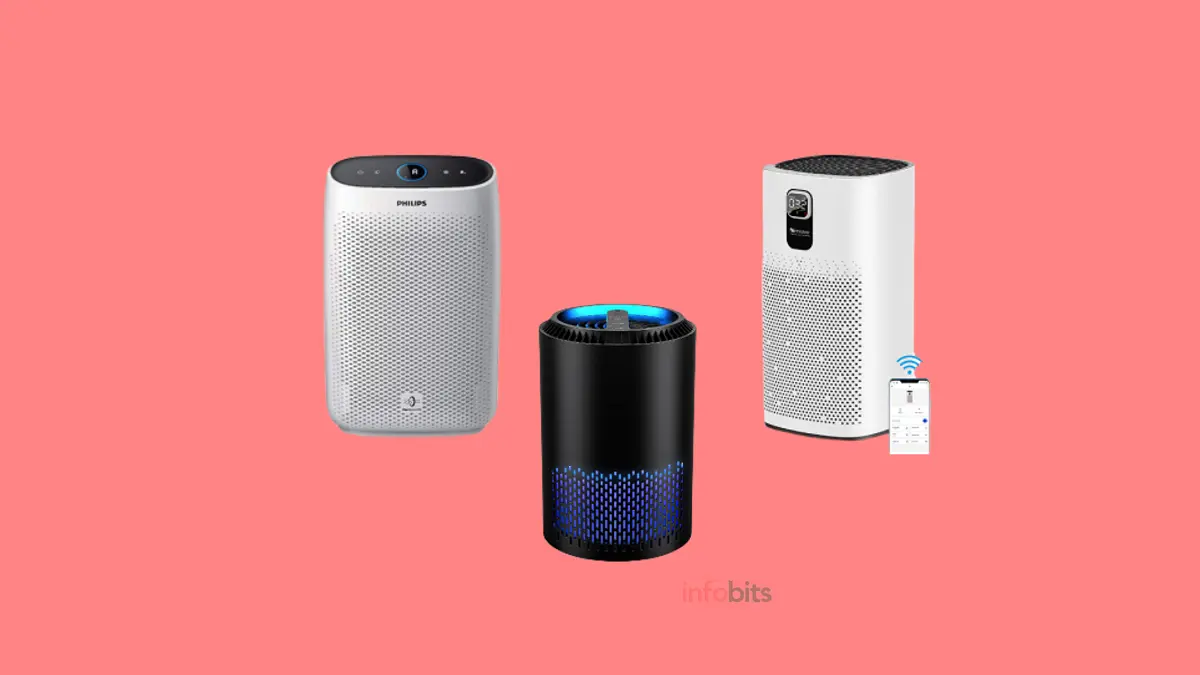
Below are our nine picks, organised so you can jump straight to the one that fits your room and your budget.
Quick Picks: Best Air Purifiers at a Glance
| Category | Product | Best For |
|---|---|---|
| Best Overall | Mi Smart Air Purifier 4 | All-round performance and value |
| Best Value for Money / Best Warranty | Coway Airmega 150 | Long filter life, low running cost |
| Best for Allergies & Pets | Honeywell Air Touch V3 | 5-stage filtration, strong Indian service |
| Best Budget Pick | Philips AC1711 | Quiet bedroom purifier under ₹15,000 |
| Best Smart Features | Mi Smart Air Purifier 4 Pro | Real-time AQI display, high CADR |
| Best for Large Rooms | Coway Airmega 250 | Living rooms and open-plan halls |
| Best Premium Pick | Sharp FP-J80M-H | Plasmacluster tech, ultra-quiet |
| Best Upgrade / Best Design | Dyson Purifier Cool PC1 (TP11) | 2-in-1 purifier and fan |
| Best for Compact Spaces | LEVOIT Core 300 | Small rooms, personal desks |
If you only remember one rule from this guide: match the CADR to your room size, then worry about brand and features. A gorgeous purifier that’s underpowered for your hall is just an expensive humming box.
Do You Really Need an Air Purifier in India?
Short answer: almost certainly, yes.
Indoor air is typically 2 to 5 times more polluted than the air outside, even on a “good” day. Cooking fumes, incense, mosquito coils, dust mites, and pet dander build up fast in a closed Indian flat, and outdoor PM2.5 walks straight in through gaps in doors and windows.
The health case is well established. HEPA-filtered air purifiers reduce your exposure to fine particulate matter, and that translates into fewer allergy flare-ups, better sleep, and long-term protection for growing lungs and ageing ones alike.
If you live in a Tier-1 or Tier-2 city in North or Central India, have small children, elderly parents at home, or anyone with asthma, an air purifier is one of the highest-impact, lowest-effort upgrades you can make to your house this year.
How We Selected These Air Purifiers
We didn’t just rank Amazon bestsellers. Every product on this list had to clear four checks:
- A verifiable True HEPA H13 (or better) filter: not a vague “HEPA-type” claim.
- A CADR rating and room-coverage figure the brand actually publishes, not just markets.
- Availability of official Indian warranty and replacement filters: a purifier with no local service network becomes junk the day the filter clogs.
- Real-world noise data, because a purifier you switch off at night to sleep isn’t purifying anything.
We also cross-checked pricing across Amazon.in, Flipkart, and brand websites. Prices below are indicative and can shift with festive sales, so always check the live price before buying.
Why You Can Trust This Guide
This list was rebuilt from scratch using current 2026 pricing, official brand specification sheets, and independently reported CADR and filter-life figures; not recycled model numbers from old buying guides.
Every affiliate link goes to the official listing on Amazon or the brand’s own India store. We’ve also flagged where a popular product is a grey-market import without local warranty support, because that detail matters more than most spec sheets do.
1. Mi Smart Air Purifier 4: Best Overall
The Mi Smart Air Purifier 4 is the purifier we’d recommend to most first-time buyers, and it’s held that position for a while now because nobody else matches its price-to-performance ratio.
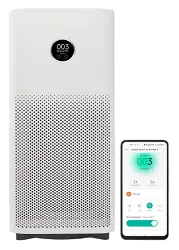
At roughly ₹13,499–₹14,999, it delivers a CADR of 400 m³/h and a manufacturer-listed coverage of 516 sq ft; realistically closer to 360 sq ft once you de-rate for real Indian flats with high ceilings and gaps under doors.
The True HEPA H13 filter captures 99.97% of particles down to 0.3 microns, and the three-layer stack (pre-filter, HEPA, activated carbon) handles both dust and cooking odours competently. Where this purifier pulls ahead of similarly priced rivals is the Mi Home app: real-time AQI monitoring, scheduling, and Alexa/Google Home voice control, all without a subscription fee.
Running costs are sensible too. The replacement filter costs around ₹2,499 and typically lasts 6 to 12 months depending on how polluted your city is and how many hours a day you run it.
The main drawback we observed in this model is build quality. It’s mostly plastic and doesn’t feel as premium as a Coway or Philips unit, and Xiaomi’s after-sales service, while functional, isn’t in the same league as Honeywell’s pan-India network.
Pros: Excellent CADR-to-price ratio; strong app ecosystem; affordable filters; Alexa/Google Home support.
Cons: Plastic build feels basic; service network thinner than Honeywell or Coway’s.
Who should buy this: Anyone furnishing a bedroom or mid-sized living room on a tight budget who wants app-based monitoring without paying a premium for it.
Who should avoid this: Buyers who prioritise a premium, all-metal build or who’ve had inconsistent experiences with Xiaomi’s India service centres in their city.
2. Coway Airmega 150 (AP-1019C): Best Value for Money / Best Warranty
If you want the purifier equivalent of a reliable, boring-in-a-good-way appliance, this is it. The Coway Airmega 150 has been a bestseller in India for years, and the reason is simple. A genuinely excellent filter combined with the longest warranty in its price band.
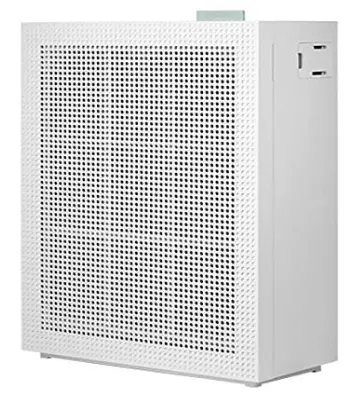
Priced between ₹10,999 and ₹12,499, it delivers a CADR of 303 m³/h across roughly 355 sq ft. The standout spec is its 8,500-hour filter life. That’s close to 1.5 to 2 years of use before you need a replacement, versus the industry-typical 6 to 12 months.
The Green True HEPA H13 filter carries anti-viral treatment and is one of the thickest in its class at 30mm, which is part of why it lasts so long.
Coway backs this unit with a 5- to 7-year warranty on the motor, unusually generous for this price segment, and a 4-colour LED air-quality indicator makes it easy to glance and know your room’s status without checking an app. Auto mode adjusts fan speed intelligently based on the built-in Smart Pollution Sensor, and it stays quiet enough on sleep mode for a bedroom.
The compromise is coverage at 355 sq ft; it’s built for a bedroom or a smaller living room, not an open-plan hall. If your space is bigger, you’ll want the Airmega 250 (pick #6 below) instead.
Pros: Class-leading 8,500-hour filter life; long motor warranty; quiet auto mode; South Korean build quality.
Cons: Limited to smaller rooms; no smartphone app.
Who should buy this: Bedroom buyers who want minimal filter-replacement hassle and the reassurance of a long manufacturer warranty.
Who should avoid this: Anyone covering a large living room or hall. This unit will run flat-out and still underperform in that space.
3. Honeywell Air Touch V3: Best for Allergies & Pets
Honeywell’s Air Touch V3 earns its spot here for one reason above all: it’s the purifier we’d trust most if something goes wrong. Honeywell has one of the widest after-sales service networks of any air-purifier brand in India, which matters enormously once your one-year warranty runs out and a filter or fan motor needs attention.
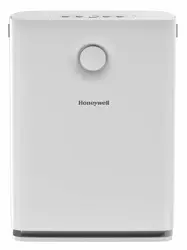
At ₹14,999, it runs a genuinely thorough 5-stage filtration system: a washable pre-filter, an H11 pre-HEPA stage, a True H13 HEPA filter, an activated carbon layer for odours, and a UV stage for additional pathogen deactivation. CADR sits at 300 m³/h across a coverage area of 387 sq ft, putting it comfortably in the same performance bracket as the Mi 4 and Philips AC1711.
Where it distinguishes itself is in households dealing with pet dander or a family member who smokes indoors. The thick activated carbon stage handles odour and VOC control noticeably better than thinner carbon-mesh filters in cheaper purifiers.
If someone in your home has allergies or mild asthma, the extra UV stage is a genuine (if modest) additional layer of protection, though it shouldn’t be mistaken for a substitute for HEPA filtration itself.
Pros: Excellent 5-stage filtration; strongest after-sales network in this price range; good odour control.
Cons: No smart app; slightly pricier than similarly specced rivals.
Who should buy this: Households with pets, smokers, or allergy sufferers who value strong after-sales support over app features.
Who should avoid this: Buyers chasing the lowest possible price. This sits at the upper end of the budget tier without a companion app to justify it for tech-focused users.
4. Philips AC1711: Best Budget Pick for Bedrooms
The Philips AC1711 is the purifier to buy if your priority is a genuinely quiet bedroom companion from a brand with an established, official Indian presence (marketed and serviced by Versuni India Home Solutions). It carries an MRP of ₹14,995, though it regularly sells for ₹12,000–₹13,500 during sales.
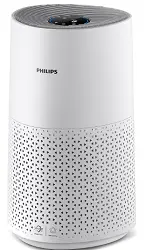
Specs are solid rather than flashy: a CADR of 300 m³/h across 380 sq ft (36 m²), a 3-layer system combining a pre-filter, NanoProtect HEPA, and activated carbon, and Philips’ claim of 99.97% particle removal down to 0.003 microns.
What actually makes this purifier stand out in daily use is the AeraSense sensor, which scans the air 1,000 times a second and displays a real-time, colour-coded AQI ring. This is genuinely useful for knowing at a glance whether your room needs the purifier on turbo or auto.
Noise is where this unit shines: as low as 15 dB in sleep mode, among the quietest we’ve tested, and it draws just 27W of power, comparable to a single incandescent bulb. It comes with a standard 2-year warranty backed by Philips’ Indian service network.
Pros: Genuinely quiet at 15 dB; official Indian brand and warranty; useful real-time AQI ring.
Cons: Coverage capped at 380 sq ft; no voice-assistant integration.
Who should buy this: Light sleepers and bedroom buyers who want an established brand name and near-silent night-time operation.
Who should avoid this: Anyone needing to cover a living room larger than 380 sq ft. This is a bedroom specialist, not a whole-home solution.
5. Mi Smart Air Purifier 4 Pro: Best Smart Purifier for Stubble-Burning Season
When Delhi-NCR’s AQI crosses 400 during the November stubble-burning spike, you want a purifier with headroom, not one running flat-out just to keep up. The Mi Smart Air Purifier 4 Pro, priced around ₹17,999, exists for exactly that scenario.
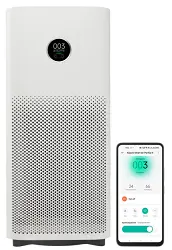
It bumps CADR up to 500 m³/h ( noticeably higher than the standard Mi 4 ), which means it clears a room faster and copes better with sudden pollution spikes rather than merely maintaining a steady state. The headline feature is an OLED display that shows real-time PM2.5 and temperature readings directly on the unit, useful if you don’t want to keep opening the Mi Home app to check.
It retains the same True HEPA H13 filtration and app-based scheduling as the standard Mi 4, making it a natural step-up rather than a different product line entirely. For households already invested in the Xiaomi/Mi smart-home ecosystem, this is arguably the smartest purifier per rupee available in India in 2026.
Pros: High 500 m³/h CADR; on-device OLED display; same reliable HEPA H13 filtration as the standard Mi 4.
Cons: Meaningful price jump over the base Mi 4 for a spec upgrade some users won’t need.
Who should buy this: Delhi-NCR households wanting extra CADR headroom for winter pollution spikes, or anyone already using Mi Home for other smart devices.
Who should avoid this: Buyers in cleaner cities where a 300 m³/h CADR purifier would comfortably suffice. The Pro’s extra power is wasted budget there.
6. Coway Airmega 250: Best for Large Living Rooms
Step up to the Coway Airmega 250 once your space exceeds what a bedroom-class purifier can handle. Priced between ₹26,990 and ₹28,990, it’s built for living rooms and open-plan halls, with a manufacturer-listed coverage of 930 sq ft (de-rate to a realistic ~650 sq ft in a typical Indian flat with door gaps and high ceilings).
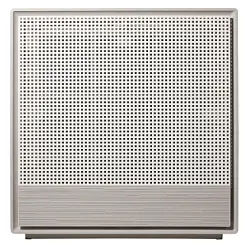
The double-suction design pulls air in from two sides rather than one, which noticeably speeds up how fast a large room clears after a smoky evening or a stubble-season spike. It uses the same Green True HEPA filtration lineage as the Airmega 150, and the built-in particle sensor drives a genuinely responsive auto mode rather than a gimmicky one.
This is a purifier for households that have outgrown a single bedroom unit and don’t want two separate machines running in the living room. It isn’t cheap, but per square foot of effective coverage, it’s competitively priced against premium alternatives like Dyson or Sharp.
Pros: Genuinely handles large rooms; fast double-suction airflow; Coway’s long warranty carries over.
Cons: Bulkier and pricier than bedroom-class purifiers; no smartphone app.
Who should buy this: Families with a large living room or open-plan hall who want one purifier rather than two smaller units.
Who should avoid this: Anyone purifying a single bedroom. You’re paying for coverage you won’t use.
7. Sharp FP-J80M-H: Best Premium Pick
Sharp’s FP-J80M-H, priced around ₹39,000, is the purifier we’d recommend to households dealing with pets, smokers, or a family member managing asthma who wants more than “just” HEPA filtration.
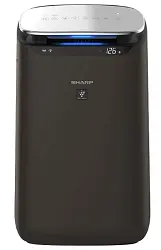
Its signature feature is Plasmacluster Ion technology, which actively releases ions to neutralise airborne bacteria, viruses, and mould spores in addition to the physical filtration handled by its HEPA and deodorising filters.
This dual approach ( filter plus active ion treatment) is genuinely differentiated from the purely filter-based purifiers elsewhere on this list, though it’s worth noting Plasmacluster should be treated as a supplementary layer, not a replacement for HEPA capture.
In daily use, it’s remarkably quiet, staying under 25 dB on sleep mode, and the haze mode specifically ramps performance for genuinely polluted conditions rather than a generic “auto” setting. Build quality feels appropriately premium for the price, and Sharp’s brand recognition in India (especially for appliances) gives some reassurance on long-term parts availability.
Pros: Plasmacluster ion technology adds a genuine extra layer; very quiet (<25 dB sleep mode); strong build quality.
Cons: Premium pricing; coverage isn’t dramatically more extensive than mid-range options.
Who should buy this: Households with pets, smokers, or asthma sufferers who want active ion treatment layered on top of HEPA filtration, and who value quiet night-time operation.
Who should avoid this: Budget-conscious buyers. At this price, the Coway Airmega 250 offers more raw coverage for less money if active ion technology isn’t a priority for you.
8. Dyson Purifier Cool PC1 (TP11): Best Design / Best 2-in-1
If you want one appliance that purifies your air and cools your room, the Dyson Purifier Cool PC1 (TP11), retailing at ₹39,900 through Dyson India’s official store, is the obvious pick. It combines a True HEPA H13 filter and activated carbon stack with Dyson’s bladeless fan technology, so it functions as both a purifier and a room fan without a second appliance taking up floor space.
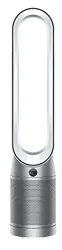
The Dyson Link app reports both indoor and outdoor AQI, letting you compare what’s happening in your room against the ambient pollution outside. A genuinely useful feature during pollution spikes when you’re deciding whether to open a window. It’s also, unsurprisingly, the best-looking unit on this list, with the minimalist design Dyson is known for.
The honest trade-off is running cost. Dyson filters cost roughly ₹5,500 a year to replace, meaningfully more than any other purifier here, and the purifying performance itself isn’t dramatically ahead of the Coway Airmega 250 at a lower price. You’re paying a real premium for the design, the dual fan-and-purifier function, and the Dyson brand.
Pros: Doubles as a room fan; sleek, minimalist design; app compares indoor vs outdoor AQI.
Cons: Expensive annual filter cost (~₹5,500); premium price doesn’t translate to proportionally higher CADR.
Who should buy this: Design-conscious buyers who want a genuine 2-in-1 purifier-and-fan for a living room, and who don’t mind the higher filter cost.
Who should avoid this: Anyone purely optimising for CADR-per-rupee. The Airmega 250 or Mi 4 Pro deliver comparable purification for meaningfully less money.
9. LEVOIT Core 300: Best for Compact Spaces & Personal Desks
The LEVOIT Core 300 remains a genuinely capable little purifier for a study table, a home office corner, or a compact bedroom, thanks to its H13 True HEPA filter, three-stage VortexAir filtration, and QuietKEAP motor technology that keeps operating noise low over years of use.
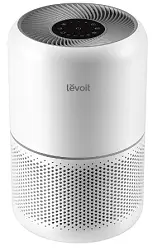
It captures 99.97% of particles including smoke, allergens, and pollen, and the activated carbon layer handles common household odours like cooking smells reasonably well.
Here’s the important caveat we think most Indian buying guides skip: LEVOIT is a US-market brand, and units sold in India typically arrive through third-party Amazon resellers rather than an official LEVOIT India entity.
That means no dedicated Indian service centre and no guarantee that a replacement filter will be readily available a year from now. A real concern given how the KuchBhi and BudgetAppliances guides both flag grey-market imports as the single biggest long-term mistake Indian buyers make.
We’re keeping it on this list because, for a small personal space where the purifier is a nice-to-have rather than a household’s primary defence against pollution, its compact size and genuinely good filtration make it worth the trade-off.
For a bedroom or living room that’s doing the heavy lifting for your family’s air quality, we’d steer you toward the Philips, Mi, or Honeywell options instead, purely because of local service and filter availability.
Pros: Compact and effective for small spaces; genuinely quiet QuietKEAP motor; solid HEPA H13 filtration.
Cons: No official Indian distributor; filter availability and warranty support depend on the third-party seller.
Who should buy this: Buyers wanting a compact purifier for a desk or small room who are comfortable sourcing filters online themselves.
Who should avoid this: Anyone wanting the reassurance of an official Indian brand warranty and easily available replacement filters for a primary household purifier.
Comparison Table: Best Air Purifiers in India 2026
| Product | Price (₹) | CADR (m³/h) | Coverage (sq ft) | Best For |
|---|---|---|---|---|
| Mi Smart Air Purifier 4 | 13,499–14,999 | 400 | ~360 (de-rated) | Best overall |
| Coway Airmega 150 | 10,999–12,499 | 303 | 355 | Best warranty & filter life |
| Honeywell Air Touch V3 | 14,999 | 300 | 387 | Allergies & pets |
| Philips AC1711 | 12,000–14,995 | 300 | 380 | Quiet bedrooms |
| Mi Smart Air Purifier 4 Pro | ~17,999 | 500 | ~400+ (de-rated) | Stubble-season spikes |
| Coway Airmega 250 | 26,990–28,990 | Higher (2× suction) | ~650 (de-rated) | Large living rooms |
| Sharp FP-J80M-H | ~39,000 | Mid-high | Mid-large | Premium/ion tech |
| Dyson Purifier Cool PC1 | 39,900 | Mid-high | Mid-large | Design / 2-in-1 |
| LEVOIT Core 300 | Varies (import) | Mid | Small-medium | Compact spaces |
Note: Prices fluctuate with festive sales; always verify the live price before purchase.
How to Choose the Best Air Purifier in India: Buying Guide
There are only four numbers that genuinely matter. Get these right, and it’s very hard to buy a bad purifier.
1. CADR (Clean Air Delivery Rate)
CADR tells you how fast the purifier actually delivers clean air, not just how big a room it’s rated for on the box. For a bedroom of 130–150 sq ft, look for a smoke CADR of at least 200 m³/h. For a 250–400 sq ft living room, aim for 300 m³/h or more. Anything under 180 m³/h is close to a token gesture against Delhi-grade winter pollution.
2. HEPA Grade: H11 vs H13 vs H14
Many budget purifiers advertise “HEPA-type” filters that are actually H11 grade, capturing only about 95% of particles. True HEPA H13 captures 99.95% and should be your realistic minimum in 2026. H14 (99.995%) is genuinely overkill for most homes and mainly useful for someone managing severe asthma or COPD.
3. Room Coverage: And Why You Should De-Rate It
Manufacturers quote optimistic coverage figures under lab conditions. A safer rule: subtract roughly 30% from any advertised coverage number. A purifier rated for “500 sq ft” will realistically manage about 350 sq ft in an Indian flat with high ceilings, door gaps, and open kitchens.
4. Filter Stack and Replacement Cost
Look for at least a 3-stage system: a washable pre-filter, an activated carbon layer for odours and VOCs, and a True HEPA H13 filter for particulates. Annual filter replacement in India typically costs ₹2,000–₹6,000. Factor this running cost into your budget, because it’s the expense most first-time buyers forget about.
5. Noise Level
Every purifier makes some fan noise, but the honest test is whether you’ll actually leave it running through the night. Anything above 35–40 dB on its lowest setting will disturb light sleepers. Check the sleep-mode dB rating specifically, not just the average.
6. ACH (Air Changes per Hour)
ACH tells you how many times per hour the purifier cycles the entire room’s air. If anyone in the household has asthma, look for a purifier capable of 5–6 ACH in your room size, not just the manufacturer’s headline coverage figure.
7. What to Avoid
Skip purifiers that rely primarily on UV or ionisation without a physical HEPA filter behind them. Some of these generate ozone as a byproduct, which is itself a lung irritant and can worsen asthma symptoms over time.
Ionisation as a supplementary feature (like Sharp’s Plasmacluster, layered on top of HEPA filtration) is a different, more defensible approach than relying on ionisation alone.
Common Mistakes to Avoid When Buying an Air Purifier
Buying on price alone for a large room. A ₹6,000 purifier in a 400 sq ft hall is essentially a paperweight. It will run constantly and still never catch up with the room’s air.
Ignoring filter replacement cost. A cheap purifier with an expensive or hard-to-find filter often costs more over three years than a pricier purifier with an efficient filter stack.
Choosing a grey-market import for your primary purifier. Products without an official Indian distributor can leave you stranded when the filter needs replacing a year in. We flagged this specifically with the LEVOIT Core 300 above.
Switching it off at night. Running your purifier 24×7 on auto mode uses roughly 30–60W, comparable to a ceiling fan, and costs about ₹150–₹300 a month in electricity. Turning it off defeats the purpose during the hours you’re actually breathing the room’s air most deeply.
Forgetting the pre-filter. A clogged pre-filter can roughly halve your purifier’s effective CADR. Vacuum or rinse the washable pre-filter every two weeks.
Expert Tips for Getting the Most Out of Your Air Purifier
- Keep doors and windows closed while it’s running. An open window is a losing battle against outdoor PM2.5.
- Place the purifier at least a foot away from walls and furniture so air can circulate freely around it.
- Register your purifier on the brand’s app or warranty portal within 30 days of purchase; several brands, including Coway and Honeywell, offer extended warranty bonuses for online registration.
- If you live in Delhi-NCR or another high-pollution city, plan on replacing HEPA filters every 6–8 months rather than the standard 12-month cycle.
Alternatives and Upgrade Picks
If none of the nine options above feels right, you still have a few alternatives to consider. Blueair and Xiaomi’s Mi ecosystem offer several models in the under-₹20,000 price range.
If formaldehyde removal is your priority, the Dyson HP09 Hot+Cool Formaldehyde is worth a look. It costs around ₹65,999 and also provides heating, which can be useful during North India’s colder winters.
Conclusion
The right air purifier for your home comes down to matching CADR and HEPA grade to your actual room size, then layering on the features like an app, a longer warranty, and active ion treatment that matter to your household.
For most Indian buyers, the Mi Smart Air Purifier 4 or Coway Airmega 150 are the smartest starting points. Step up to the Coway Airmega 250 or Mi 4 Pro for bigger rooms and winter pollution spikes, and reach for the Dyson or Sharp only once design and premium engineering matter more than the last few thousand rupees.
Whichever you choose, don’t put off the purchase. Every extra month spent breathing unfiltered indoor air is one your lungs, and your family’s, don’t get back, and with options starting well under ₹15,000, clean indoor air is now one of the most accessible health upgrades an Indian household can make.
Frequently Asked Questions
For most Indian homes, the Mi Smart Air Purifier 4 offers the best balance of CADR, filtration quality, and price. If you want a longer warranty and lower long-term filter costs, the Coway Airmega 150 is the stronger pick.
For a bedroom up to 150 sq ft, look for 200–300 m³/h. For a living room of 250–400 sq ft, aim for 300–450 m³/h. For an open-plan flat or larger hall, 500 m³/h or more is ideal. Always check smoke CADR specifically, since PM2.5 is India’s dominant indoor pollutant.
They do different jobs. An air conditioner regulates temperature; an air purifier removes contaminants like dust, smoke, pollen, and PM2.5 from the air you breathe. Some ACs include a basic filtration function, but it isn’t a substitute for a dedicated HEPA purifier.
Yes, most modern purifiers are built for continuous use. Power draw typically ranges from 30W in sleep mode to 60W on turbo, adding roughly ₹150–₹300 a month to your electricity bill. A reasonable investment for consistently cleaner air.
Most manufacturers recommend annual replacement, but in Delhi-NCR or other heavily polluted cities, plan for every 6–8 months. The washable pre-filter should be cleaned every two weeks regardless.
No. True HEPA filters cannot be washed. Doing so damages the fibre matrix and destroys their filtration efficiency. Only the outer pre-filter is designed to be washed or vacuumed.
The grade indicates filtration efficiency at 0.3 microns. H11 captures around 95% of particles, H13 captures 99.95%, and H14 captures 99.995%. H13 is the realistic minimum to look for in an Indian home in 2026.
Yes. A True HEPA H13 filter captures the dust, pollen, pet dander, and PM2.5 particles that commonly trigger allergy and asthma symptoms. For best results, pair it with an activated carbon layer to also handle odours and gaseous irritants, and avoid purifiers relying solely on ionisation or UV.
Consider following our Facebook page as well as our X handle to stay updated with our new articles.
Also, please share this information with your friends and relatives. Sign up for our free newsletter to stay up to date on the latest deals, offers, and ebooks.
Subscribe to be the first to learn about new information
Disclosure: We will get an affiliate commission on some, but not all, of the products or services we recommend if you follow our links to a retailer’s website and make a purchase. This does not affect your pricing.