Is a BLDC Mixer Grinder Worth It? Atomberg Zenova Review 2026
Quick Answer: A BLDC mixer grinder is worth buying if you want lower noise at everyday speeds, a longer-lasting motor, and precise speed control, and you’re willing to pay a ₹2,000–₹4,000 premium over a conventional mixer for it. It’s not worth buying purely to cut your electricity bill; a mixer grinder simply isn’t used long enough each day for the wattage savings to matter much financially.
We’ve already written a full article on BLDC fans, which has helped many readers understand what this motor technology actually changes in daily use.
BLDC mixer grinders apply the same underlying idea to the kitchen, and Atomberg remains the main brand bringing it to Indian homes with its Zenova mixer grinder.
We’ve spent time with this appliance and want to walk through exactly how a BLDC mixer grinder differs from a standard one, where it genuinely delivers, and where the marketing runs a little ahead of real-world performance.
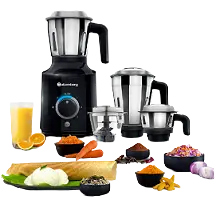
Atomberg Zenova BLDC Mixer Grinder for Kitchen with 4 Jars
The first BLDC-powered mixer grinder in India. Power consumption is lower (550W), and performance is higher.
What Makes a Mixer Grinder “BLDC”
A conventional mixer grinder uses a brushed universal motor, where carbon brushes physically contact a rotating commutator to keep the motor spinning. Those brushes wear down over time, generate friction heat, and are the main reason regular mixers eventually lose power or fail.
A BLDC (Brushless DC) motor removes that mechanical contact entirely, using electronic switching instead of brushes to control rotation.
Atomberg’s Zenova takes this further with what it calls an “Intelligent” BLDC motor, one that automatically adjusts RPM (from around 2,000 to 18,000) based on the jar fitted and the load detected, rather than running at one fixed speed regardless of what’s inside.
Related: Best BLDC Fans in India: Tested Picks & Buying Guide
Speed Control
This is genuinely one of the standout differences. Like Atomberg’s BLDC fans, the mixer grinder lets you select a much more precise speed range than a standard mixer’s simple 3-speed dial.
The Zenova’s Coarse Mode, running at roughly 5,000 RPM, is a particularly useful addition. It’s designed to replicate the texture of traditional stone grinding (sil-batta or ammikallu), which most conventional mixers simply can’t produce without manually pulsing the machine on and off.
We haven’t seen a genuinely comparable slow-speed mode on other mainstream mixer grinders, so if authentic chutney texture matters to you, this is a real point in the BLDC mixer’s favour.
Power Efficiency: Does It Actually Save Money?
The Zenova draws around 550W at full speed while Atomberg claims performance equivalent to a 1000W conventional mixer. Of course, it is a genuine efficiency gain in terms of watts-to-output.
However, the actual money saved is small in practice. Most households use a mixer grinder for only 15–20 minutes a day.
At that usage level, saving roughly 450W of draw works out to around 0.11–0.15 units of electricity per day, a modest few rupees, not a meaningful dent in your monthly bill.
If your primary reason for considering this appliance is cutting your electricity costs specifically, a BLDC mixer grinder isn’t the purchase that will get you there. The efficiency gain is real, but the appliance simply isn’t used often enough for it to translate into significant savings.
Lifespan and Motor Durability
BLDC motors are built to outlast brushed motors by design, since there are no brushes to wear down or replace over years of use. This should, in theory, make the Zenova’s motor more durable than a comparable conventional mixer’s over the long run.
That said, it’s worth being realistic about timeframes here: some conventional mixer brands, like Panasonic and Sujata, have well-documented real-world track records of 10–20 years of reliable use with proper care.
BLDC mixer grinders are still too new to India to have that same length of proven field data, even if the underlying motor theory favours them.
Noise Level: What Independent Testing Actually Found
The BLDC motor is noticeably quieter than a standard mixer at idle and at low or Coarse Mode speeds. This part of the noise advantage holds up well in practice. Owners commonly describe it as a soft hum rather than the higher-pitched whine typical of conventional motors.
However, independent 2026 lab testing found that during heavy grinding at higher speeds, the Zenova’s noise output is actually comparable to a standard 1000W mixer, not dramatically quieter as some marketing suggests.
If your main goal is a genuinely silent kitchen appliance for high-load daily grinding, temper your expectations accordingly. The quiet advantage is real, but it’s most noticeable at gentler speeds rather than across the board.
Using It on an Inverter or Solar Supply
Because BLDC motors have a lower starting current than brushed motors, the Zenova is genuinely easier and safer to run off a power inverter or solar setup than a conventional mixer grinder.
This is a real, practical advantage if you regularly cook during power cuts or run your kitchen partly on solar power.
Combined with its lower overall power draw, this makes it a sensible choice for households actively trying to reduce dependence on grid electricity, even if the direct electricity-bill savings from daily use are modest.
Related: BLDC Fan Lightning Protection: Does It Exist & How to Add It
Maintenance and Service Availability
Because there are no brushes to replace, day-to-day maintenance is simpler than with a conventional mixer. There’s less to physically wear out inside the motor housing.
Where you should be more cautious is after-sales service reach. Atomberg’s service network has expanded significantly since this article was first published, but as of 2026, it’s still notably stronger in metro cities than in Tier 2 and Tier 3 towns.
If you live outside a major city, it’s genuinely worth checking Atomberg’s service coverage for your specific pin code before buying, since a motor issue with no nearby technician can turn into a frustrating, drawn-out repair process.
Pros and Cons of BLDC Mixer Grinders
Advantages
- Genuine energy efficiency; lower power draw for comparable output, even if daily savings are modest, given typical usage time.
- Quieter at low and idle speeds, with a noticeably softer sound profile than conventional motors under light use.
- Longer motor lifespan by design, with no brushes to wear out over time.
- Precise, wide-range speed control, including a genuinely useful Coarse Mode for authentic chutney texture.
- Low routine maintenance, since there are no brushes to clean or replace.
- Reliable safety features, including jar-lock interlocks, no auto-restart after a power cut, and fault LED indicators for overload or overheating.
- Better suited to inverter/solar power thanks to a lower starting current.
Disadvantages
- Higher upfront cost; typically ₹2,000–₹4,000 more than a comparable conventional mixer grinder.
- Limited brand choice; Atomberg remains essentially the only mainstream BLDC option in India as of 2026.
- Service network still maturing outside metros; check local service availability before buying if you’re in a smaller city or town.
- Noise reduction is speed-dependent; quieter at idle and low speeds, but comparable to a 1000W mixer during heavy grinding.
- Dry grinding limitations for very hard spices, such as turmeric and similarly tough dry grinding reportedly come out coarser than on dedicated high-wattage mixers like Bosch or Sujata.
- A short learning curve; the interface and features differ somewhat from a conventional mixer, so expect a brief adjustment period.
How the Atomberg Zenova Compares to Regular Mixers
If a BLDC mixer isn’t the right fit, here’s how it stacks up against a couple of well-regarded conventional alternatives in a similar price bracket:
| Model | Motor | Price Band | Standout Feature | Best For |
|---|---|---|---|---|
| Atomberg Zenova | 550W Intelligent BLDC | ₹6,000–₹7,000 Price on Amazon | Coarse Mode, low noise at low speeds, energy efficiency | Quieter kitchens, inverter/solar homes, chutney texture |
| Bosch TrueMixx Pro | 1000W conventional | ₹4,000–₹4,500 Price on Amazon | Stone Pounding Technology, Active Flow Breaker for even mixing | Heavy-duty daily grinding at a lower price |
| Bajaj Military Series Rex | 750W conventional | ₹3,800–₹4,200 Price on Amazon | 5-year motor warranty, military-grade steel jars | Budget-conscious buyers want long warranty coverage |
The Zenova sits at a genuine price premium over both alternatives, and that premium buys you quieter everyday operation and lower running costs, not necessarily stronger raw grinding power for the toughest dry-grinding jobs.
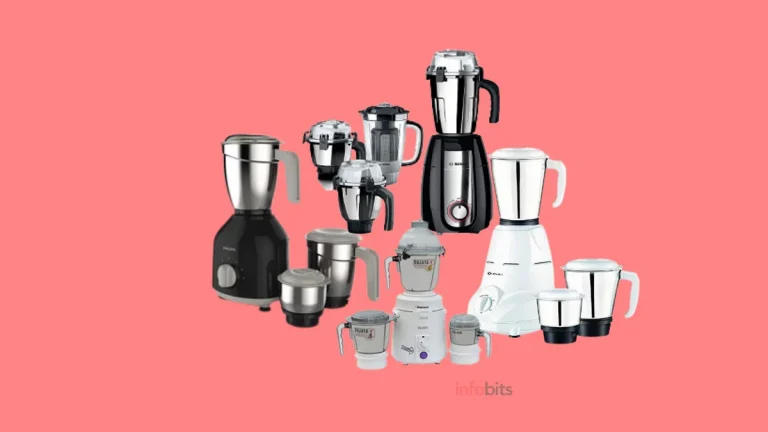
Related: Best Mixer Grinders in India | How to Select a Good Mixer Grinder?
Who Should (and Shouldn’t) Buy a BLDC Mixer Grinder
Consider the Atomberg Zenova if:
- You want a noticeably quieter kitchen for everyday, low-to-medium intensity grinding.
- You value the Coarse Mode’s authentic chutney texture.
- You run your kitchen partly on an inverter or solar power.
- You’re comfortable paying a premium for newer motor technology and don’t mind a smaller pool of service centres, especially outside major cities.
Consider a conventional mixer instead if:
- Your main goal is to reduce your electricity bill; the savings here are too small to justify the price difference on that basis alone.
- You frequently grind very hard, dry spices like turmeric in bulk, where dedicated high-wattage mixers still edge ahead.
- You live in a smaller town where Atomberg’s service network isn’t yet well established.
- You want a track record of 10+ years of proven reliability data, which established conventional brands like Panasonic and Sujata currently offer, and BLDC models don’t yet have.
Atomberg Zenova Special Edition Mixer Grinder for Kitchen with 4 Jars
The first BLDC-powered mixer grinder in India. Power consumption is lower (550W), and performance is higher.
Conclusion
A BLDC mixer grinder like the Atomberg Zenova is a genuinely good option for anyone prioritising quieter everyday operation, precise speed control, and a longer-lasting motor, and who’s willing to pay a modest premium for it.
The energy savings are real but small in absolute terms, so don’t buy one expecting a noticeable dent in your electricity bill.
Where the technology still falls a little short of the marketing is under heavy load. Noise levels converge with conventional mixers during hard grinding, and very tough dry spices still come out finer on dedicated high-wattage machines.
Go in with realistic expectations on those two points, and the Zenova remains a solid, forward-looking choice for most home kitchens.
Frequently Asked Questions
Yes, for most everyday Indian cooking tasks like chutneys, batters, and regular spice blends. For very hard, dry grinding like bulk turmeric, dedicated high-wattage conventional mixers like Bosch or Sujata still perform slightly better.
Yes, typically by around ₹2,000–₹4,000 compared to a similarly specced conventional mixer grinder. The premium reflects the BLDC motor technology and added smart features rather than raw grinding power alone.
Yes, they draw less power for comparable output, meaningfully, around 550W versus 1000W for similar performance. However, because mixer grinders are typically used only 15–20 minutes daily, the actual electricity bill savings are modest.
They’re noticeably quieter than conventional mixers at idle and low/Coarse Mode speeds. Independent testing has found that noise levels converge with a standard 1000W mixer during heavy, high-speed grinding, so the quiet advantage is speed-dependent rather than absolute.
As of 2026, yes, Atomberg remains the main mainstream brand offering a genuine BLDC-motor mixer grinder in India. Other brands have introduced different smart features, like thermal diagnostics or specialised grinding blade technology, but not BLDC motors specifically.
Yes, its lower starting current makes it genuinely easier to run on an inverter or solar power compared to a conventional mixer grinder, in addition to its overall lower power draw.
BLDC motors are designed to outlast brushed motors due to the absence of wearable brushes. However, since BLDC mixer grinders are relatively new to the Indian market, there isn’t yet the same length of proven real-world track record that established conventional brands like Panasonic or Sujata have built up.
Coarse Mode runs the motor at around 5,000 RPM to replicate the texture of traditional stone grinding (sil-batta or ammikallu), producing more authentic chutney texture than most conventional mixers can achieve without manual pulsing.
It handles regular spice blends and garam masala well, but independent reviews note that very hard dry grinding, like bulk turmeric, comes out slightly coarser than on dedicated high-wattage mixers like Bosch or Sujata models.
It includes jar-lock interlocks that prevent operation unless the jar is properly seated, no automatic restart after a power cut until manually reset, and a fault LED that indicates overload or overheating events.
Atomberg’s service coverage has expanded significantly but is still notably stronger in metro areas than in Tier 2/3 towns as of 2026. Check service availability for your specific pin code on Atomberg’s website before buying if you’re outside a major city.
The Zenova typically ships with four jars: a 1.5L liquidising jar, a 1L multipurpose jar, a 0.5L chutney/spice jar, and a 0.5L chopper jar for hands-free vegetable chopping.
It comes with a standard 2-year warranty, extendable to a third year if you register your purchase on Atomberg’s website.
No, given typical daily usage of 15–20 minutes, the electricity savings amount to only a few rupees a month, which won’t offset the higher upfront cost on its own. Consider a BLDC mixer for its noise, speed control, and durability benefits instead.
Yes, a modest one. The interface, speed settings, and safety interlocks differ somewhat from conventional mixers, so expect a short adjustment period even if you’re an experienced mixer grinder user.
We hope you found this guide on BLDC mixer grinders useful. Follow Infobits on Facebook, Instagram, and Twitter for more updates like this.
Subscribe to our free newsletter to get similar articles and regular updates directly in your Email Inbox.
Also, share this article with your friends and relatives. Bookmark this page for future reference.
Subscribe to be the first to learn about new information
Disclosure: We will get an affiliate commission on some, but not all, of the products or services mentioned in this article if you follow our links to a retailer’s website and make a purchase. This does not affect your pricing.
You May Be Interested to Read:
- Best Mixer Grinder in India | How to Select a Good Mixer Grinder?
- BLDC Fan vs. Normal Fan | Why Do We Need to Use BLDC Fans?
- How to Select a Mini Fridge? | Best Mini Refrigerators in India
- Best Air Purifier for Home in India | How to Select the Best Air Purifier?
- Best Wall Fans in India | How to Select a Good Wall Fan?