10 Best Smart Plugs in India (2026): Tested Picks for AC, Geyser & Daily Use
A smart plug is still the cheapest, fastest way to make your home “smart.” Plug it into any normal wall socket, connect it to Wi-Fi, and whatever you plug into it ( a fan, a geyser, a TV, an AC) instantly gets remote control, scheduling, and (on most models) energy monitoring.
We’ve used, researched, and cross-checked specifications for 10 of the most popular smart plugs sold in India right now, from mass-market names like Wipro and Tapo to budget picks like Lifelong and niche performers like Smarteefi.
This guide tells you which one actually fits your appliance, your budget, and your patience for buggy apps.
Quick note before you buy: in India, smart plugs come in two broad current ratings: 10A and 16A. A 10A plug is fine for TVs, routers, table fans, and chargers. For anything that heats or cools ( geysers, air conditioners, induction cooktops, room heaters), you need a 16A-rated plug, or you risk overheating the plug itself.
Quick Picks: Best Smart Plugs in India
Best Overall: Wipro 16A Wi-Fi Smart Plug
Best Premium Pick: Tapo P110 16A Smart Plug
Best for Light Appliances: Wipro 10A Smart Plug
Best Budget Pick: Zebronics ZEB-SP110 10A
Best from an Electrical Brand: Havells 16A Smart Plug
Best for Internet Outages: Qubo 10A Wi-Fi + BT Smart Plug
Best for Guaranteed Scheduling: Smarteefi 16A Smart Plug
Best Wide-Range Pick: Philips 6-16A Smart Plug
Best Made-in-India Value: AZIOT 16A Smart Plug
Best Ultra-Budget Pick: Lifelong 10A Smart Plug
Best Smart Plugs: Usage at a Glance
| Category | Product | Best For |
|---|---|---|
| Best Overall | Wipro 16A Wi-Fi Smart Plug | Balanced price, features, and brand support |
| Best Premium Pick | Tapo P110 16A Smart Plug | Polished app, universal pins, reliable performance |
| Best for Light Appliances | Wipro 10A Smart Plug | TVs, chargers, kettles, fans |
| Best Budget Pick | Zebronics ZEB-SP110 10A | Cheapest reliable option, child-safety shutter |
| Best from an Electrical Brand | Havells 16A Smart Plug | Buyers who trust Havells/Crabtree electricals |
| Best for Internet Outages | Qubo 10A Wi-Fi + BT Smart Plug | Wi-Fi + Bluetooth dual control |
| Best for Guaranteed Scheduling | Smarteefi 16A Smart Plug | Geysers/pumps on a strict timer, weak-internet homes |
| Best Wide-Range Pick | Philips 6-16A Smart Plug | One plug for both light and heavy appliances |
| Best Made-in-India Value | AZIOT 16A Smart Plug | Tapo-like features at a lower price |
| Best Ultra-Budget Pick | Lifelong 10A Smart Plug | Absolute lowest entry price |
1. Wipro 16A Wi-Fi Smart Plug: Best Overall
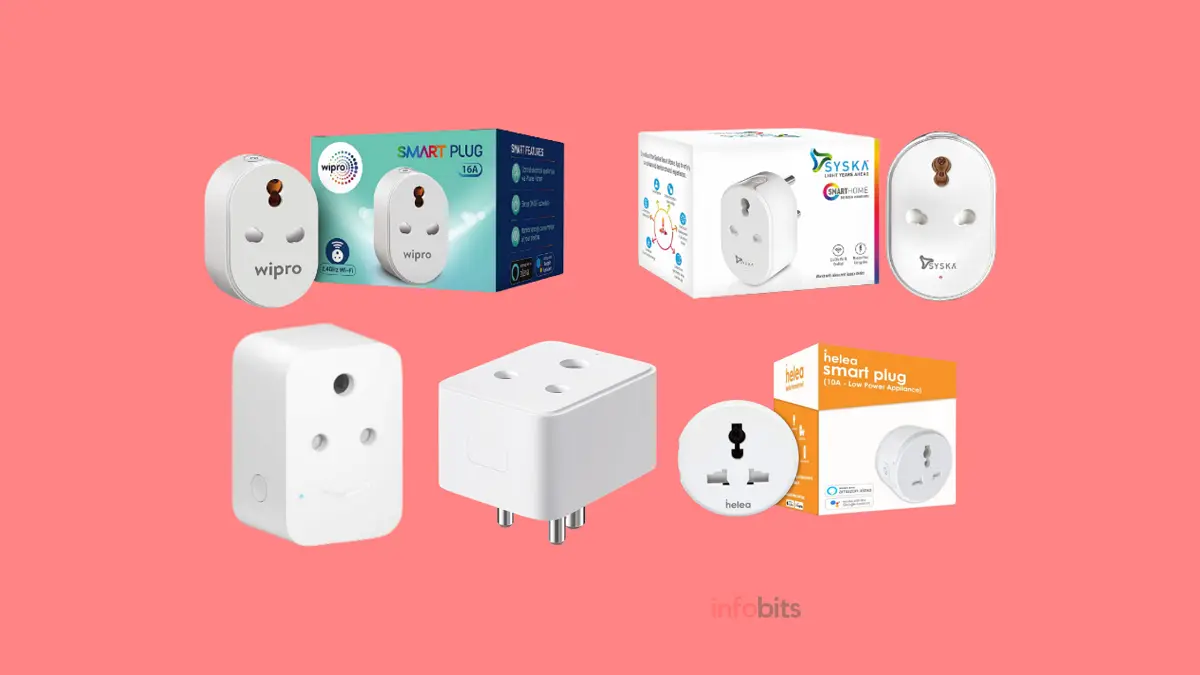
Wipro’s 16A smart plug remains the default recommendation for Indian buyers, and for good reason. It’s rated to handle geysers, microwave ovens, and air conditioners, and it pairs with the Wipro Next Smart Home app for scheduling, remote on/off, and real-time energy tracking.
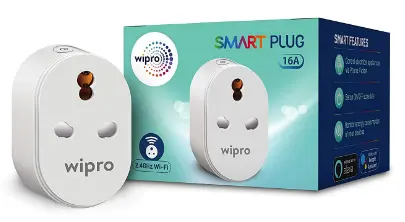
It also works with both Amazon Alexa and Google Assistant, and supports IFTTT for anyone who likes chaining automations across apps.
Setup doesn’t need a separate hub. It connects straight to your 2.4GHz Wi-Fi network. The white polycarbonate body is compact enough that it won’t block the socket next to it on a standard Indian switchboard, and it ships with a one-year manufacturer warranty.
One honest opinion: some recent buyers have flagged that the plastic housing feels less rugged than they expected from a 16A-rated device, especially under sustained high-load use like a running AC for hours.
If you’re powering a geyser that only runs in short bursts, this isn’t a concern. If you’re planning to run an AC through it all day, keep an eye on how warm the plug gets in the first few weeks, and prefer well-ventilated sockets.
Also worth knowing: Wipro’s own scheduling only triggers automations at the exact time set. It doesn’t re-apply a missed schedule after a power cut, unlike some rival apps. If that matters to you, Smarteefi (further down this list) handles it better.
Who should buy this: Anyone who wants one reliable, well-supported smart plug for a geyser or AC without hunting for niche brands.
Who should avoid this: Buyers who need guaranteed schedule execution through power cuts; look at Smarteefi instead.
2. Tapo P110 16A Wi-Fi Smart Plug: Best Premium Pick
TP-Link’s Tapo P110 is arguably the most refined app experience on this list. It supports remote control, scheduling, countdown timers, and detailed energy monitoring with clean, readable graphs. This feature is genuinely more useful than most rivals if you actually want to track what a device is costing you in electricity.
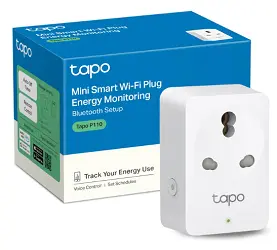
Its single-piece, mini-sized build avoids overheating issues and doesn’t hog neighbouring socket space. The universal pin design means it fits most Indian socket types without an adapter, and it includes 4-way safety shutters that stop kids from poking fingers or objects into the plug.
Setup uses Bluetooth to pair faster, and no separate hub is needed. It works with Alexa and Google Assistant, and also has an “Away Mode” that randomly toggles a connected lamp to simulate someone being home.
Reviews are largely positive on ease of setup, though a small number of buyers have reported dead-on-arrival units. As with any electronics purchase, it’s worth testing the plug within the return window.
Who should buy this: Anyone comparing 2-3 options and wants the most polished app and safety features, and doesn’t mind paying slightly more than Wipro.
Who should avoid this: Extreme budget buyers. Zebronics or Lifelong will save you money if energy monitoring isn’t a priority.
3. Wipro 10A Smart Plug: Best for Light Appliances
This is Wipro’s smaller-capacity sibling, built specifically for low-power devices like TVs, electric kettles, table fans, mobile and laptop chargers, set-top boxes, and air purifiers.

It runs on the same Wipro Next app as the 16A model, so you get the same scheduling, remote control, energy monitoring, Alexa/Google Assistant support, and IFTTT compatibility; just at a current rating that suits everyday electronics rather than heavy appliances.
Because it’s not rated for geysers or ACs, it also tends to run cooler and is a sensible choice if you only need automation for smaller loads and want to save some money over the 16A variant.
Who should buy this: Buyers automating TVs, fans, chargers, and other sub-10A devices who don’t need heavy-appliance support.
Who should avoid this: Anyone planning to eventually add a geyser or AC to their smart home. Buy the 16A version instead so you don’t need two different plugs.
4. Zebronics ZEB-SP110 Smart Wi-Fi Plug: Best Budget Pick
The ZEB-SP110 is Zebronics’ entry into smart plugs, controlled through the ZEB-Home app, and it works with a wide range of appliances such as TVs, refrigerators, washing machines, lights, and more.
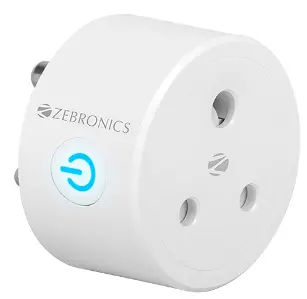
It supports voice control via Alexa and Google Assistant, and includes a child-safety shutter, which is a genuinely useful touch if you have young kids at home.
It supports timers and schedules, and the app includes a slightly unusual feature: a countdown that can trigger if the ambient temperature crosses a set threshold. The build is a bit bulkier than a standard socket but has a polished finish.
The compromise for the low price: this plug does not have energy monitoring, and it’s rated at 10A, not 16A. So it isn’t meant for geysers, ACs, or other heavy-draw appliances. Treat it purely as an on/off and scheduling device for everyday electronics.
Who should buy this: Budget-focused buyers who mainly want remote on/off and scheduling, and don’t care about tracking power consumption.
Who should avoid this: Anyone who wants to monitor electricity usage; pick Tapo, Wipro, Qubo, or AZIOT instead, all of which include energy monitoring.
5. Havells 16A Wi-Fi Smart Plug: Best from an Electrical Brand
Havells’ smart plug (sold under the Crabtree brand as the ACST161603) is a relatively recent entrant, but it comes from a company most Indian households already trust for switches, wiring, and electrical safety, which matters when you’re plugging in a geyser or AC.
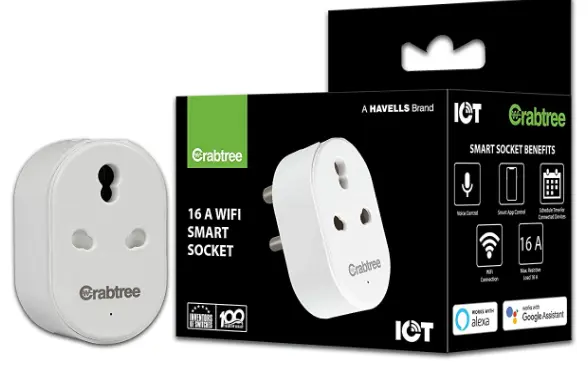
It connects directly to 2.4GHz Wi-Fi without a hub, handles ACs, geysers, motors, TVs, kettles, fans, set-top boxes, and air coolers, and includes a built-in fuse for overload protection.
The Havells DigiTap app supports remote control, scheduling, and energy consumption tracking, and the plug works with both Alexa and Google Assistant.
We’d be doing you a disservice not to flag this clearly: a meaningful number of recent buyers have reported compatibility headaches, particularly with pairing the plug reliably to Android phones and with Alexa integration not working as expected.
If you go this route, test the setup process thoroughly within your platform’s return window before relying on it for something like a geyser schedule.
Who should buy this: Buyers who specifically want an established Indian electrical brand behind their smart plug and are comfortable troubleshooting app setup.
Who should avoid this: Anyone who wants the smoothest possible out-of-box experience; Tapo or Wipro are more consistently trouble-free.
6. Qubo 10A Smart Plug: Best for Internet Outages
Qubo (from Hero Group) makes one of the more thoughtfully designed smart plugs on this list. It’s built for light appliances ( TVs, kettles, table fans, lamps, air purifiers ), and its standout feature is dual Wi-Fi and Bluetooth connectivity.
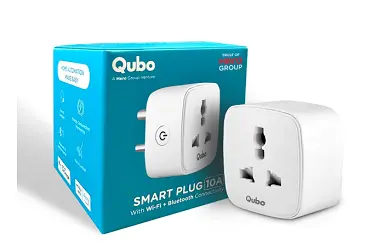
When your broadband goes down (which, in India, happens more than any of us would like), Bluetooth lets you still control the plug locally from within the room, instead of losing control entirely.
The compact form factor is genuinely well thought out. It won’t block adjacent sockets on a multi-socket extension board, which is a common complaint with bulkier smart plugs.
It includes real-time energy monitoring with graphical usage data, supports Alexa and Google Assistant, and lets you group multiple devices for single-tap control. Setup needs no wiring or professional help.
Reviewers consistently praise the build quality for the price, though a few have noted the plug forgets timer settings during a power outage since it lacks a backup battery, and that surge protection is not included.
Who should buy this: 1-2 BHK apartment dwellers who want reliable local control even when the internet is patchy, for everyday electronics.
Who should avoid this: Anyone needing to power a geyser or AC; Qubo’s 10A rating isn’t built for that (Qubo does sell a separate 16A version if you want to stay in the same ecosystem).
7. Smarteefi 16A WiFi Smart Plug: Best for Guaranteed Scheduling
Smarteefi is a smaller, more specialised Indian brand, but this particular plug does something none of the mainstream competitors does well. It has a built-in clock chip, so your schedules and countdown timers run independently of your internet connection or even a power cut.
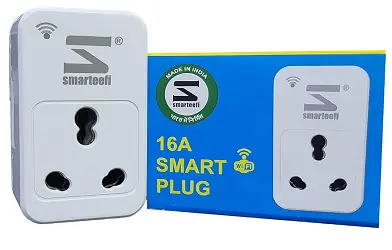
Set a geyser to switch off after 20 minutes, and it will switch off after 20 minutes, whether your Wi-Fi is working or not.
This makes it genuinely useful for farmhouses, terraces, or any location with unreliable connectivity, and for appliances where a missed shutoff (like an unattended geyser or water pump) is a real safety concern.
It also offers real-time voltage, current, and power readings, works with Alexa and Google Assistant, and is rated for heavy loads like ACs up to 2 ton, geysers up to 3kW, and water motors up to 1HP.
It typically costs more than Wipro or Tapo’s equivalent 16A models, and the app, while functional, is less visually polished than Tapo’s. Some users have also noted the physical build is more basic than premium alternatives.
Who should buy this: Anyone automating a geyser, water pump, or motor where a schedule absolutely must fire on time, internet or not.
Who should avoid this: Casual buyers who just want app-controlled on/off for a lamp or TV. This plug’s strengths are wasted on light-duty use.
8. PHILIPS 6-16A Smart WiFi Plug: Best Wide-Range Pick
Philips’ smart plug (powered by the WiZ ecosystem) stands out for its flexible 6-16A rating, meaning one plug covers both low-power gadgets and heavy-duty appliances like ACs, geysers, and water pumps; you don’t need to pick a current rating in advance.
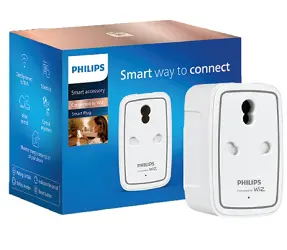
It’s built with a universal pin, surge protection, and fire-resistant materials, and Philips markets it as designed specifically for Indian voltage conditions.
It connects to Wi-Fi without an external hub, and the Wiz app supports scheduling, timers, and voice control via Alexa and Google Assistant. It also plays well with other WiZ-connected devices for scene automation. This is very useful if you already own Philips WiZ smart bulbs.
Reviewers generally rate the setup experience and app reliability well, with several using it specifically for scheduling EV chargers or geysers.
Who should buy this: Buyers who already use Philips WiZ lighting, or who want a single plug that comfortably spans light and heavy appliances.
Who should avoid this: Strict budget shoppers. This sits at the pricier end of the list.
9. AZIOT 16A Smart Plug: Best Made-in-India Value
AZIOT is a newer Made-in-India brand built on the Tuya/SmartLife platform, which means it works not just with Alexa and Google Assistant but also with Samsung SmartThings and Home Assistant.

It is useful if you’re building a more advanced smart home setup rather than a single isolated plug. It offers Wi-Fi and Bluetooth control, real-time energy monitoring, and over-voltage/over-current protection for heavy appliances like geysers, microwaves, and ACs.
Several buyers directly compare it to the Tapo P110 and describe it as a comparable alternative at a noticeably lower price, with responsive after-sales support and warranty repairs actually being honoured. A minority of reviews mention occasional inaccuracies in the energy readings and slower Bluetooth pairing.
Who should buy this: Value-conscious buyers who want Tapo-like features and SmartThings/Home Assistant compatibility without paying TP-Link’s price.
Who should avoid this: Buyers who strongly prefer an established, decade-old brand name over a newer Indian challenger.
10. Lifelong 10A Smart Power Plug: Best Ultra-Budget Pick
Lifelong’s smart plug is the cheapest reliable option on this list, aimed squarely at small appliances: TVs, electric kettles, table fans, set-top boxes, and air purifiers. It works with Alexa and Google Assistant, supports scheduling, and has a physical on/off switch on the unit itself for manual control when you don’t want to open the app.
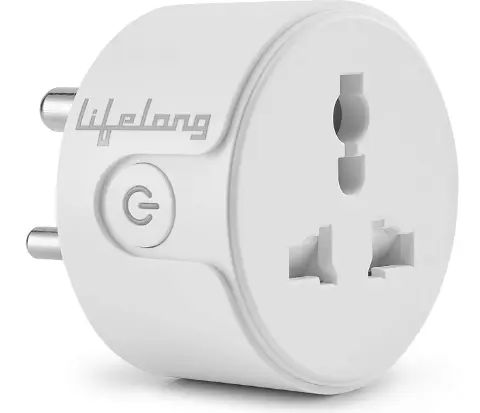
It’s a genuinely Indian-manufactured product, which reviewers appreciate, and setup over 2.4GHz Wi-Fi is straightforward.
That said, at this price point you’re trading away some polish: several buyers report the companion app hasn’t been updated in a while and can feel clunky, and, importantly, it does not offer meaningful energy-monitoring detail the way Tapo, Wipro, or Qubo do, despite being marketed alongside “smart” features.
Who should buy this: First-time smart-home buyers who want to try automation on 2-3 devices without spending much, and don’t care about tracking power usage.
Who should avoid this: Anyone who specifically wants energy monitoring, or who has been burned before by apps that stop getting updates. Spend a bit more on Tapo or Wipro for long-term reliability.
How We Evaluated These Smart Plugs
We assessed each smart plug on installation ease, app quality, voice-assistant compatibility, current rating suitability, safety features (child shutters, surge/overload protection, fire-resistant housing), and, where available, real customer feedback on long-term reliability rather than just first-impression reviews.
Pricing was checked across Amazon, Flipkart, and brand websites, and reflects typical selling prices rather than inflated MRPs, which are frequently discounted 40-60% at checkout in this category.
Buying Guide: What to Look for in a Smart Plug
1. Current Rating (6A / 10A / 16A)
This is the single most important spec. A 10A plug is meant for lights, fans, TVs, chargers, and similar low-draw electronics.
A 16A plug is built for appliances that draw heavy current like geysers, air conditioners, induction cooktops, room heaters, and washing machines. Using a 10A plug for a geyser is a genuine fire risk; always check the plug’s rating against your appliance’s power draw before buying.
2. Energy Monitoring
If you want to actually see how much a device is costing you to run, look for plugs with real-time energy monitoring in the app. Tapo, Wipro, Qubo, Havells, Philips, Smarteefi, and AZIOT all offer this. Zebronics and Lifelong, on this list, do not offer meaningful energy tracking.
3. Platform and Voice Assistant Compatibility
Every plug on this list works with both Amazon Alexa and Google Assistant. If you’re already deep into a specific ecosystem, Samsung SmartThings or Home Assistant, for example, AZIOT’s Tuya-based platform gives you broader compatibility than most brand-locked apps.
4. Offline Reliability
Standard smart plugs depend entirely on your internet connection for scheduling. If your Wi-Fi is unreliable, or you’re automating something safety-critical like a geyser or water pump, prioritise a plug like Smarteefi that stores schedules locally, or Qubo, which falls back to Bluetooth when Wi-Fi drops.
5. Safety Certifications and Build
Look for fire-retardant housing (explicitly mentioned by Tapo, AZIOT, and Philips), child-safety shutters (Tapo, Zebronics), and overload/surge protection. Given that many of these plugs will power appliances running unattended, don’t compromise on this to save a few hundred rupees.
Common Mistakes to Avoid
- Buying a 10A plug for a geyser or AC. This is the most common and most dangerous mistake. Always check the plug’s amperage against your appliance’s rated load.
- Assuming all smart plugs have energy monitoring. Several budget options (Zebronics, Lifelong) skip this feature entirely, despite being marketed as “smart.”
- Ignoring the app’s power-cut behaviour. Some apps (like Wipro’s) won’t re-trigger a missed automation after an outage; others (like Smarteefi’s) will. If you’re automating something safety-relevant, this distinction matters.
- Overcrowding a single socket board with multiple bulky smart plugs. Compact designs like Tapo, Qubo, and Wipro avoid blocking neighbouring sockets. Bulkier plugs like Zebronics can crowd out adjacent outlets.
Expert Tips
- If you’re automating a geyser, pair a 16A smart plug with the plug’s built-in scheduling rather than solely relying on voice commands. This ensures the geyser switches off even if you forget to say “turn off.”
- Check whether your existing switchboard uses a 5-amp or 15-amp Indian standard socket; some smart plugs (like Havells’ 16A model) only fit Power sockets and not universal ones.
- If you plan to buy more than 2-3 smart plugs, staying within a single brand’s ecosystem (like Tapo or Qubo) makes multi-device grouping and scene automation far simpler than mixing brands.
Conclusion
A smart plug is one of the easiest and most affordable ways to make your home smarter. It lets you control your appliances from anywhere, set schedules, reduce unnecessary power consumption, and add extra convenience to your daily routine.
However, choosing the right model is important. Always match the plug’s current rating with your appliance. A 10A smart plug is suitable for TVs, fans, routers, and other small appliances, while a 16A smart plug is the safer choice for heavy appliances like air conditioners, geysers, room heaters, and microwave ovens.
If you want the best all-round option, the Wipro 16A Smart Plug offers an excellent balance of features, reliability, and value for money. The Tapo P110 is ideal if you prefer a polished app experience with detailed energy monitoring. For buyers on a tight budget, the Zebronics ZEB-SP110 and Lifelong Smart Plug are good choices for basic home automation.
Quick Picks Summary:
| # | Product | Category | Rating | Energy Monitoring |
|---|---|---|---|---|
| 1 | Wipro 16A Wi-Fi Smart Plug | Best Overall | 16A | Yes |
| 2 | Tapo P110 16A Smart Plug | Best Premium Pick | 16A | Yes |
| 3 | Wipro 10A Smart Plug | Best for Light Appliances | 10A | Yes |
| 4 | Zebronics ZEB-SP110 | Best Budget Pick | 10A | No |
| 5 | Havells 16A Smart Plug | Best from an Electrical Brand | 16A | Yes |
| 6 | Qubo 10A Wi-Fi + BT Smart Plug | Best for Internet Outages | 10A | Yes |
| 7 | Smarteefi 16A Smart Plug | Best for Guaranteed Scheduling | 16A | Yes |
| 8 | Philips 6-16A Smart Plug | Best Wide-Range Pick | 6-16A | Yes |
| 9 | AZIOT 16A Smart Plug | Best Made-in-India Value | 16A | Yes |
| 10 | Lifelong 10A Smart Plug | Best Ultra-Budget Pick | 10A | No (limited) |
Frequently Asked Questions
The Wipro 16A plug is an excellent choice for heavy-duty appliances. Similarly, its 10A counterpart is an excellent choice for general-purpose applications. Both of them operate perfectly, are simple to set up, and are of high quality. It is compatible with Google Assistant, Alexa, and Wipro Next Smart Home.
Through voice assistants and smart applications, smart plugs can let you manage your plug-connected devices and appliances. As a result, these smart plugs enable you to operate your appliances without having to reach them and conserve energy by allowing you to turn off appliances that may be consuming electricity while on standby.
Smart plugs allow you to remotely manage your equipment, making it easy to turn on appliances even while you’re not at home. The smart plugs are controlled by a manufacturer-created application, and you may manage the power of your appliances with the press of a button.
Smart plugs convert many connected devices and appliances into more energy-efficient goods. There are several items in our houses that we forget to switch off, such as televisions, lamps, fans, other electronic devices, and air conditioners. And they simply consume our electricity without our knowledge. Smart plugs, on the other hand, transform them into energy-saving devices because they can be controlled from anywhere. Smart plugs assist in keeping your money in your pocket.
If you want to automate your home or devices, smart plugs can let you control your plug-connected gadgets and appliances via voice assistants and smart apps. These smart plugs allow you to use your appliances without having to reach them and save energy by turning off gadgets that may be consuming electricity while on standby.
Go with a 16A-rated plug. The Wipro 16A, Tapo P110, Havells 16A, Smarteefi 16A, Philips 6-16A, or AZIOT 16A all qualify. If your geyser runs unattended and you want the schedule to fire reliably even during connectivity issues, Smarteefi’s built-in clock is the strongest choice.
Always use a minimum 16A-rated plug for an air conditioner. Wipro, Tapo P110, Havells, Philips, and AZIOT are all rated for this. Avoid 10A plugs like the Zebronics ZEB-SP110, Qubo 10A, or Lifelong 10A for AC use.
Most smart plugs need Wi-Fi for remote control and scheduling. Qubo’s 10A plug adds Bluetooth as a local fallback, and Smarteefi’s plugs store schedules on a built-in clock so they execute even without internet. Both are good picks if your connectivity is unreliable.
No. Smart plugs typically consume 0.3-0.4 watts on standby, occasionally up to 2 watts, negligible compared to most connected appliances, and far outweighed by the savings from remembering to switch things off.
Yes, as long as you match the plug’s current rating to your appliance and buy from a reputable brand with overload/surge protection. Avoid unbranded or unusually cheap plugs with no visible certification, especially for heavy appliances.
The terms are largely used interchangeably in India. Technically, a smart plug is portable and needs no wiring. You simply plug it into an existing socket. A smart socket (or smart switch) is usually wired permanently into your electrical board.
Decent smart plugs with energy monitoring and safety certification start around ₹700-900 (AZIOT, Wipro 10A, Qubo 10A) and go up to ₹1,000-1,600 for premium options like Tapo P110, Philips, or Smarteefi. Ultra-budget options without energy monitoring, like Lifelong or Zebronics, can be found for under ₹700.
Tapo’s app is the most polished, with clean energy-usage graphs and reliable Bluetooth-assisted setup. Wipro’s app is close behind and better supported by Indian customer service. Smarteefi and Zebronics apps are functional but less refined visually.
We hope this guide has helped you find the right smart plug for your home. Before buying, compare the latest prices, check compatibility with your appliances, and read recent customer reviews.
If you found this article useful, share it with your friends and family, and follow Infobits for more buying guides, product reviews, and smart home tips. Found a smart plug that deserves a spot on this list? Let us know, and we’ll test it for a future update.
Don’t forget to share this information with your friends and relatives. Also, consider following our Facebook and Twitter pages for regular updates.
Subscribe to our free newsletter so that you will get similar articles and regular updates directly in your Email.
Subscribe to be the first to learn about new information
Disclosure: If you click on any of the links in this article to go to a retailer’s website and make a purchase, we will receive an affiliate commission for some, but not all, of the products or services we recommend. This will not affect your buying price.