WebOS vs Fire TV (2026): Which Smart TV Platform Is Right for You?
Quick answer: WebOS is the operating system built into LG televisions. Fire TV is Amazon’s streaming platform, available as an add-on stick (Fire TV Stick) or built into budget smart TVs from brands like Onida and Redmi. If you already own, or are buying, an LG TV, you’re using webOS, and there’s no separate “Fire TV vs webOS” purchase decision to make. If you own any other TV brand and want a faster, more app-rich interface, Fire TV is the streaming device you’d add to it.
The real decision most readers are actually facing is: should I buy an LG TV for its built-in webOS, or buy a cheaper TV and pair it with a Fire TV Stick? This guide answers both questions.
If you’ve landed on this comparison, there’s a good chance you’re mixing up two different kinds of products, and that mix-up matters more than any feature on either platform. Let’s clear that up first, then get into the details that actually affect your daily viewing.
WebOS and Fire TV Aren’t Really the Same Category
Here’s something most comparison articles gloss over. webOS is an operating system baked into a television, while Fire TV is primarily a separate streaming device that plugs into any TV’s HDMI port.
Amazon does license Fire TV to some budget TV brands in India. Onida and Redmi have sold Fire TV Edition smart TVs. But the vast majority of Fire TV usage in India comes from the Fire TV Stick, a ₹3,000–₹7,000 dongle you buy separately.
So the honest framing isn’t “webOS vs Fire TV” as two competitors slugging it out for the same slot. It’s closer to two different shopping decisions:
- Buying a new TV? If you pick LG, you get webOS. No stick required, no extra cost.
- Already own a TV (any brand) and want a better smart interface? A Fire TV Stick is one of the cheapest, fastest ways to upgrade it.
Once you frame it this way, most of the “which is better” confusion disappears. The rest of this guide compares them on the merits that actually matter for each scenario.
Related: Google TV vs Android TV: What’s the Real Difference?
WebOS vs Fire TV: Full Comparison Table
| Parameter | WebOS (LG) | Fire TV (Amazon) |
|---|---|---|
| What it is | Built-in OS on every LG smart TV | Streaming stick, cube, or licensed smart TV OS |
| How you get it | Comes with the TV; no separate purchase | Buy a Fire TV Stick (₹3,499–₹6,499) or a Fire TV Edition TV |
| Latest version (2026) | webOS 26 | Fire OS 8 (older devices) / Vega OS (new sticks) |
| Interface style | Card-based launcher bar at the bottom of the screen | Full-screen, content-first grid with a promotional carousel on top |
| Voice assistant | LG ThinQ AI via Magic Remote | Alexa, built into every remote |
| App store | LG Content Store | Amazon Appstore |
| JioHotstar support | Native app available | Native app available |
| Sideloading/custom apps | Not supported (closed platform) | Supported on Fire OS devices; blocked on newer Vega OS sticks |
| Software updates | Up to 5 years via the webOS Re:New program | Ongoing, but tied to Amazon’s hardware refresh cycle |
| Ads on home screen | Screensaver and Home Promotion banners (can be limited in settings) | Prominent rotating banner across the top third of the screen |
| Data collection | Live Plus (ACR); opt-out available in settings | Amazon collects viewing/usage data per its privacy policy |
| Smart home hub | LG Home Hub with Homey integration | Alexa smart home skills |
| 4K/HDR support | Yes, on 4K/8K model variants | Yes, on Fire TV Stick 4K and 4K Max |
| Best for | Buyers choosing their next LG television | Anyone upgrading an existing TV cheaply, or wanting Alexa-first control |
Note: Feature availability can change with software updates; this table reflects the position as of 2026.
What Is WebOS?
WebOS began life at Palm, passed briefly through HP, and has been LG’s smart TV platform since 2013. Every LG television sold today, from an entry-level 32-inch HD set to the flagship OLED G-series, runs some version of webOS.
The signature feature is the card-based launcher: a horizontal row of app “cards” that slides across the bottom of the screen. It’s designed to get you from live TV to Netflix to your last HDMI input in one or two clicks, using the point-and-click Magic Remote instead of a directional pad.
LG has also been unusually committed to keeping older TVs current. Since 2024, the webOS Re: New program has guaranteed most LG TVs up to five years of full OS upgrades. Not just bug fixes, but entirely new webOS versions with new features.
webOS 26, the 2026 release, added a redesigned Home Hub with Homey smart-home integration, a Kids Mode for parental content restrictions, and general performance improvements, and LG has committed to rolling it out to eligible 2022–2025 TVs as well as new sets.
Related: WebOS vs Android TV: Which Smart TV OS Is Best for Your TV?
What Is Fire TV?
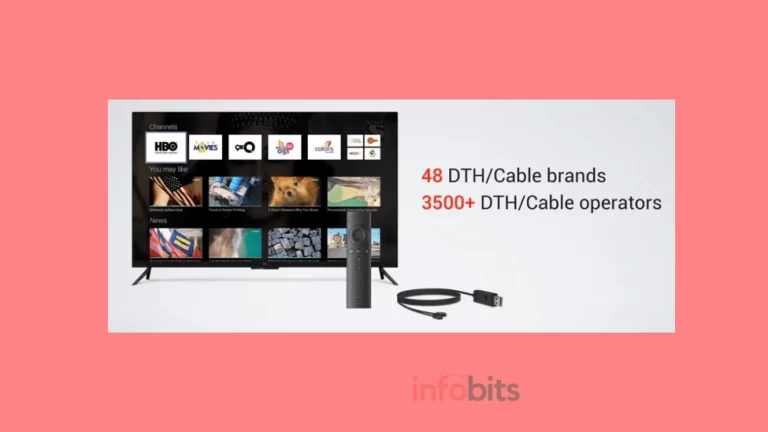
Fire TV is Amazon’s streaming platform. Unlike webOS, it isn’t tied to one hardware brand. You’ll find it in three forms:
- Fire TV Stick – the plug-in dongle most Indian buyers actually own (Lite, HD, 4K, and 4K Max variants)
- Fire TV Cube – a set-top box with hands-free Alexa
- Fire TV Edition smart TVs – TVs from partner brands like Onida with Fire TV built in, similar to how webOS is built into LG sets
The interface leads with content recommendations rather than an app grid. The home screen surfaces shows and movies based on your viewing history, with a navigation bar for installed apps below.
One genuinely important 2026 development: Amazon is transitioning new Fire TV Sticks from Android-based Fire OS to a new in-house Vega OS. The Fire TV Stick HD launched in 2026 already ships on Vega.
Vega is faster and more resource-efficient, but it currently blocks sideloading third-party APKs; a capability some Fire TV users relied on for apps not officially listed.
If you depend on sideloaded apps, check which OS a specific Fire TV Stick model runs before buying. Older Fire OS-based sticks (like the Fire TV Stick 4K Max) still support it, but Amazon has signalled this is a transition, not a one-off.
Interface and Navigation
WebOS’s card-based system is built for speed. Apps stay “warm” in the background, so switching between Netflix and a live HDMI source rarely means a cold restart. The customizable home row means your five most-used apps can sit right where your thumb expects them.
Fire TV’s interface is optimised differently. It wants you to discover something to watch, not just relaunch what you already have open. That’s great if you like being shown new content. It’s mildly frustrating if you already know exactly what you want to watch and have to scroll past a promotional banner to get to your apps.
Neither is objectively “better” here. It depends on whether you want a fast app-switcher (webOS) or a content-discovery front page (Fire TV).
Performance and Speed
Modern webOS TVs are consistently snappy, helped by LG tuning the software to its own hardware. Fire TV Stick performance depends heavily on which stick you buy. The entry-level Fire TV Stick HD is noticeably slower than the Fire TV Stick 4K Plus, which Amazon claims is around 40% more powerful than the standard Fire TV Stick 4K Select.
If you’re buying a Fire TV Stick specifically for smoother multitasking and faster app launches, it’s worth paying the difference for the Fire TV Stick 4K Plus rather than the base Fire TV Stick. The RAM and CPU bump make a genuine difference in day-to-day use, and Amazon’s Wi-Fi 6 support on the Max helps a lot if your home router supports it too.
Apps and Content in India (Including JioHotstar)
App coverage is close to a tie for the streaming services most Indian households actually use. Both platforms carry Prime Video, Netflix, JioHotstar (the merged Disney+ Hotstar and JioCinema service, live since February 2025), SonyLIV, Zee5, and YouTube.
Where they diverge is in the long tail:
- WebOS’s LG Content Store covers the mainstream apps well but can lag on niche or newly launched regional apps.
- Fire TV’s Amazon Appstore has a larger overall catalogue, partly because Fire OS’s Android lineage made it easier for smaller developers to port apps over. That advantage may narrow as Amazon shifts new sticks to Vega OS, which uses a different app framework.
If your household leans heavily on cricket and live sports via JioHotstar, both platforms support it natively. You won’t need to sideload anything either way.
Voice Control and Smart Home
WebOS uses ThinQ AI through the Magic Remote. You can search for content, adjust settings, and control ThinQ-compatible smart home devices by voice. LG’s 2026 Home Hub update added deeper smart-home control through its Homey integration, letting the TV act as a central hub for compatible lights, locks, and thermostats.
Fire TV’s Alexa integration is more mature simply because Alexa has a much larger installed base of compatible smart home devices in India. If you already own Echo speakers or Alexa-compatible switches and bulbs, Fire TV slots into that ecosystem more naturally than webOS does.
Pricing in India: What You’ll Actually Pay
This is where the “OS vs device” distinction really shows up in your wallet.
WebOS comes bundled with an LG television, so there’s no standalone price for the software. You’re paying for the whole TV. LG’s webOS-powered sets in India start around ₹17,000–₹18,500 for a 32-inch HD model (available on Amazon) and scale up from there depending on screen size, resolution, and panel technology (LED, Nano, OLED).
If you’re comparison-shopping LG TVs by price, it’s worth checking whether a slightly larger 43-inch 4K webOS model is available on Amazon close to the price of a smaller HD set during a sale. The jump in resolution and screen size is often worth more than the ₹3,000–₹5,000 price gap.
Fire TV, as a standalone device, is far cheaper to add to an existing TV:
| Model | Approximate India Price (2026) |
|---|---|
| Fire TV Stick HD | ₹5,299 |
| Fire TV Stick 4K Select | ₹5,499 |
| Fire TV Stick 4K Plus | ₹6,999 |
| Fire TV Cube | NA |
For a Full-HD television, there’s little point in paying extra for the 4K sticks. The Fire TV Stick HD gets you the redesigned 2026 Fire TV interface at a lower price, and you’ll only notice the difference if your TV can actually display 4K.
Prices on all models typically drop 25–40% during Amazon sale events like the Great Indian Festival and Republic Day sale, so timing your purchase around those dates can save a meaningful amount.
Related: Top 5 Streaming Devices in India: Turn Any TV into a Smart TV
Ads and Privacy: The Part Nobody Tells You
Both platforms monetise their home screens, and both collect viewing data, just through different mechanisms, and it’s worth knowing what you’re opting into.
Fire TV’s ads are the more visible of the two. A rotating promotional banner occupies roughly the top third of the home screen, often pushing Amazon Originals or sponsored content. There’s currently no official setting to remove it entirely.
WebOS’s ad presence shows up differently, through screensaver ads and Home Promotion banners on the launcher row, and LG gives you more granular controls to dial it back. LG TVs also run Automatic Content Recognition (ACR), branded as Live Plus, which analyses what’s on your screen to build a viewing profile for content recommendations and advertising.
This has drawn regulatory attention. In December 2025, Texas’s Attorney General filed suit against several major TV manufacturers, including LG, alleging ACR data collection happened without adequate consumer consent.
If privacy matters to you, both platforms let you dial back tracking, but you have to go looking for the settings. They aren’t off by default.
On LG webOS, you can reduce data collection by going to Settings → All Settings → General → Additional Settings and turning off Live Plus, then heading to Home Settings to disable Home Promotion and Content Recommendation.
On Fire TV, go to Settings → Preferences → Privacy Settings and turn off Interest-based Ads and Collect App Usage Data to limit what Amazon uses for targeting.
Software Updates and Long-Term Support
This is an area where webOS currently has a documented edge for TV buyers. LG’s Re: New program commits most 2022-and-newer models to at least five years of full OS upgrades, not just security patches. A TV bought in 2023 is scheduled to receive webOS 24, 25, and 26 in turn, with new AI and smart-home features arriving each cycle for free.
Fire TV Sticks don’t carry an equivalent multi-year upgrade pledge in the same public way. Updates happen, but the more relevant long-term question right now is Amazon’s shift to Vega OS, which is reshaping what a “software update” even means for newer sticks (new app framework, no sideloading, but reportedly faster performance and lower memory use).
Common Mistakes to Avoid
- Assuming you need to choose one platform overall. Many Indian households actually run both: an LG webOS TV in the living room and a Fire TV Stick on an older bedroom TV. They aren’t mutually exclusive.
- Buying the top-spec Fire TV Stick for a Full-HD TV. The 4K Max’s extra power is wasted if your television can’t display 4K in the first place.
- Not checking whether a specific Fire TV Stick runs Vega OS if you rely on sideloaded apps or custom launchers. Vega doesn’t currently support them.
- Assuming JioHotstar isn’t available on your platform. It’s natively supported on both webOS and Fire TV; connectivity issues are almost always a stale app cache or an outdated firmware version, not a platform limitation.
- Leaving ACR and ad-personalisation settings on by default and then being surprised by how targeted the recommendations feel.
- Plugging a Fire TV Stick 4K into an older Full-HD TV’s older HDMI port and blaming the stick for a laggy picture. Check that your TV’s HDMI version supports the resolution you’re paying for.
Myth vs Fact
Myth: “Fire TV Stick will make an old TV as fast as a new smart TV.” Fact: It replaces the smart TV interface, but picture quality is still limited by your TV’s panel, resolution, and HDMI version. A Fire TV Stick 4K on a 10-year-old Full-HD panel won’t display true 4K.
Myth: “WebOS only works well on expensive LG OLED TVs.” Fact: The core webOS experience ( card interface, app store, voice search) is present on LG’s budget 32-inch and 43-inch HD/4K sets too. What scales with price is panel quality and AI processing features, not the OS itself.
Myth: “You can’t get Alexa on an LG webOS TV.” Fact: LG TVs support Alexa voice control as a secondary option alongside ThinQ AI on many recent models, though the native, deepest integration is still ThinQ.
Myth: “Sideloading works on any Fire TV Stick.” Fact: It works on Fire OS-based sticks (like the Fire TV Stick 4K Max), but Amazon’s newer Vega OS-based sticks block it entirely.
Who Should Choose What: A Decision Guide
Choose an LG webOS TV if you:
- Are buying a new television anyway and want a fast, polished interface with minimal extra shopping
- Want a documented, multi-year free software upgrade commitment
- Prefer a card-based launcher over a content-recommendation-first home screen
- Already own other LG or ThinQ-compatible smart home devices
Choose a Fire TV Stick if you:
- Already own a TV (of any brand) and just want a faster, more modern smart interface
- Have Echo speakers or Alexa-compatible smart home devices
- Want the lowest possible upfront cost to add 4K HDR streaming to a display that doesn’t have Fire TV natively
- Don’t currently need to sideload third-party apps (or you’ve confirmed your specific stick model still supports it)
Consider both if you:
- Have multiple TVs in the house of different ages and brands. Pairing an LG webOS TV in one room with a Fire TV Stick on an older set elsewhere is a completely normal, common setup in Indian households.
Final Verdict
WebOS and Fire TV rarely compete for the same rupee. WebOS is the platform you get by choosing LG as your TV brand, and in 2026, LG backs it with genuinely strong long-term software support through the Re: New program.
Fire TV is the platform you choose when you want to upgrade an existing television cheaply, want deep Alexa integration, or need a smart interface on a TV that doesn’t have a good one built in.
If you’re TV shopping, judge webOS as part of the overall LG TV. Screen quality, price, and size matter as much as the software.
If you’re just trying to smarten up a TV you already own, a Fire TV Stick remains one of the most cost-effective upgrades available in India, provided you pick the right variant for your TV’s actual resolution.
Frequently Asked Questions
Neither is “better” outright. webOS is the built-in OS on LG TVs, while Fire TV is mostly a separate streaming stick you add to any TV. Which suits you depends on whether you’re buying a new TV or upgrading an existing one.
Yes. You can plug a Fire TV Stick into any HDMI port on an LG TV and use it alongside, or instead of, the built-in webOS interface.
Yes, JioHotstar (the merged Disney+ Hotstar and JioCinema service) has a native app on both the LG Content Store and the Amazon Appstore.
Fire TV is cheaper as a standalone purchase. A Fire TV Stick starts around ₹3,499. WebOS only comes as part of an LG television, which starts around ₹17,000–₹18,500 for a basic 32-inch model.
The Fire TV Stick 4K and 4K Max output up to 4K HDR, but you’ll only see 4K picture quality if your television’s panel and HDMI port actually support 4K resolution.
Vega OS is Amazon’s newer, Linux-based operating system that’s replacing Android-based Fire OS on new Fire TV Stick models. It’s faster and more efficient but currently doesn’t support sideloading third-party apps.
On older, Fire OS-based sticks (like the Fire TV Stick 4K Max), yes. On newer Vega OS-based sticks (like the 2026 Fire TV Stick HD), sideloading is currently blocked.
Through the webOS Re: New program, most LG TVs from 2022 onward are guaranteed up to five years of full OS version upgrades, not just minor patches.
Yes; screensaver ads and Home Promotion banners appear on the launcher, though you can reduce them through LG’s settings menu.
Yes, Fire TV displays a rotating promotional banner across the top of the home screen, and there’s currently no official way to remove it completely.
LG TVs use Automatic Content Recognition (branded Live Plus) to analyse on-screen content for recommendations and ad targeting. You can disable it in Settings → General → Additional Settings, though it’s on by default.
Yes, natively; Fire TV’s Alexa integration lets you control compatible smart home devices like lights, plugs, and thermostats directly through the remote or voice.
The Fire TV Stick is a compact HDMI dongle, while the Fire TV Cube is a larger set-top box with far-field microphones for hands-free Alexa without pressing the remote.
No; webOS is exclusive to LG televisions and isn’t sold as a separate streaming device the way Fire TV is.
Fire TV Stick 4K Max supports cloud gaming for services like Xbox Cloud Gaming out of the box. WebOS TVs support gaming through built-in cloud gaming apps on select higher-end models, but coverage is less consistent across the range.
Not usually; webOS already covers the major streaming apps. You might still add one if you specifically want Alexa’s voice ecosystem or an app that isn’t on the LG Content Store.
Only for Full-HD TVs on a tight budget. For anything close to 4K, or for smoother multitasking, the standard Fire TV Stick HD or 4K is a better long-term buy.
Existing Fire OS devices you already own will likely keep running Fire OS and their existing apps for the foreseeable future; the shift affects new stick purchases going forward. Always check the OS a specific new model runs before buying if this matters to you.
Yes, on compatible LG TV models. Support depends on the specific screen, not on webOS as a platform across the board.
There’s no complete off-switch, but you can reduce personalised ad targeting through Settings → Preferences → Privacy Settings by disabling interest-based ads.
We hope you found this comparison useful. Follow us on Facebook, Instagram, and Twitter for more guides like this, and subscribe to our free newsletter for updates straight to your inbox.
Also, share this article with your friends and relatives. Bookmark this page for future reference.
Subscribe to our free newsletter to get similar articles and regular updates directly in your Email Inbox.
Subscribe to be the first to learn about new information
Disclosure: If you follow our links to a retailer’s website and make a purchase, we will get an affiliate commission on some, but not all, of the items or services we promote. This will cause no price change for you.