
Jio AirFiber vs Airtel Xstream AirFiber: Full Comparison
If a fibre cable has never reached your building and you’re tired of waiting, both Jio and Airtel now have an answer that doesn’t involve digging up your street: wireless broadband delivered over 5G, straight to a box in your living room.
But “which one’s better” genuinely depends on something most comparisons gloss over: which one is even available at your address in the first place.
Quick answer: Jio AirFiber has significantly broader coverage across India, including semi-urban and rural areas, starts cheaper at ₹599/month, and offers a wider range of speed tiers and OTT bundles. Airtel Xstream AirFiber is currently limited to select metro cities (Delhi NCR, Kolkata, Rajkot, and expanding), but delivers more consistent latency and is generally regarded as the stronger pick for competitive gaming and heavy work-from-home video calls where connection stability matters more than raw speed.
This guide breaks down real, current plan prices from both providers, honest latency and coverage differences, and a straightforward way to decide, starting with the one factor that actually eliminates one option for most people before price ever enters the picture.
Quick-Answer Comparison Table
| Jio AirFiber | Airtel Xstream AirFiber | |
|---|---|---|
| Starting price | ₹599/month (30 Mbps) | ₹699/month (entry tier) |
| Speed range | 30 Mbps – 1 Gbps | 40 Mbps – 100+ Mbps (flagship tier) |
| Data cap | Up to 1,000 GB high-speed, then throttled to 64 Kbps | Up to 1 TB high-speed, then throttled to 2 Mbps |
| Typical latency | 25–50 ms, can spike at peak hours | 20–35 ms, more consistent |
| Coverage (2026) | Broad; cities, towns, and many semi-urban/rural 5G areas | Limited; Delhi, Ghaziabad, Noida, Faridabad, Gurgaon, Kolkata, Rajkot, expanding |
| OTT bundles | Netflix, Prime Video, YouTube Premium, JioHotstar, and more (varies by tier) | Live TV channels bundled even at entry tier; OTT apps on higher tiers |
| Best for | Budget-conscious users, semi-urban/rural areas, streaming variety | Competitive gaming, stable video calls, live TV, metro-city users |
| Devices supported | Wi-Fi 6, LAN ports for TVs/PCs/consoles | Wi-Fi 6, supports up to 64 connected devices |
What Is AirFiber, Actually?
Both services use the same technology called Fixed Wireless Access (FWA). Instead of using a fibre-optic cable, FWA connects your home to the internet wirelessly. A receiver installed at your home communicates with a nearby 5G tower.
This setup can offer speeds similar to wired fibre connections. It also avoids the need to lay new cables. You do not have to wait for road permissions or for your building to get a fibre connection. This makes FWA a convenient option in areas where fibre installation is difficult or not yet available.
This makes AirFiber a practical option specifically for two groups: people in areas where laying fibre is physically or economically impractical, and people who simply want internet running the same day rather than waiting for a wired installation slot.
Related read: What Is BSNL Bharat Air Fibre? How Is It Different from BSNL Bharat Fibre?
What Is Jio AirFiber?
Jio AirFiber is Reliance Jio’s 5G-based wireless broadband service, built to extend Jio’s home internet reach into areas its wired JioFiber network hasn’t reached yet. It’s become a genuinely significant part of Jio’s broadband business.
As of early 2026, roughly 75% of Jio’s new home broadband sign-ups are AirFiber connections rather than wired JioFiber, which tells you how much Jio itself is now leaning on this as its primary growth product, not just a stopgap for hard-to-reach areas.
What Is Airtel Xstream AirFiber?
Airtel Xstream AirFiber is Bharti Airtel’s equivalent 5G Fixed Wireless Access product, positioned as the wireless alternative when Airtel’s wired Xstream Fiber hasn’t reached a particular address.
Airtel is explicit about the hierarchy here: if your area is “fiberised,” Airtel recommends wired Fiber first, with AirFiber as the alternative where wired coverage isn’t available.
Coverage: The Factor That Decides This Before Price Even Matters
This is genuinely the most important practical difference between the two, and it’s the one most comparisons underplay.
Jio AirFiber has expanded aggressively across a large number of cities and towns, with meaningful reach into semi-urban and even rural locations wherever Jio has strong 5G tower presence. If you live outside a major metro, Jio AirFiber is very often your only AirFiber option.
Airtel Xstream AirFiber, as of 2026, remains concentrated in select cities. Delhi, Ghaziabad, Noida, Faridabad, Gurgaon, Kolkata, and Rajkot are the confirmed markets, with ongoing urban expansion.
If you’re outside these areas, Airtel’s AirFiber simply isn’t a choice you can make yet, regardless of how its pricing or features compare.
Practical takeaway: Before comparing a single plan or feature, check actual availability at your address on both providers’ websites. For a large share of India, this single check will decide for you.
Jio AirFiber Plans and Pricing
Jio currently runs three main AirFiber postpaid plans, billed monthly, with the core difference coming down to speed tier and which OTT apps are bundled in:
| Plan | Price | Speed | Data | OTT/Extras |
|---|---|---|---|---|
| Entry | ₹599/month | 30 Mbps | Up to 1,000 GB high-speed* | Basic OTT bundle |
| Mid | ~₹799–₹999/month | Up to 100 Mbps | Up to 1,000 GB high-speed* | JioHotstar, additional OTT apps |
| Premium | ~₹1,499/month | Up to 1 Gbps | Up to 1,000 GB high-speed* | Netflix, Prime Video, YouTube Premium, and more |
*After the high-speed data limit, speed is reduced to 64 Kbps until the next billing cycle.
Jio also offers quarterly, semi-annual, and annual billing options. Semi-annual plans include 15 extra days of validity at no additional cost, and annual plans include 30 extra days. A meaningful saving if you’re committing long-term. All listed prices are exclusive of GST; expect roughly 18% added at checkout.
Related read: Jio GigaFiber Price, Plans, and Details
Airtel Xstream AirFiber Plans and Pricing
| Plan | Price | Speed | Data | OTT/Extras |
|---|---|---|---|---|
| Entry | ₹699–₹799/month | ~40 Mbps | Up to 1 TB high-speed* | Broadband-only on some entry tiers |
| Mid | ~₹899–₹999/month | Up to 100 Mbps | Up to 1 TB high-speed* | 350+ live TV channels, select OTT bundle |
| Flagship | Higher tier | 100+ Mbps | Up to 1 TB high-speed* | Full OTT + live TV bundle |
*After the high-speed data limit, speed is reduced to 2 Mbps.
A notable quirk in Airtel’s current lineup: its ₹799 tier is a stripped-down, broadband-only plan sitting awkwardly between two more fully-bundled options. It is worth avoiding unless you specifically don’t want TV or OTT bundling included.
New customers on Black Plans or 6/12-month standalone plans pay a one-time acquisition charge of roughly ₹3,300, which is worth factoring into your first-year cost comparison.
Related read: Airtel Best Recharge Plans: Full Price List & Which One to Pick.
Speed and Performance
At the entry level, Jio’s 30 Mbps plan sits below Airtel’s roughly 40 Mbps starting tier. It is a real, if modest, difference for very budget-conscious buyers.
At the top end, Jio offers a dedicated 1 Gbps tier, while Airtel’s flagship AirFiber plan currently tops out around 100+ Mbps, making Jio the clearer choice if you specifically want the highest available ceiling speed.
Where Airtel tends to pull ahead is consistency, not headline speed. Airtel Xstream AirFiber is widely reported to deliver more stable throughput during peak evening hours, when network congestion affects wireless services most.
Latency and Gaming
This is where the two services diverge most clearly for a specific type of user. Jio AirFiber typically runs 25–50 ms latency, with occasional spikes during peak hours, perfectly workable for casual and cloud gaming (Xbox Cloud Gaming, GeForce NOW) on higher-speed plans, but noticeable to competitive players.
Airtel Xstream AirFiber typically runs 20–35 ms, and more importantly, holds that range more consistently.
If you’re a competitive gamer who cares about stable ping over raw download speed, Airtel is the better-regarded option where it’s available. If you’re a casual or cloud gamer, either service works fine on a plan with at least 100 Mbps.
Data Limits: The Fine Print Both Providers Downplay
Both services advertise “unlimited data,” but the practical reality is a soft cap most users should budget around:
- Jio AirFiber: Up to 1,000 GB of high-speed data per billing cycle, after which speeds drop sharply to 64 Kbps, effectively unusable for streaming or video calls.
- Airtel Xstream AirFiber: Up to 1 TB of high-speed data, after which speeds drop to 2 Mbps; still slow, but noticeably more usable than Jio’s post-cap throttle for basic browsing.
For a household streaming 4K content regularly across multiple devices, both caps are reachable well before the billing cycle ends. It is worth checking your actual monthly usage against these thresholds before assuming “unlimited” means no ceiling exists.
OTT and Entertainment Bundles
Jio leans on streaming app variety. Its higher tiers bundle genuine heavyweight apps like Netflix, Amazon Prime Video, and YouTube Premium alongside JioHotstar and a long list of regional and niche OTT services.
Airtel’s differentiator is live TV channel access bundled even at its entry tier. This is a meaningful point of difference if your household still watches a lot of scheduled television alongside streaming.
Related read: Top 5 Streaming Devices to Turn Any TV into a Smart TV
Improving Your AirFiber Setup: Router and Coverage Upgrades
Since both services are wireless by nature, your indoor Wi-Fi setup meaningfully affects the real-world speed you actually experience versus what your plan promises.
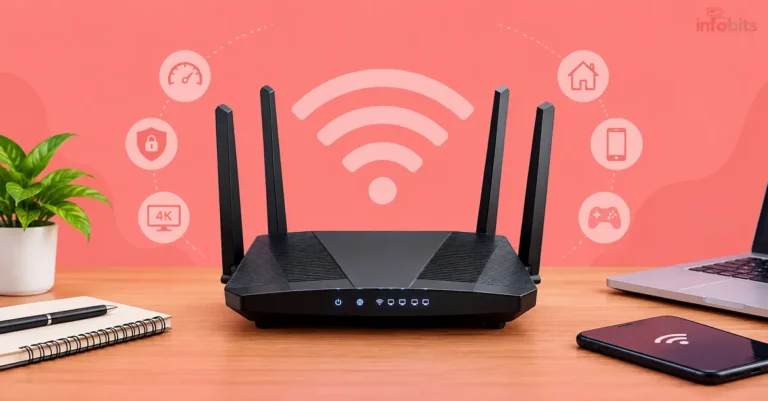
If you’re planning to use AirFiber for gaming, 4K streaming, or connecting many smart devices simultaneously, upgrading to a dedicated Wi-Fi 6 router like the TP-Link Archer AX12 (available on Amazon)improves wireless stability and range beyond what the bundled ISP router typically delivers.
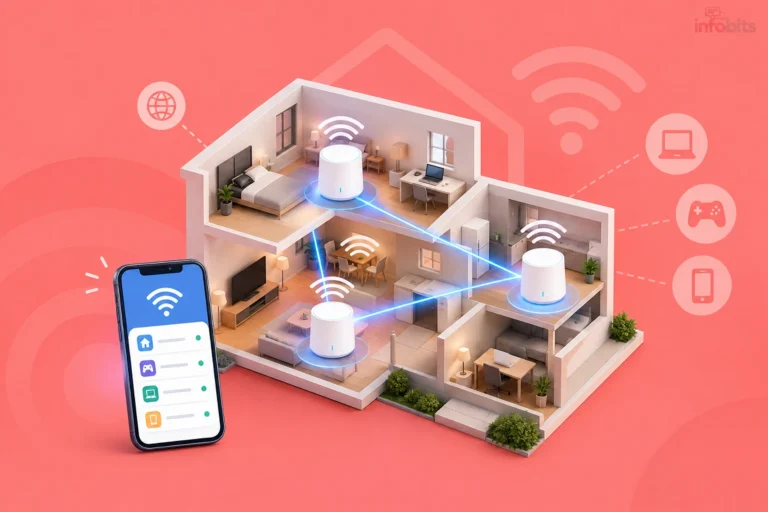
In larger homes or multi-floor properties, a single router ( however good) often can’t cover the whole space evenly. A mesh Wi-Fi system like the TP-Link Deco X50 ( available on Amazon) eliminates dead zones and extends your AirFiber signal reliably to every room.
Related read: TP-Link AC750: Does It Really Extend Your WiFi Range?
Reliability During Power Cuts
Because AirFiber’s receiver unit and router both need continuous power, a short outage takes your connection down instantly, unlike wired fibre setups where some ONTs have battery backup built in. If you work from home or have kids attending online classes, a compact UPS for your Wi-Fi router and AirFiber unit keeps you connected through brief power interruptions.
Customer Support Comparison
Jio leans heavily on digital-first support. AI-driven chatbots, an app-based service management interface, and multilingual support channels designed for fast, self-serve resolution.
Airtel leans on its long-established support infrastructure, with 24/7 helplines, dedicated support tiers for higher-value customers, and a reputation, backed by consistent user feedback, for more responsive human support during technical issues.
Neither approach is objectively better. It depends on whether you’d rather troubleshoot through an app or get a person on the phone quickly.
AirFiber vs Traditional Wired Fibre: One More Thing to Consider
If wired fibre (JioFiber or Airtel Xstream Fiber) is actually available at your address, it remains the more stable option in absolute terms. Physical cables aren’t subject to weather interference, tower congestion, or the signal degradation that can affect any wireless service.
AirFiber’s real value proposition is filling the gap for the large number of Indian households where wired fibre simply hasn’t arrived yet, not necessarily outperforming it head-to-head where both exist.
Which One Should You Choose? A Practical Decision Guide
- Check availability first. If you’re outside Delhi NCR, Kolkata, or Rajkot, Airtel Xstream AirFiber likely isn’t an option yet. Jio AirFiber becomes the default by elimination.
- Choose Jio AirFiber if: you want the lowest entry price, the broadest speed range up to 1 Gbps, the widest streaming app bundle, or you live in a semi-urban/rural area.
- Choose Airtel Xstream AirFiber if: you’re in a supported city, prioritise consistent low latency for gaming or video calls, or want live TV channels bundled from the entry tier.
- Either way: budget for the ~1 TB data threshold, invest in a proper router or mesh system if your home is large, and confirm real signal strength at your address before committing to an annual plan.
Common Mistakes to Avoid
- Assuming “unlimited data” means no practical cap. Both services throttle heavily after roughly 1,000 GB–1 TB. Of course, it is a real limit for heavy 4K households.
- Signing an annual plan before confirming signal strength. Both providers test signal during installation and may decline to proceed if it’s weak. But plan pricing and promotional discounts are easier to lock in for the long term once you’ve confirmed a stable connection first.
- Comparing only headline prices without checking city-specific installation and deposit charges, which can vary and aren’t always reflected in the advertised monthly rate.
- Ignoring indoor router placement. Since AirFiber is wireless at the last mile as well as the backhaul, poor router placement can undercut even a genuinely strong outdoor signal.
Myth vs Fact
| Myth | Fact |
|---|---|
| “AirFiber is basically the same as mobile hotspot data.” | AirFiber uses dedicated Fixed Wireless Access technology with a stationary receiver optimised for home broadband, not a mobile SIM-based hotspot connection. |
| “Both services are available everywhere in India now.” | Jio AirFiber has broad coverage, but Airtel Xstream AirFiber remains limited to select cities as of 2026. |
| “Wireless internet is always less reliable than wired fibre.” | AirFiber can deliver fibre-comparable speeds and stability in areas with strong 5G tower coverage, though wired fibre remains more resistant to weather and congestion where both are available. |
| “Higher advertised speed always means a better real-world experience.” | Latency consistency and indoor Wi-Fi setup often affect day-to-day experience more than the maximum advertised speed tier. |
Conclusion
Jio AirFiber and Airtel Xstream AirFiber solve the same basic problem: fast home internet without waiting for a physical fibre connection, but they’re not really competing head-to-head everywhere yet.
Jio’s aggressive coverage expansion and lower entry pricing make it the practical default for most of India, while Airtel’s tighter, city-focused rollout trades reach for genuinely better latency consistency where it’s available.
Start by confirming which service, if either, actually covers your address, then weigh price, speed tier, and OTT bundle against your household’s actual usage pattern rather than the headline numbers alone.
Frequently Asked Questions
It depends primarily on your location and priorities: Jio AirFiber offers broader coverage, lower starting prices, and more OTT variety, while Airtel Xstream AirFiber offers more consistent latency and is better for competitive gaming where it’s available.
Jio AirFiber plans start at ₹599 per month for 30 Mbps, with higher tiers going up to roughly ₹1,499 per month for speeds up to 1 Gbps and a fuller OTT bundle.
Airtel Xstream AirFiber plans start at around ₹699–₹799 per month, with higher tiers offering speeds of 100+ Mbps along with bundled live TV and OTT content.
As of 2026, Airtel Xstream AirFiber is confirmed available in Delhi, Ghaziabad, Noida, Faridabad, Gurgaon, Kolkata, and Rajkot, with ongoing expansion to more cities.
Yes, Jio AirFiber has expanded into many semi-urban and even rural areas with strong 5G tower coverage, making it more widely available than Airtel’s currently city-limited AirFiber service.
Airtel Xstream AirFiber is generally considered better for competitive gaming due to its more consistent, lower latency, though Jio AirFiber works well for casual and cloud gaming on higher-speed plans.
Jio AirFiber offers speed tiers up to 1 Gbps on its premium plans.
Airtel Xstream AirFiber’s flagship tier currently offers speeds of 100+ Mbps, lower than Jio’s top-tier offering.
Both offer high-speed data up to roughly 1,000 GB (Jio) or 1 TB (Airtel) per month, after which speeds are significantly throttled for the rest of the billing cycle.
On Jio AirFiber, speed drops to 64 Kbps; on Airtel Xstream AirFiber, speed drops to 2 Mbps, both effectively too slow for streaming or video calls until the next billing cycle.
Wired fibre remains generally more stable since it isn’t affected by weather or tower congestion, but AirFiber can deliver comparable speeds and reliability in areas with strong 5G coverage.
Yes, in most cases, you can connect an additional router or mesh Wi-Fi system to the ISP-provided AirFiber unit to improve coverage in larger homes.
Jio relies more on digital, app-based, and AI-driven support channels, while Airtel is generally regarded as having stronger traditional human support through its long-established helpline network.
Yes, both services support video conferencing and remote work reliably, though Airtel’s more consistent latency can offer a slight edge for call stability.
Yes, Jio AirFiber’s entry-level plan at ₹599/month is generally cheaper than Airtel Xstream AirFiber’s entry tier, which starts around ₹699–₹799/month.
Heavy rain or severe weather can affect wireless signal strength for both services, though modern 5G-based systems are designed to minimise disruption under normal weather conditions.
Jio AirFiber generally offers a wider variety of bundled streaming apps like Netflix and Prime Video on higher tiers, while Airtel Xstream AirFiber differentiates with live TV channel bundles even at its entry tier.
Yes, both are built on Wi-Fi 6 technology; Airtel’s AirFiber router is specified to support up to 64 connected devices simultaneously.
If wired fibre is genuinely available, it’s generally the more stable long-term choice; AirFiber is best chosen specifically when wired fibre isn’t yet available in your area.
New customers on Black Plans or 6/12-month standalone plans typically pay a one-time acquisition charge of around ₹3,300, in addition to the monthly plan cost.
We hope you are interested in our articles and consider following our Facebook, Instagram, and Twitter pages for regular updates.
Subscribe to our free newsletter to get similar articles and regular updates directly in your Email Inbox.
Also, share this article with your friends and relatives. Bookmark this page for future reference.
Subscribe to be the first to learn about new information
Disclosure: If you follow our links to a retailer’s website and make a purchase, we will get an affiliate commission on some, but not all, of the items or services we promote. This will cause no price change for you.