Amazon vs Flipkart Festive Sale 2026: Which One Should You Buy On? (Dates, Offers & Verdict)
Two giant sales. One wallet. Amazon’s Great Indian Festival and Flipkart’s Big Billion Days both land in the second week of October.
Neither platform wins everything. Your bank card, your Prime or Plus status and the category you’re shopping in decide the winner. The same phone can look cheaper on one app and dearer on the other.
This guide compares dates, bank offers, early access and delivery. You’ll also get a simple plan to pay the lowest final price, not just chase the biggest headline discount.
Quick answer: Amazon or Flipkart?
Buy on Amazon if you hold an SBI card, are a Prime member, or want Amazon devices like Echo, Fire TV or Kindle. Buy on Flipkart if you hold an Axis or ICICI card, or you’re a Flipkart Plus or Black member. For anything above ₹10,000, put the item in both carts and compare the final amount after every offer.
Amazon vs Flipkart sale dates at a glance
| Amazon Great Indian Festival 2026 | Flipkart Big Billion Days 2026 | |
|---|---|---|
| Early deals | Early Deals are already live on Amazon | Early Bird Deals began on 24 September |
| Early access | Reported for Prime members from 7 October | 8 October for Plus, Black and Flipkart credit card holders |
| Main sale | 8 October | 9 October |
| End date | Not confirmed | Not announced by Flipkart |
Diwali falls on 8 November 2026. Treat that as the outer edge of the shopping window. Both sales usually run in waves before then.
Amazon’s Prime early access is reported by news outlets, not stated in Amazon’s own release. Watch the Amazon app on 6–7 October for the exact time.
What are these two sales?
The Amazon Great Indian Festival is Amazon India’s annual festive sale. It covers phones, electronics, appliances, fashion, beauty and groceries. Prime members get extra benefits.
Flipkart Big Billion Days (BBD) is Flipkart’s flagship yearly sale. It covers the same broad categories. Flipkart Plus and Black members shop a day early.
Both are timed around Dussehra and Diwali. Both use bank offers, exchange bonuses and time-limited deals to pull you in.
Bank offers compared: this is where the money is
This is the biggest difference between the two sales. The right card can save you more than the platform itself.
| Offer type | Amazon | Flipkart |
|---|---|---|
| Main card offer | 10% instant discount on SBI credit, debit and EMI transactions | Up to 10% instant discount on eligible Axis Bank and ICICI Bank cards |
| Member bonus | Prime members get up to 10% extra benefits | Some outlets report 12% for Plus and up to 15% for Black members during early access. Confirm in the app |
| Co-branded card | Amazon Pay ICICI card: unlimited 5% cashback for Prime, 3% for non-Prime | 10% savings reported on the Flipkart Axis Bank credit card |
| Pay later | Amazon Pay Later: pay in 3 interest-free EMIs on carts of ₹1,500 and above | Flipkart Pay Later: credit up to ₹1 lakh with No Cost EMI |
Here’s my take. Look at your wallet before you look at the deals. An SBI card holder should start on Amazon. An Axis or ICICI card holder should start on Flipkart.
Watch the cap. Instant discounts almost always have a maximum per order and a minimum cart value. A “10% off” on a ₹40,000 phone may only save you ₹1,500 or ₹2,000. The cap is shown on the product page under “Bank offers”.
Worked example (illustrative numbers only):
| Platform A | Platform B | |
|---|---|---|
| Listed price | ₹40,000 | ₹39,500 |
| Card offer | 10% capped at ₹2,000 | Not applicable to you |
| Exchange value | ₹5,000 | ₹6,500 |
| You pay | ₹33,000 | ₹33,000 |
The “cheaper” listing didn’t win. The final payable amount is the only number that matters.
Early access: Prime vs Flipkart Plus and Black
Early access matters for one reason. Popular phone variants and limited-stock appliances can sell out on day one.
If you already have Prime, use it. If you already have Flipkart Plus or Black, use that. Don’t buy a membership just for one early-access day unless the item you want is genuinely scarce.
Also remember that sale prices often stay for the whole event. Waiting a day rarely costs you on TVs or appliances. It can cost you on hot phone colours and storage sizes.
Delivery speed: a bigger deal than you think
A ₹300 saving means little if your Diwali gift arrives after Diwali. Delivery reliability matters.
Amazon says it is opening 20 new fulfilment centres, six sort centres and 150 last-mile delivery stations ahead of the festival. Its quick-delivery service, Amazon Now, has expanded to over 65 Indian cities and towns. Flipkart runs its own quick delivery, Flipkart Minutes, in select cities.
Expert tip: Enter your pincode on both apps before you decide. Delivery dates for bulky items like fridges and TVs can differ a lot by location.
Which platform is better for what you’re buying?
| Category | Lean toward | Why |
|---|---|---|
| Amazon devices (Echo, Fire TV, Kindle) | Amazon | These are Amazon’s own products |
| Android flagships | Compare both | Amazon has teased deals on the Galaxy S25 Ultra, OnePlus 13s, iQOO 15, Xiaomi 17 and Vivo X300 FE |
| iPhones | Compare both | Flipkart is promoting iPhone offers heavily. Check exchange and card offers on both |
| Laptops and tablets | Compare both, temper expectations | See the memory price note below |
| TVs and large appliances | Compare both | Delivery and installation matter as much as price |
| Fashion and beauty | Whichever has the better card offer | Return policies vary by seller |
A note on this year’s prices. One reporter points to a global memory crisis pushing up prices of consumer electronics. That is a plausible reason Amazon is talking more about logistics than big discounts. Don’t expect last year’s price drops on RAM- and storage-heavy gadgets.
If you’re buying a smartphone
Shortlist two or three phones first. Then check the sale price, the exchange value and your card offer on both platforms. Our Mobile Buying Guide helps you decide what specs matter.
On a tighter budget? See the Best Android Phones Under ₹10,000 in India.
Buying a phone means budgeting for the extras too. A tempered glass screen guard and a sturdy case for your exact model are worth adding to the same order on Amazon, since they cost little and protect a lot.
If you’re buying a laptop
Decide your use case before you look at deals. A student, an office user and a gamer need different machines. Our Laptop Buying Guide and other tips on the Best Laptops for Students in India cover this.
Check RAM, SSD size and warranty type. Then look at the sale price. If you’re moving files from an old laptop, a portable SSD on Amazon is a handy add-on.
If you’re buying a TV or a big appliance
Confirm delivery, installation and warranty terms before you pay. Ask what “onsite warranty” really means. We explain it in What Does Onsite Warranty Mean? A Complete Guide.
For TVs, see the Best 32 Inch Smart TVs in India article. Wondering about power protection? Read Does Your Smart TV Need a Voltage Stabiliser?.
A surge-protected power strip like Honeywell Surge Protector from Amazon is a sensible small purchase alongside a new TV, especially in areas with frequent voltage fluctuations.
Buying an AC? Our AC buying guide explains tonnage and star ratings. For fans, see the best BLDC fans article.
If you’re building a smart home
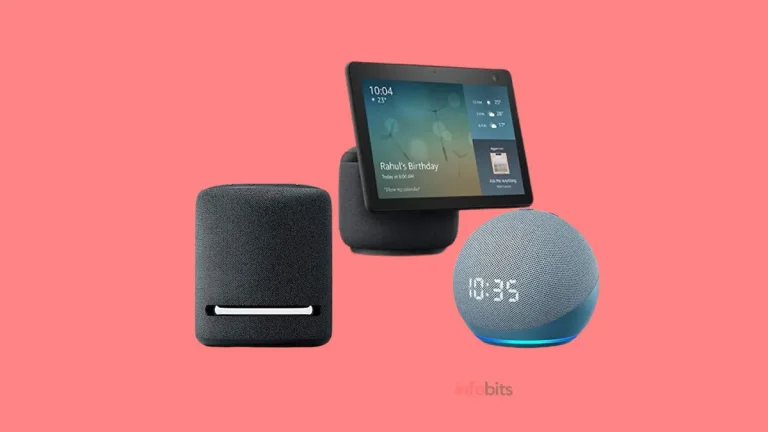
Amazon’s own devices are usually its most heavily promoted items during sales. See the related article on the best Amazon Echo devices.
An Echo Dot or a Fire TV Stick is a low-risk way to try voice control, and Amazon tends to push its own devices hard during festive sales.
Want to control old appliances? Read about the best smart plugs in India. A smart plug with energy monitoring on Amazon also shows you which appliance is quietly running up your bill.
If you’re buying earbuds, soundbars or small gadgets
Small gadgets are the easiest place to overpay for a famous name. Compare a few brands first. Our listicles on best earbuds under ₹4,000 and best soundbars in India are a good start.
Setting up the kitchen for Diwali? See the best mixer grinders in India article.
Are festive sale discounts real? How to check
Sometimes a discount is calculated against an inflated original price. Here is a quick way to check.
- Note the price today. Do it a week before the sale, not on sale day.
- Use a price-history tool. Free trackers show an item’s past prices.
- Compare across stores. Check Amazon, Flipkart and brand stores.
- Check the seller. A well-known brand store or an assured seller is safer than an unknown one.
- Look at the final price. Ignore the strike-through MRP.
Prices really do vary by platform. One recent snapshot from a non-sale day showed a MacBook Air M2 at ₹77,990 on Amazon and ₹81,900 on Flipkart. That’s a gap of nearly ₹4,000 on the same laptop.
Myth vs Fact
| Myth | Fact |
|---|---|
| The platform with the bigger sale banner is cheaper | The cheapest platform changes item by item |
| “Up to 80% off” applies to everything | It applies to a few select items |
| The bank offer is always 10% of the price | It’s usually capped, with a minimum spend |
| Day 1 always has the best prices | Popular stock goes fast, but many prices hold through the sale |
| No Cost EMI means you pay no extra | The cost is often built into the price or the discount |
Common mistakes to avoid
- Buying at the first price you see, without comparing on a second app.
- Ignoring the bank offer cap and the minimum cart value.
- Forgetting to check the warranty type and seller.
- Adding items to the cart only on sale day, when stock and payment pages are slower.
- Paying through a link forwarded on WhatsApp.
Warning signs of a fake sale or scam
Festive season also brings fake shopping links. Be careful if you see any of these:
- A “sale” link forwarded on WhatsApp or SMS.
- A website address that is not the official Amazon or Flipkart domain.
- A request for your OTP or UPI PIN to “receive a refund”.
- A price that is far below every other seller.
Always shop inside the official app or the official website. Read our guide to protecting your bank account from hackers and how UPI payment apps work.
No Cost EMI: read this before you tap it
No Cost EMI sounds free. Usually, the interest is still charged. It is offset by a discount you lose, and GST applies to the interest portion.
Check the EMI breakup screen before you pay. Compare the total you’d pay with EMI against a normal card payment with the instant discount. Sometimes the instant discount is the better deal.
Troubleshooting: when things go wrong
The bank offer isn’t applying. Check the card type (credit, debit or EMI). Check the minimum cart value. Some offers apply only to specific products.
Payment failed at checkout. Try a different card or UPI. Don’t retry ten times, as you may get duplicate charges. If money is deducted, wait for the bank’s auto-reversal before contacting support.
The order got cancelled. This can happen when stock or a pricing error is flagged. Check the refund status and re-check availability on the other platform.
The wrong or damaged item arrived. Record an unboxing video before you open the package fully. Report it inside the app within the return window.
My 7-step festive sale plan
- List what you actually need. Write down items and your budget.
- Check your cards. Note which bank offers apply to you.
- Track prices now. Note today’s price of each item.
- Wishlist on both apps. You’ll get alerts when prices drop.
- Confirm delivery. Enter your pincode on both apps.
- Compare final prices. Include card offers, coupons and exchange.
- Pay with the right method. Use the card that gives the best return.
Cashback portals can add a little more, but read the terms first. Our post on whether CashKaro is safe explains what to check.
Final verdict: Amazon or Flipkart?
Amazon’s Great Indian Festival and Flipkart’s Big Billion Days are closely matched on paper. Each has a 10% card offer, and each has early access for its members. The real winner is the platform that matches your card and your product.
Choose Amazon if:
- You hold an SBI card or the Amazon Pay ICICI card.
- You’re a Prime member.
- You want Echo, Fire TV or Kindle devices.
Choose Flipkart if:
- You hold an Axis or ICICI card, or the Flipkart Axis Bank card.
- You’re a Plus or Black member.
- Its early access lets you grab a scarce phone variant.
Use both if:
- You’re spending more than ₹10,000.
- You have an old device to exchange.
- The two prices are within a few hundred rupees of each other.
Honestly, the smartest approach is boring. Keep both apps open, compare the final price and pick the lower one.
Frequently Asked Questions
Amazon has confirmed an 8 October start. Prime early access is reported from 7 October. Early Deals are already live.
The main sale begins on 9 October, with early access from 8 October. Flipkart’s Early Bird Deals started on 24 September.
Neither wins everywhere. Amazon suits SBI and Prime users. Flipkart suits Axis, ICICI and Plus or Black users. Always compare the final payable price.
SBI credit and debit cards get a 10% instant discount, including EMI transactions. The Amazon Pay ICICI card gives cashback instead.
Eligible Axis Bank and ICICI Bank cards get up to 10% off instantly. The Flipkart Axis Bank card offers extra savings.
It’s worth it if you shop often and want early access and extra benefits. Amazon says Prime members get up to 10% extra benefits. For a single purchase, do the maths first.
Only for early access or the extra member discount. Some outlets report 12% for Plus and up to 15% for Black members during early access. Confirm the terms in the app.
Flipkart’s early access opens on 8 October for Plus, Black and Flipkart credit card holders. Prime early access on Amazon is reported to begin on 7 October.
Often yes, but not always. Some discounts are calculated against an inflated MRP. Check price history and compare across stores.
Usually yes, but not always. Each offer has its own terms, caps and exclusions. The checkout page shows what stacks on your cart.
Compare both. Flipkart is promoting iPhone offers. Amazon may match or beat them. Check exchange value and your card offer on each.
There’s no fixed winner. Compare price, warranty, delivery and installation on both. For bulky items, delivery reliability matters as much as price.
For scarce phone variants, day one is safer. For TVs and appliances, prices often hold through the sale, so you can compare calmly.
Not always. Interest is often offset by a lost discount, and GST applies to interest. Compare the EMI total with a full payment plus your card offer.
Note the price before the sale and use a price-history tool. Compare against other stores. Focus on the final price, not the strike-through MRP.
Check the card type, the minimum cart value and the product eligibility. Try another eligible card. Read the offer terms on the product page.
Check the return window, the seller and the warranty type. For appliances, confirm whether service is on-site. Keep your invoice and take an unboxing video.
No. Fake sale links are common during the festive season. Open the official app or website yourself and never share an OTP or UPI PIN.
We hope you are interested in our articles and consider following our Facebook, Instagram, and Twitter pages for regular updates.
Also, share this article with your friends and relatives. Bookmark this page for future reference.
Subscribe to our free newsletter to get similar articles and regular updates directly in your Email Inbox.
Subscribe to be the first to learn about new information
Disclosure: If you follow our links to a retailer’s website and make a purchase, we will get an affiliate commission on some, but not all, of the items or services we promote. This will cause no price change for you.