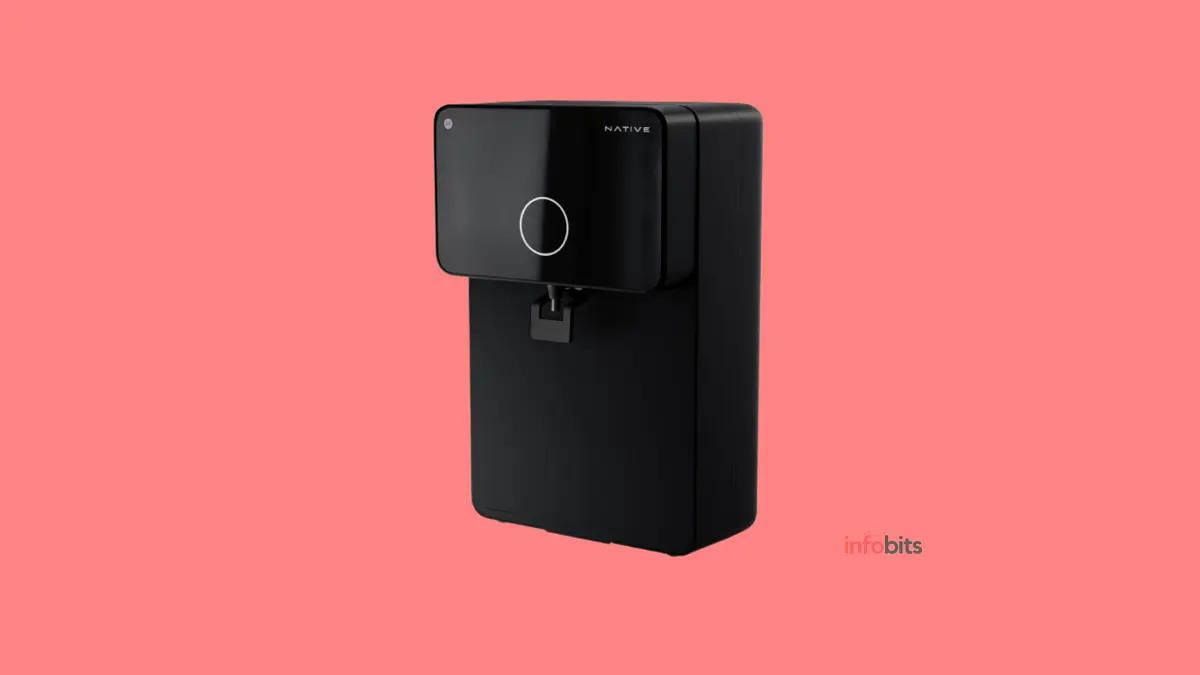
Native M1 by Urban Company Review (2026): 6-Month Honest Test
Quick answer: The Native M1 is a genuinely good pick if you live in a city where Urban Company operates, and you want to stop thinking about your water purifier for two years. Its real edge isn’t the 10-stage marketing language. It’s the warranty and service model. Just go in knowing what happens after year two, and check your water’s TDS level before you buy, since not every home actually needs an RO purifier at all.
I’ve now used the Native M1 for over six months, through two Chennai summers’ worth of tanker water and one particularly bad spell of borewell water that turned everyone’s kettle white with scale.
This review covers what actually held up, what I’d flag before you buy, and the one thing almost every other review of this purifier, including comparison articles, skips: what your bill looks like once the free 2-year period ends.
Native M1 at a Glance
| Spec | Detail |
|---|---|
| Technology | RO + UV + Copper + Alkaline, with in-tank UV |
| Storage capacity | 8 litres, food-grade tank |
| Suitable TDS range | Works up to ~2,000–2,500 ppm input TDS (per brand claims) |
| Warranty | 2 years, unconditional; covers filters, membrane, and electrical parts |
| Installation | Free, scheduled via the Urban Company app |
| Price (varies by seller/promo) | Roughly ₹9,500–₹14,999 at the time of writing; always check the live price before buying |
| Sold by | Amazon.in, Flipkart, and directly via the Urban Company app |
Note: Price ranges for appliances like this shift often due to promotions and seller stock. Treat the number above as a ballpark and confirm the current price on the listing before you decide.
Do You Even Need an RO Purifier?
This is the one step almost every purifier review skips, and it can save you money either way.
According to BIS and WHO guidelines, water with TDS (Total Dissolved Solids) below 300 ppm is generally considered safe, and running it through full RO filtration isn’t necessary. A simple UV/UF purifier does the job, costs less, and doesn’t waste water.
RO purification becomes genuinely important once TDS crosses 300 ppm, or when your water source (especially borewell or tanker water) has contamination risks like fluoride, arsenic, or heavy metals, regardless of TDS.
Quick check before buying:
- Municipal Corporation water in most Indian cities: usually 100–300 ppm
- Borewell or tanker water: often 400–1,500+ ppm, highly variable by locality
- If you don’t know your number, a ₹300–₹500 digital TDS meter answers this in ten seconds
If you’re not sure whether your water even needs an RO system, picking up an inexpensive digital TDS meter (available on Amazon) before you spend ₹13,000+ on a purifier is the cheapest ten minutes of research you’ll do all year.
The Native M1 is built for the higher end of that range. It’s rated for input TDS up to roughly 2,000–2,500 ppm, which makes it a strong fit for borewell-heavy areas, but arguably more purifier than you need if your municipal water already tests under 200 ppm.
Related: Best Mixer Grinders in India: Tested Picks for Every Kitchen
Key Features of the Native M1
1. 10-Stage RO+UV+Copper+Alkaline Purification
The purifier layers reverse osmosis, UV sterilisation, copper infusion, and alkaline enhancement to target dissolved solids, bacteria, viruses, and taste, in that order.
Each stage does a specific job rather than duplicating the previous one, which is a genuine design improvement over cheaper purifiers that stack redundant carbon stages just to inflate the “number of stages” on the box.
2. Smart Rinse Technology (the actual headline feature)
This is what makes the 2-year no-service claim possible. The system periodically self-cleans the filters to prevent clogging, instead of relying on a technician visit every 3–6 months like most traditional ROs.
3. In-Tank UV Sterilisation
Water sitting in the 8-litre tank stays under continuous UV protection, so it doesn’t become a breeding ground for bacteria if you don’t drink from it for a few hours. A real concern with tanks that only purify water once, on the way in.
4. 8-Litre Food-Grade Tank
Enough for a small-to-medium family without needing to refill constantly, and reasonably sized for shared office pantries too.
5. Water-Source Flexibility
It’s designed to work with municipal, borewell, and tanker water, which matters in Indian cities where your source can genuinely change month to month depending on supply.
6. Free Professional Installation
Handled through the Urban Company app, with a pressure-adjustment kit available separately (roughly ₹250–₹500) if your building’s water pressure is outside the ideal range.
Related: Best Mini Fridge in India: Top 8 Compact Refrigerators Compared
My 6-Month Experience: What Actually Held Up
Installation
Booking through the app was straightforward, and the technician arrived on schedule. He tested our incoming water pressure before installing, which is a step some cheaper installations skip. It is worth insisting on if your technician doesn’t do it automatically.
Design
It genuinely doesn’t look like a typical wall-mounted purifier. The compact, rounded design blends into a modular kitchen far better than the boxy units most brands still sell.
Taste and Quality
Water tastes clean without the flat, “stripped” taste some pure-RO systems produce. The alkaline and copper stages noticeably round off the taste compared to plain RO output. This matched what several other reviewers have independently reported too.
Performance Over Time
Six months in, flow rate hasn’t visibly dropped, and there’s been no unusual noise from the pump. The Smart Rinse cycle runs on its own schedule without me needing to do anything, which has genuinely been the biggest quality-of-life upgrade over my previous purifier.
The One Real Complaint
Water wastage. Like virtually every RO purifier on the market, the Native M1 rejects a significant portion of input water as waste during the RO process. This isn’t unique to Native, but it’s worth knowing before you buy, especially in cities where water scarcity or tanker costs are a real concern.
If your area gets municipal water at low TDS, this is one more reason to check whether you need full RO at all (see the section above).
Pros
- Genuinely maintenance-free for 2 years; no AMC calls, no filter-change scheduling.
- Balanced water taste from copper + alkaline stages, not just flat RO output
- Compact, modern design that doesn’t dominate kitchen counter space
- Works across municipal, borewell, and tanker water sources
- Backed by Urban Company’s existing service and installation network
- In-tank UV keeps stored water safe, not just water passing through
Cons
- RO rejection means noticeable water wastage, especially with high-TDS input water; a limitation shared by nearly every RO purifier, not unique to this one.
- Service is currently limited to cities and towns where Urban Company operates. Check coverage in your area before buying.
- Occasional leak complaints exist online, as with most RO units after months of use; not widespread, but worth knowing about
- A few buyers who purchased directly through the Urban Company app (rather than Amazon or Flipkart) have mentioned receiving units they suspected were refurbished, with limited replacement options. Buying through Amazon or Flipkart gives you their standard return and replacement policy as an added layer of protection.
- It may be more purifier (and cost) than you need if your municipal water already tests below 200–300 ppm TDS.
Related: Best Air Purifiers for Home in India: Buying Guide
What Happens After the 2-Year Warranty Ends?
This is the number that actually decides whether the Native M1 is a good long-term investment, and it’s the section most comparison articles conveniently leave out.
Based on Urban Company’s published post-warranty service structure, you can expect an AMC (Annual Maintenance Contract) covering filters, membrane, and service calls for the next period, priced at roughly ₹5,000 for two years, going by current published rates.
That’s a genuinely reasonable number compared to legacy brands, where filter replacements and service visits can add up to a similar amount even over just 12–18 months. Still, budget for it. “2-year no-service” isn’t the same as “free forever,” and the total cost of ownership only makes sense once you factor this in.
Native M1 vs Kent vs Aquaguard vs Livpure: How It Actually Compares
| Brand & Model | Warranty / No-Service Period | Standout Strength | Where It Falls Short |
|---|---|---|---|
| Native M1 (Urban Company) | 2 years unconditional | Best-in-class service model backed by UC’s app-based support | Service limited to UC-covered cities |
| Livpure Allura Premia | 2.5 years no-service | Longest no-cost warranty currently on the market | Lower input TDS handling (~500 ppm) than Native |
| Kent Grand Plus | Standard 1-year, AMC after | Extremely wide spare-parts and service network across India, even in smaller towns | Higher long-term AMC costs; service visits needed more often |
| Aquaguard Delight/Enrich | Standard 1-year, AMC after | Best-known brand name, widest offline service reach | Taste and mineral tuning less consistent across models |
| Atomberg Intellon | 2 years, comparable positioning to Native | Similar smart, low-maintenance approach with strong app integration | Newer to the category, smaller install base than Kent/Aquaguard |
The honest takeaway: if minimal maintenance is your top priority and you live in a serviceable city, Native M1 and Livpure’s Allura Premia are the two strongest options right now.
Livpure edges it on warranty length; Native edges it on brand backing and app-based service reliability through Urban Company’s existing network. If you’re in a smaller town where UC doesn’t operate yet, Kent’s spare-parts availability still makes it the safer long-term bet, even with a shorter free-service window.
Myth vs Fact
| Myth | Fact |
|---|---|
| “10-stage purification means 10x cleaner water.” | The stage count is a marketing metric, not a purity multiplier. What matters is which contaminants each stage actually removes; Native’s stages are at least non-redundant, which is more than some cheaper “10-stage” purifiers can claim. |
| “2-year no-service means the purifier lasts only 2 years.” | It means no maintenance cost for 2 years. The unit itself is expected to last well beyond that, with a paid AMC afterwards. |
| “Every home needs an RO purifier.” | Only if your water’s TDS crosses roughly 300 ppm, or has specific contamination risks. Below that, a UV/UF purifier is sufficient and wastes less water. |
| “More expensive always means better purification.” | Purification quality depends on matching the right technology (RO vs UV vs UF) to your actual water source, not the price tag alone. |
Common Mistakes People Make Before Buying
- Skipping the TDS test. Buying a high-TDS-capacity RO purifier for water that’s already under 200 ppm means you’re paying more and wasting more water than necessary.
- Ignoring service area coverage. Urban Company’s service network is strong in metros and tier-1/tier-2 cities, but check availability in your specific PIN code before ordering.
- Buying only on the 2-year warranty headline. Factor in the post-warranty AMC cost when comparing total ownership cost against other brands.
- Not checking water pressure beforehand. Buildings with unusually high or low pressure may need an add-on kit. Ask about this during booking, not after installation day.
- Assuming “refurbished” risk applies everywhere. It’s mainly been flagged for direct purchases through the UC app; buying via Amazon or Flipkart gives you their standard buyer protection.
Who Should Buy the Native M1?
- Households with borewell or tanker water where TDS regularly crosses 300 ppm and varies month to month
- Busy professionals and families who want to genuinely forget about filter changes for two years
- Anyone who’s been burned by unreliable AMC service from older-generation purifier brands
- Kitchens where design matters. Its compact form factor is a real upgrade over boxy legacy units.
Related: Is a BLDC Mixer Grinder Worth It? Atomberg Zenova Review
Who Should Consider a Different Option
- Homes with municipal water already under 200–300 ppm TDS – a simpler UV/UF purifier would serve you just as well for less money and less water wastage.
- Areas without Urban Company service coverage – check this first, since the entire value proposition depends on their service network
- Buyers on a tighter budget who don’t mind scheduling occasional AMC visits – Kent or Aquaguard’s base models are cheaper upfront.
Buying Checklist
- [1] Tested your water’s TDS level (or asked your building’s facility team for the last known reading)
- [2] Confirmed Urban Company service is available in your specific area
- [3] Checked your home’s water pressure fits the standard range, or budgeted for a pressure kit
- [4] Compared the post-warranty AMC cost against at least one competing brand
- [5] Decided whether to buy via Amazon/Flipkart (for standard return policy) or directly via the UC app
- [6] Measured your kitchen wall space against the unit’s mounting dimensions before ordering
Expert Tip
If your building recently switched water sources (a common shift during Chennai and Bengaluru summers when municipal supply gets supplemented with tanker water), retest your TDS every few months rather than assuming it stays constant. This affects both which purifier technology you need and how quickly your RO membrane will wear.
Final Verdict: Is the Native M1 Worth It?
After six months of daily use, the Native M1 earns its reputation, but not for the reason most marketing pages lead with.
The 10-stage, RO+UV+Copper+Alkaline spec sheet is genuinely competitive, but it’s the service model, 2 years without thinking about maintenance, backed by an app-based booking system that actually shows up on time, that makes this purchase worth it for the right household.
It’s not the purifier for everyone. If your water is already low-TDS municipal supply, you’re better off spending less on a simpler UV/UF unit.
But if you’re dealing with borewell or tanker water, live somewhere Urban Company services, and want to stop budgeting mental energy for filter changes, this is one of the strongest options in its price bracket right now. Just go in with eyes open about the AMC cost once year two ends.
⭐ Overall Rating: 4.3 out of 5 ⭐
Where to Buy
Buying through Amazon or Flipkart gets you their standard return and replacement window in addition to Urban Company’s installation and warranty, which is generally the safer route compared to ordering directly through the app.
Frequently Asked Questions
Yes. It’s rated to handle input TDS up to roughly 2,000–2,500 ppm, which covers most borewell water conditions in Indian cities.
Yes, for standard usage conditions. Smart Rinse Technology handles filter cleaning automatically, removing the need for scheduled AMC visits during that period.
You move to a paid AMC, priced at roughly ₹5,000 for the following two years based on Urban Company’s current published rates. Confirm the latest pricing before your warranty ends.
Like all RO purifiers, it rejects a portion of input water proportional to TDS levels. Higher TDS input means more rejected water. This is standard across the RO purifier category, not specific to this model.
If your water’s TDS is below roughly 300 ppm, a UV/UF purifier is generally sufficient per BIS and WHO guidelines, and wastes less water. RO becomes worthwhile above that threshold or when contamination risks like fluoride or arsenic are present.
No. Installation is handled by a professional technician, free of cost, scheduled through the Urban Company app.
It depends on your priority. Native M1 wins on maintenance-free ownership for two years; Kent and Aquaguard win on wider service-network reach, especially in smaller towns where Urban Company doesn’t yet operate.
Yes, it’s compatible with municipal, borewell, and tanker water sources.
Coverage is strongest in metros and tier-1/tier-2 cities. Check availability for your specific pin code on the Urban Company app before purchasing.
8 litres, made from food-grade material, suitable for small to medium households or office pantries.
Yes, the manufacturer’s warranty applies either way, but buying via Amazon or Flipkart adds their standard return/replacement policy as extra protection during the initial purchase window.
Some users have reported occasional leaks after extended use, which is a known risk across most RO purifier brands, not unique to this model. It doesn’t appear to be a widespread issue based on available reviews.
The M2 generally adds features like real-time tracking and preset dispensing on top of the same core purification technology. Check the current spec sheets, as both models get updated periodically.
Yes, most users, including in this review, notice a rounder, less “flat” taste compared to plain RO output, since these stages reintroduce minerals stripped out during reverse osmosis.
It can be, especially if your water source has high TDS or fluctuates seasonally, but a smaller-capacity or UV/UF-only purifier might be more cost-effective if your water is already low-TDS municipal supply.
MRP is generally listed around ₹18,999–₹20,999, with typical selling prices ranging from roughly ₹12,999–₹15,999 depending on ongoing promotions. Always verify current pricing on the listing.
Only if your home’s water pressure falls below the unit’s minimum requirement. Urban Company offers a pressure-adjustment kit for an additional ₹250–₹500 if needed.
It’s suitable for small office pantries too, given its 8-litre capacity and low-maintenance design, though very high-footfall offices may need a higher-capacity commercial unit instead.
We hope you are interested in our articles and consider following our Facebook, Instagram, and Twitter pages for regular updates.
Also, share this article with your friends and relatives. Bookmark this page for future reference.
Subscribe to our free newsletter to get similar articles and regular updates directly in your Email Inbox.
Subscribe to be the first to learn about new information
Disclosure: If you follow our links to a retailer’s website and make a purchase, we will get an affiliate commission on some, but not all, of the items or services we promote. This will cause no price change for you.
You May Be Interested in Reading:
- Is the BLDC Mixer Grinder Good and worth buying over the Atomberg Mixer Grinder?
- Best Mixer Grinders in India | How to Select a Good Mixer Grinder?
- Fosi Audio BT20A Review: A Compact Stereo Audio 2-Channel Amplifier
- Difference Between BSNL IPTV and BSNL IFTV Services
- String Inverters vs. Micro Inverters: Which One’s Best for You?