11 Best Voice Recorder Devices in India (2026): Traditional & AI Recorders
Smartphones have taken over most everyday recording tasks, but dedicated voice recorders haven’t gone away; they’ve actually gotten more interesting. On one side, you’ve still got the reliable Sony and Zoom dictaphones that journalists, students, and professionals have trusted for years.
On the other, a new generation of AI voice recorders has arrived that don’t just capture audio. They transcribe it, summarise it, and turn it into searchable notes automatically.
We’ve used and researched both categories to put together this list. If you just need something simple, reliable, and pocket-friendly to record lectures or interviews, our traditional picks have you covered.
If you want your recorder to think for you ( auto-transcription, meeting summaries, to-do lists ), we’ve added two AI recorders that are genuinely worth considering in 2026, including one built right here in India.
A quick note on how we work: this isn’t a paid or sponsored roundup, and we’re not affiliated with any of these brands. We may earn a small affiliate commission if you buy through our links, at no extra cost to you. Full disclosure is at the bottom of this article.
Quick Picks: Best Voice Recorders at a Glance
| Product | Best For | Price Range |
|---|---|---|
| Sony ICD-UX570 | Best Overall | ₹4,500–₹5,500 |
| Zoom H1n Handy Recorder | Best for Podcasting & Music | ₹6,500–₹8,000 |
| Sony ICD-PX470 | Best for Meetings & Interviews | ₹3,500–₹4,500 |
| Olympus WS-882 | Best Battery Life | ₹8,000–₹10,500 |
| Sony ICD-TX660 | Best Compact/Lightweight | ₹5,500–₹7,000 |
| Sony ICD-UX570F | Best Value for Money | ₹4,000–₹5,000 |
| Sony ICD PX370 | Best Budget Pick | ₹2,500–₹3,200 |
| Sony ICD-UX560 | Best for Focus + Wide Recording Modes | ₹4,500–₹5,500 |
| EVISTR 16GB Recorder | Best Budget Alternative to Sony | ₹1,800–₹2,500 |
| Plaud Note | Best AI Voice Recorder | ₹16,990–₹24,990 |
| neosapien Neo 1 | Best AI Wearable (Made in India) | ₹11,999–₹15,999 |
Note: Prices fluctuate with sales and offers. Always check the live price before buying.
1. Sony ICD-UX570 Digital Voice Recorder: Best Overall
The ICD-UX570 tops our list because it balances everything most buyers actually need. A sharp built-in stereo microphone, a genuinely useful three-mode recording system, and a slim body that disappears into a pocket. It’s the newer sibling of the UX560, and the upgrade shows in daily use.
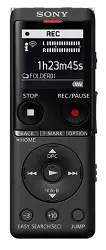
Its Normal, Focus, and Wide-Stereo recording modes let you adapt to almost any situation. Focus narrows in on a single speaker across a room, while Wide-Stereo is built for group discussions and panel interviews. Auto Voice Recording and Auto Music Recording both work well, adjusting sensitivity automatically so you’re not fiddling with input levels mid-recording.
Build quality is a step up from the UX560 too, with a brighter OLED display that’s genuinely easier to read at a glance, plus 3.5mm ports for an external mic and headphones if you want more control. A 3-minute quick charge for an hour of recording is a small but useful feature when you’re rushing out the door.
Pros: Three flexible recording modes, easy-to-read OLED display, external mic support, fast quick-charge
Cons: 4GB built-in storage is on the smaller side for a recorder at this price; no expandable storage slot on some variants, so check before buying
Best for: Students, journalists, and professionals who want one reliable recorder that handles interviews, lectures, and meetings equally well.
2. Zoom H1n Handy Recorder: Best for Podcasting & Music
If your recording needs go beyond spoken word ( podcasting, field recording, or capturing live music ), the Zoom H1n is built specifically for that job. Its 90-degree X/Y stereo microphones are designed to capture a natural, wide stereo image that dictaphones simply can’t match.
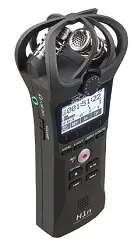
The internal limiter allows distortion-free recording up to 120dB SPL, so you can record a loud concert or a quiet interview without switching gear. 24-bit audio recording captures detail that budget dictaphones miss entirely, and the playback speed control (without pitch distortion) is genuinely useful for musicians learning parts or journalists transcribing audio.
It records directly to SD and SDHC cards up to 32GB, and at just 68 grams, it’s light enough to carry everywhere. The overdub feature is a nice bonus for songwriters who want to layer ideas on the go, and the one-touch controls keep the learning curve short despite the more advanced feature set underneath.
Pros: Excellent stereo mic quality, 24-bit recording, distortion-free up to 120dB, useful for both speech and music
Cons: Doesn’t have as many meeting-specific features (like Focus/Wide modes) as Sony’s dictaphones; battery life (10 hours) is shorter than some competitors
Best for: Podcasters, musicians, and content creators who need genuinely high-fidelity audio, not just clear speech.
3. Sony ICD-PX470: Best for Meetings & Interviews
The ICD-PX470 remains one of Sony’s most well-rounded recorders for anyone regularly capturing meetings, interviews, or lectures. Its S-Microphone is tuned specifically to pick up low and distant sounds clearly, which matters a lot in a large conference room.
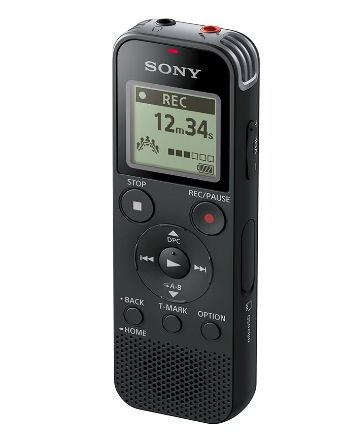
Four Scene presets ( Music, Meeting, Interview, and Dictation ) automatically adjust the recording settings so you don’t need to manually tweak input levels for each situation. The Intelligent Noise Cut and low-cut filter features do a genuinely good job of stripping out projector hum, traffic noise, or wind without hurting speech clarity.
You get 4GB of built-in storage, expandable via microSD up to 32GB, and the built-in USB plug means you can transfer files directly to a laptop without carrying a separate cable. At 55 hours of battery life on a single AAA battery, it easily covers a full week of moderate daily use.
Pros: Excellent noise reduction, four scene presets for different situations, built-in USB for cable-free transfers, long battery life
Cons: No touchscreen or app connectivity; purely physical button controls, which some younger users may find dated
Best for: Anyone who records meetings or interviews regularly and wants dependable noise reduction without complexity.
4. Olympus WS-882 Digital Voice Recorder: Best Battery Life
If long recording sessions without worrying about battery are your priority, the WS-882 is hard to beat. Olympus claims up to 1,000 hours of recording life and roughly 100 hours of standby battery, which is genuinely class-leading for a device this size.
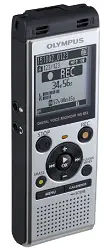
The true stereo microphone, angled at 90 degrees, captures a wider and more natural soundstage than most single-mic dictaphones. Auto Mode intelligently adjusts recording levels to match the loudness of your environment, so you’re not stuck manually tweaking gain when moving between a quiet office and a noisy hallway.
Its Voice Balancer feature is particularly useful in group settings. It raises quieter voices and caps louder ones so everyone in a recording stays audible. Simple Mode strips the interface down for new users who don’t want to dig through menus, while advanced users can access the full feature set when needed.
Pros: Exceptional battery and recording-time claims, true stereo mic, Voice Balancer for group recordings, beginner-friendly Simple Mode
Cons: Design feels a bit dated compared to Sony’s newer UX-series models; no built-in USB plug, so you’ll need a cable for transfers
Best for: Users who record for extended periods. Think all-day conferences, multi-day fieldwork, or long lecture series, without frequent charging.
5. Sony ICD-TX660: Best Compact/Lightweight
At just 29 grams, the ICD-TX660 is one of the lightest voice recorders you can buy in India, and its ultra-thin, metallic body makes it genuinely comfortable to carry in a shirt pocket all day.
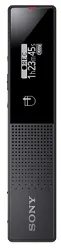
Don’t let the size fool you. It packs 16GB of built-in storage (expandable via microSD), which is more than double what most Sony recorders in this price range offer. You can record up to 636 hours in a single session or store up to 5,000 individual files, which is more than enough for even the busiest journalist or field researcher.
The One Push Recording function starts capturing audio instantly, even from a powered-off state, which is genuinely useful when a conversation starts before you expect it. USB Type-C charging (rather than the older micro-USB or AAA battery setup found on some Sony models) makes it easier to keep charged using cables you probably already own.
Pros: Extremely lightweight and pocketable, generous 16GB storage, USB-C charging, instant recording even from off
Cons: Smaller size means a smaller mic array than bigger recorders. Audio quality is very good but not quite class-leading
Best for: Anyone who wants their recorder to be genuinely forgettable in a pocket or bag until the moment they need it.
6. Sony ICD-UX570F: Best Value for Money
The ICD-UX570F sits in a comfortable middle ground. It isn’t the cheapest recorder on this list, but it packs enough features that you won’t feel like you’re missing anything a pricier model offers.
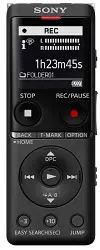
Its S-Microphone delivers clear, accurate recordings whether you’re capturing a lecture, a business meeting, or casual music practice, and the optimised audio capture settings reduce the usual headaches around getting microphone sensitivity wrong. A 3-minute quick charge for an hour of recording means you’re rarely caught out by a dead battery before an important call.
The compact, lightweight design makes it easy to slip into a bag, and the wider, brighter LED indicator removes any doubt about whether it’s actively recording. A small detail that matters more than it sounds when you’re relying on it for something important.
Pros: Well-rounded feature set for the price, quick-charge battery, clear LED recording indicator, comfortable size
Cons: 4GB built-in storage means you’ll want a microSD card for longer recording needs.
Best for: Buyers who want a dependable all-rounder without paying for features (like advanced scene presets) they may never use.
7. Sony ICD PX370 Mono Digital Voice Recorder: Best Budget Pick
If you just need something simple and affordable for personal notes, lectures, or dictation, the ICD PX370 covers the basics well without unnecessary extras. It’s a mono recorder, so it’s not built for music or high-fidelity work, but for straightforward voice capture, it does the job reliably.
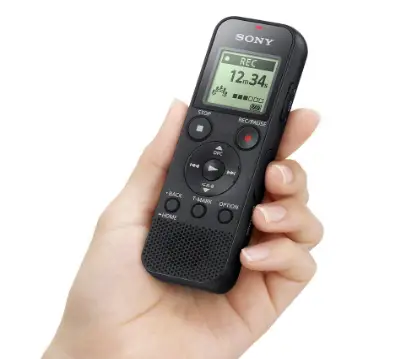
Battery life is genuinely strong for the price. Up to 57 hours of MP3 recording on two standard AA batteries, which are easy to find and replace anywhere in India. The built-in USB connector lets you plug directly into a computer for fast file transfers without carrying extra cables.
Scene Select lets you optimise for music, meetings, or general dictation, and Auto Voice Rec does a solid job of reducing background noise so speech stays intelligible even in moderately noisy rooms. At 4GB of internal storage, you get around 59 hours 35 minutes of MP3 recording space before you’d need to offload files.
Pros: Genuinely budget-friendly, uses easy-to-replace AA batteries, solid battery life, built-in USB
Cons: Mono recording only. Not suitable if you want stereo separation for music or ambient sound capture
Best for: Students and casual users who want a no-fuss, affordable recorder for lectures and personal notes.
8. Sony ICD-UX560: Best for Focus + Wide Recording Modes
The ICD-UX560 was one of Sony’s most popular recorders for a reason: its Focus and Wide-Stereo microphone modes genuinely adapt well to different recording situations, whether you’re capturing a one-on-one interview or a full boardroom discussion.
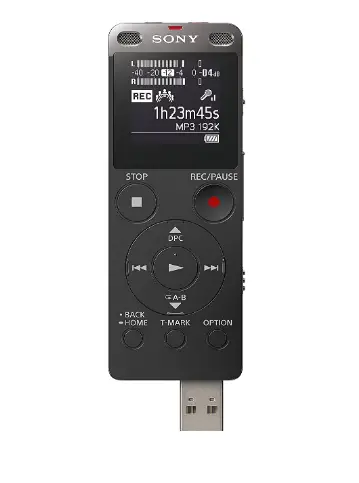
Its high-sensitivity, low-noise S-Microphone captures quiet or distant sound sources clearly. Sony’s own example of picking up birdsong in the background illustrates just how sensitive it is. The built-in lithium battery with quick-charge support means you’re rarely left waiting around before an important recording session.
With 4GB of built-in memory, expandable via microSD (SDHC and SDXC supported), and a direct USB connection for cable-free transfers, it hits most of the same marks as the newer UX570 at a slightly lower price point. A solid choice if you don’t need the brighter OLED display or extra polish of the newer model.
Pros: Reliable Focus/Wide recording modes, sensitive S-Microphone, quick-charge lithium battery, direct USB transfer
Cons: Heavier than most other recorders on this list at 454 grams, and the display isn’t as sharp as the newer UX570.
Best for: Buyers who want UX570-level recording flexibility at a lower price and don’t mind a slightly older design.
9. EVISTR 16GB Digital Voice Recorder: Best Budget Alternative to Sony
If Sony’s pricing is out of your budget but you still want solid features, the EVISTR L157 is worth a look. It packs 16GB of storage, more than most Sony models in this price bracket, and supports HD recording quality up to 1536 Kbps.
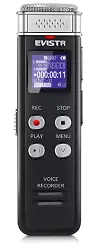
Its Focus and Wide microphone modes mirror what you’d find on pricier Sony devices, making it a genuinely capable option for lectures and meetings despite the lower price tag. The voice-activated recording feature is a nice touch. It starts recording automatically when it detects sound, which can save battery and storage during long, intermittent sessions.
At just 62.8 grams, it’s light and pocketable, and it doubles as a competent MP3 player supporting MP3, WAV, FLAC, APE, OGG, and WMA formats. USB rechargeable with a 3-minute quick charge for an hour of use, it’s a genuinely solid budget pick for students and casual users.
Pros: Excellent storage-to-price ratio, voice-activated recording, doubles as an MP3 player, supports multiple audio formats
Cons: Build quality and microphone sensitivity don’t quite match Sony or Olympus at higher price points.
Best for: Budget-conscious students and casual users who want generous storage without paying Sony prices.
10. Plaud Note: Best AI Voice Recorder
The Plaud Note represents a genuinely different category from everything else on this list. Rather than just recording audio for you to review later, it uses OpenAI’s Whisper model and ChatGPT to transcribe your recordings automatically and turn them into summaries, meeting minutes, and to-do lists; all without you touching a keyboard.
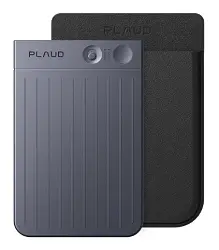
It captures audio from in-person meetings, lectures, voice memos, and even phone calls, and the dedicated Plaud app handles transcription in over 100 languages with time-coded transcripts for easy review. For professionals drowning in post-meeting admin ( writing up notes, chasing action items ), this genuinely eliminates most of that manual work.
Privacy is a legitimate consideration with any AI recorder, and Plaud states its cloud files remain user-controlled with local encryption, though as with any cloud-connected device, it’s worth reading the privacy policy before recording sensitive conversations. The device includes a free tier of cloud transcription minutes, with paid plans available for heavier use.
Pros: Automatic AI transcription and summarisation, supports 100+ languages, works for meetings, lectures, and calls, saves significant manual note-taking time
Cons: Meaningfully pricier than traditional recorders; ongoing usefulness depends partly on a connected app and optional subscription for extended cloud minutes
Best for: Professionals, consultants, and anyone who regularly needs meeting notes, summaries, or transcripts and wants AI to handle the busywork.
11. neosapien Neo 1: Best AI Wearable (Made in India)
The neosapien Neo 1 deserves a spot on this list for two reasons: it’s a genuinely capable AI wearable, and it’s designed and built in India- a rare thing in this category. Unlike the Plaud Note’s handheld form factor, the Neo 1 is a pendant you wear around your neck, designed to passively capture conversations throughout your day.
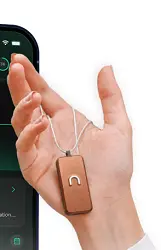
It positions itself as a “second brain” – capturing in-person conversations, transcribing them, and organising them into searchable notes, summaries, and action points automatically. You can later ask Neo specific questions about past conversations, effectively searching your own memory. Calendar integration also helps convert conversations directly into follow-ups and reminders.
Privacy is built into its core pitch: audio is processed only to generate notes and is stated to be deleted within minutes, rather than stored indefinitely. Battery life covers a full working day of moderate use, though continuous all-day recording will likely need a mid-day top-up via USB-C. It’s a niche device and genuinely useful if your day revolves around meetings and conversations, less so if it doesn’t.
Pros: Made in India with local support, hands-free wearable design, privacy-focused audio processing, searchable conversation memory
Cons: Niche use case; not useful if your day doesn’t involve frequent meetings or conversations; premium pricing similar to Plaud Note
Best for: Founders, consultants, and professionals who want a hands-free, always-ready way to capture and organise conversations throughout the day.
Traditional Voice Recorders vs AI Voice Recorders: Which Should You Buy?
This is probably the biggest decision you’ll make on this list, so let’s break it down clearly.
Traditional recorders (Sony, Zoom, Olympus, EVISTR) are built to do one job extremely well: capture clean audio reliably, for hours, without needing an internet connection or an app. They’re cheaper, simpler, and their battery life is measured in tens or hundreds of hours rather than a single day. If you just want a recording you can listen back to or manually transcribe, these remain excellent, dependable choices.
AI recorders (Plaud Note, neosapien Neo 1) do more than record. They transcribe, summarise, and organise your conversations automatically. This saves real time if you’re regularly writing up meeting notes or chasing action items, but it comes with trade-offs: higher upfront cost, dependency on a companion app, and in most cases, some reliance on cloud processing for the AI features to work.
Our take: if your recording needs are occasional – a lecture here, an interview there – a traditional recorder is simpler, cheaper, and just as reliable. If you’re in back-to-back meetings every day and post-meeting admin is eating your time, an AI recorder can genuinely pay for itself in saved hours.
How Did We Choose These Voice Recorders?
We prioritised recorders with a quick start time and an intuitive interface, since most of these devices get used in the moment ( capturing a live interview, a lecture, or a spontaneous meeting ) and a fiddly device costs you the recording entirely.
Most of our picks support one-button recording, so you’re not digging through menus while someone’s already talking. We also weighed portability heavily, since a voice recorder that’s inconvenient to carry simply won’t get used consistently, alongside the addition of AI-capable options for readers whose needs have shifted toward automated transcription and summarisation.
This list is built to cover the full range of Indian buyers, from students needing an affordable option for lectures, to journalists who need reliable field recording, to professionals who want AI to handle the note-taking entirely.
Why You Can Trust This Guide
Infobits has been covering consumer electronics and buying guides for the Indian market for several years, and this article is based on hands-on use of select models, published manufacturer specifications, and verified pricing from Amazon India and Flipkart.
We’re not paid by any of the brands featured here, and our picks reflect what we’d genuinely recommend to a friend or family member. Full affiliate disclosure is at the bottom of this article.
What to Look for When Buying a Voice Recorder
Recording Quality
Think about what you’re actually recording. Personal notes and memos don’t need premium fidelity, but interviews or recordings in noisy environments benefit hugely from built-in noise suppression and a sensitive microphone.
Beyond standard MP3, look for support for higher-quality formats like FLAC or LPCM if audio fidelity really matters to you. They suffer far less quality loss than compressed MP3 files.
Size & Portability
A voice recorder should comfortably fit in a pocket or bag if you’re using it on the move. There’s usually a trade-off between size and microphone quality, so look for a model that balances both well rather than optimising for one extreme.
Battery Life & Charging
Battery life matters more than people expect, especially for all-day use. Some recorders run on replaceable AA or AAA batteries (easy to find anywhere, even mid-trip), while others use built-in rechargeable batteries with USB or USB-C charging.
Compact recorders typically offer around 10 hours of battery, while dedicated dictaphones can stretch to 50-60 hours or more on a single charge.
Memory Capacity
If your recorder supports microSD expansion, built-in storage matters less. You can always add more. If it doesn’t, check the built-in capacity carefully against how much you actually plan to record before you run out of space mid-session.
File Format Support
Check which formats a recorder supports before buying, especially if you need compatibility with specific transcription software or editing tools. MP3 covers most needs, but LPCM or WAV are worth having if you’re doing anything music- or production-related.
AI & Transcription Features (New for 2026)
If saving time on note-taking matters to you, check whether a recorder offers built-in or app-based transcription, summarisation, and language support.
This is the single biggest differentiator between traditional and AI recorders, and it’s worth being clear on how many free transcription minutes you get before a subscription kicks in.
Price & Warranty
Voice recorders span a huge price range in India, from under ₹2,000 for basic models to ₹25,000 for premium AI recorders. Always buy from an authorised seller and check the manufacturer warranty terms, especially for AI recorders where software support matters as much as hardware durability.
Common Mistakes to Avoid When Buying a Voice Recorder
- Buying based on wattage or storage alone: A recorder with more GB isn’t automatically better if its microphone quality is poor; check both together.
- Ignoring battery type: If you travel often or record in remote locations, a recorder that runs on standard AA/AAA batteries can be more practical than one that needs a specific charger.
- Assuming all “noise cancellation” claims are equal: Test reviews and real user feedback before trusting marketing copy. Some noise reduction features work far better than others in genuinely noisy environments.
- Overlooking storage expansion: A recorder with only 4GB built-in and no microSD slot can fill up faster than expected during long recording sessions.
- Choosing an AI recorder without checking ongoing costs: Many AI recorders include limited free transcription minutes per month. Check what happens (and what it costs) once you exceed that limit.
Expert Tips for Better Voice Recordings
- Position the recorder as close to the primary speaker as reasonably possible. Even a few extra feet of distance noticeably affects clarity, especially in Focus mode.
- Use Wide-Stereo or omnidirectional modes for group discussions, and Focus/directional modes for one-on-one interviews.
- Do a 10-second test recording before anything important, and actually listen back; don’t just trust the input meter.
- Keep a spare set of batteries (or a charged power bank for USB-C models) if you’re recording anything long or important, like a full-day conference.
- For AI recorders, review auto-generated transcripts and summaries before relying on them fully. Accuracy is generally strong but not perfect, especially with heavy accents or overlapping speech.
Who Should Buy a Traditional Voice Recorder vs an AI Recorder?
Buy a traditional recorder (like the Sony UX570 or Zoom H1n) if: you want maximum battery life, don’t need automatic transcription, and prefer a simple, dependable device without ongoing app or subscription dependency.
Buy an AI recorder (like the Plaud Note or neosapien Neo 1) if: you’re regularly in meetings, interviews, or consultations and post-recording admin (transcribing, summarising, writing notes) is eating up hours of your week.
Consider a smartphone recording app instead if: your recording needs are occasional and casual. A dedicated device only pays off once you’re recording regularly enough to notice the difference in quality, battery life, or workflow.
Conclusion
Whether you go for a tried-and-tested Sony dictaphone or a newer AI recorder like the Plaud Note or neosapien Neo 1 genuinely depends on how you plan to use it.
For most students, journalists, and casual users, a traditional recorder remains the simpler, more affordable, and perfectly reliable choice. For professionals buried in meeting notes, an AI recorder can be a genuine time-saver worth the higher price tag.
Whichever you choose, prioritise microphone quality and battery life over flashy extras. A voice recorder’s whole job is to reliably capture the moment, and that’s the one thing you can’t compromise on.
Quick Picks Summary:
| Product | Category |
|---|---|
| Sony ICD-UX570 | Best Overall |
| Zoom H1n Handy Recorder | Best for Podcasting & Music |
| Sony ICD-PX470 | Best for Meetings & Interviews |
| Olympus WS-882 | Best Battery Life |
| Sony ICD-TX660 | Best Compact/Lightweight |
| Sony ICD-UX570F | Best Value for Money |
| Sony ICD PX370 | Best Budget Pick |
| Sony ICD-UX560 | Best for Focus + Wide Recording Modes |
| EVISTR 16GB Recorder | Best Budget Alternative to Sony |
| Plaud Note | Best AI Voice Recorder |
| neosapien Neo 1 | Best AI Wearable (Made in India) |
Frequently Asked Questions
Yes, in most cases. Dedicated voice recorders have purpose-built microphones with better sensitivity and noise handling than smartphones, along with significantly longer battery life for extended recording sessions.
The Sony ICD PX370 or EVISTR 16GB Recorder are excellent budget-friendly choices for students, offering reliable recording for lectures without a high price tag.
The Plaud Note is currently the most established AI voice recorder available in India, offering automatic transcription and summarisation powered by OpenAI’s Whisper model and ChatGPT.
Yes, the neosapien Neo 1 is designed and built by an Indian startup, making it one of the few AI wearables genuinely developed for the Indian market.
It varies widely. Compact models average around 10 hours of continuous recording, while dedicated dictaphones like the Sony PX370 or Olympus WS-852 can last 55 to 1,000+ hours depending on settings and battery type.
Traditional recorders like Sony and Zoom models work entirely offline. AI recorders like Plaud Note and neosapien Neo 1 need an internet connection (via their companion app) for transcription and summarisation features.
Most support MP3 as standard, with higher-end models also supporting LPCM, WAV, FLAC, or other lossless formats for higher audio fidelity.
Some AI recorders, including the Plaud Note, are designed to capture phone call audio directly. Traditional recorders generally require you to place the recorder near a speakerphone, since they don’t intercept calls directly.
Yes, especially if you record frequently or for long durations. A microSD-expandable recorder avoids the risk of running out of space mid-recording, unlike models limited strictly to built-in storage.
Mono recorders capture audio through a single channel and are generally cheaper, suited for basic dictation. Stereo recorders use two channels for a fuller, more natural soundstage, better suited for music or ambient recording.
For professionals who regularly need meeting notes, summaries, or transcripts, yes. The time saved on manual note-taking often justifies the cost. For casual or occasional use, a traditional recorder offers better value.
For casual use, 4GB (which stores dozens of hours of MP3 recording) is usually enough. If you record long sessions daily, look for 16GB or higher, or a model with microSD expansion.
Quality varies by model. Recorders with dedicated noise-cut or low-cut filter features, like the Sony ICD-PX470 and Olympus WS-852, handle background noise noticeably better than basic models.
Some models, like the EVISTR 16GB Recorder, double as functional MP3 players supporting multiple audio formats. Most dedicated dictaphones also support basic playback of your own recordings.
The Sony ICD-PX470 and Sony ICD-UX570 are strong picks for journalism, thanks to their Focus/Wide recording modes and reliable noise reduction in varied environments.
Yes, its high-fidelity stereo microphones also work well for interviews, field recording, and podcasting. Anywhere natural, detailed audio matters more than pure speech clarity.
Accuracy is generally strong for clear, single-speaker audio in supported languages, but can drop with heavy accents, background noise, or multiple overlapping speakers. Always review AI-generated transcripts before relying on them fully.
Most AI recorders, including Plaud Note, include a free tier of transcription minutes. Heavier use typically requires a paid subscription for additional cloud processing.
The EVISTR 16GB Digital Voice Recorder offers the best combination of storage and features at the lowest price point among our picks.
The Olympus WS-852 leads with claimed recording times of up to 1,000 hours (MP3 128kbps stereo) and around 100 hours of standby, making it the strongest choice for extended use without recharging.
We hope you are interested in this article and consider following our Facebook and Twitter pages for regular updates. Also, share this article with your friends and relatives.
Subscribe to our free newsletter so that you will get regular updates directly in your Email.
Subscribe to be the first to learn about new information
Disclosure: We will receive an affiliate commission on some, but not all, of the products or services we recommend if you follow our links to a retailer’s website and make a purchase.