What Is Deepfake Technology? How to Spot It and Stay Safe
Quick answer: A deepfake is AI-generated audio, video, or image content that convincingly fakes a real person’s face, voice, or actions. In India, deepfakes have moved well beyond celebrity face-swaps .
They’re now actively used in “digital arrest” scams, voice-cloned calls impersonating family members or company executives, and fake celebrity investment endorsements.
By 2026, the most advanced deepfakes are genuinely difficult to spot by eye alone, which is why verification habits matter more than visual detection tricks.
If you’ve heard about deepfakes mostly through celebrity face-swap videos, it’s worth updating that picture.
In 2025 alone, India recorded an estimated ₹22,495 crore in cyber fraud losses, with voice-cloning and deepfake-based impersonation scams forming a fast-growing share of it.
This guide covers what deepfake technology actually is, how it’s currently being used against Indians specifically, what still works (and what no longer reliably works) to spot one, and exactly what to do if you or someone you know becomes a target.
What Is a Deepfake, Exactly?
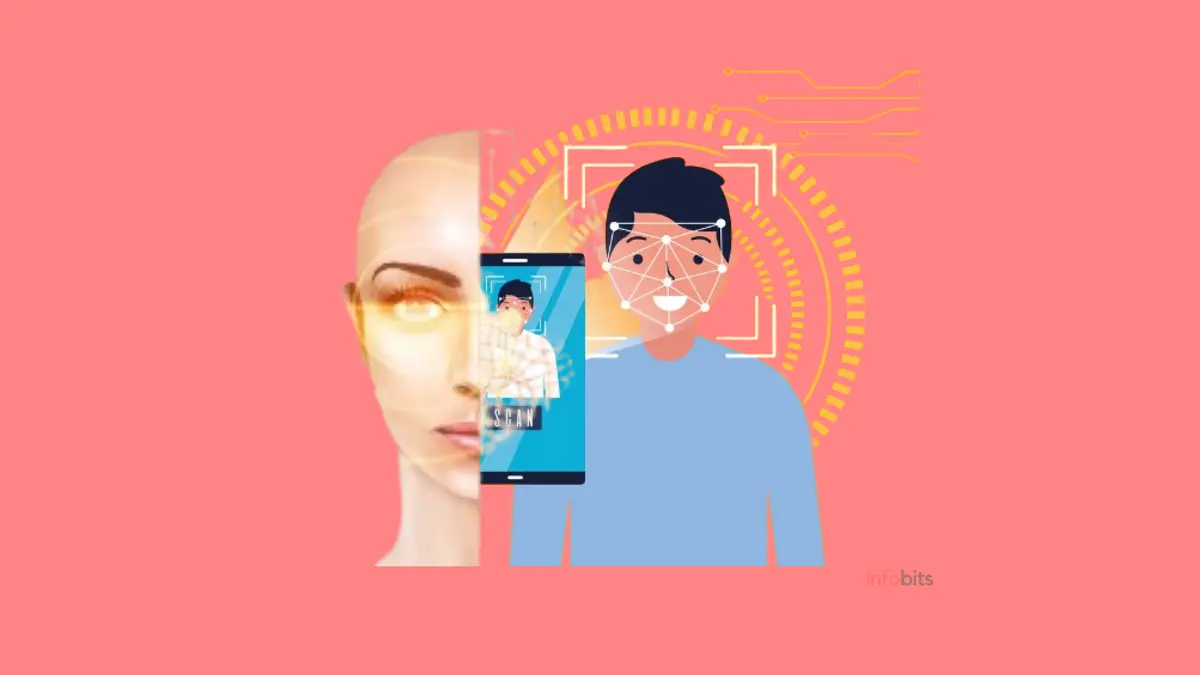
A deepfake is synthetic media – video, audio, or images – created or altered using AI to convincingly depict someone doing or saying something they never actually did or said. The term combines “deep learning” (the AI technique behind it) and “fake.”
How the underlying technology has changed: early deepfakes (around 2017–2021) mostly relied on Generative Adversarial Networks (GANs). There are two competing AI models, one generating fake content and the other trying to catch it as fake, improving each other through repeated competition.
Current-generation deepfakes increasingly use diffusion models (the same underlying technology behind many AI image generators), which produce noticeably fewer of the tell-tale visual glitches that made older deepfakes easier to spot.
The other major shift: voice cloning now needs almost no data. As recently as 2023, convincing voice cloning needed 10–20 minutes of clean audio of the target speaking.
By 2026, 3 to 5 seconds of audio, easily pulled from an Instagram Reel, a YouTube comment, or even a voice note sent to a friend, is enough to generate a convincing clone of someone’s voice.
Note : “Can deepfakes still be spotted by eye in 2026?” Increasingly, no, at least not reliably. Current-generation video and voice deepfakes are reported to be over 95% convincing even to trained reviewers in many cases, which is why this guide focuses heavily on verification habits rather than visual spotting tricks alone.
How Deepfakes Are Actually Being Used Right Now
This is the part that matters most, and it’s exactly where the original conversation around deepfakes (mostly focused on celebrity videos) has fallen behind reality.
1. “Digital Arrest” Scams
Fraudsters posing as CBI, police, customs, or Enforcement Directorate officials make a video call, often dressed in uniform and sitting in front of a fake “police station” backdrop, and tell the victim their Aadhaar or bank account is linked to a crime.
They keep the victim on a continuous call, sometimes for days, isolating them from contacting anyone, until the victim transfers money to “clear their name.”
This scam pattern has caused massive losses: over 30,000 digital-arrest complaints were filed in 2025, with national losses estimated near ₹3,000 crore for the year.
Victims have included a Mangaluru woman who lost ₹1.80 crore, a retired Delhi couple who lost roughly ₹15 crore, and a 92-year-old Delhi resident drained of ₹2 crore.
Important fact to remember and share: No legitimate Indian law enforcement agency ( police, CBI, customs, or ED ) conducts arrests, interrogations, or demands money over a WhatsApp or video call. Real legal proceedings involve physical summons, not video calls.
2. Voice-Cloned “Emergency” Calls From Family Members
A call comes in sounding exactly like a relative; the tone, the urgency, the familiar way they speak, asking for immediate money for a medical emergency or similar crisis. It’s not them.
A teacher in Indore lost nearly ₹1 lakh in one of the first confirmed Madhya Pradesh cases of this exact scam, after receiving a call that sounded precisely like her cousin urgently needing money for heart treatment.
3. CEO/Executive Voice Cloning (Corporate Fraud)
This isn’t limited to individuals. A finance team can receive an “urgent wire transfer” call sounding exactly like their CEO or CFO.
In one widely reported case, a Mumbai CFO authorised a ₹2.3 crore transfer after a call that sounded exactly like the company’s CEO, who was in a meeting the entire time.
Even prominent business figures haven’t been spared: the cloned voice of a well-known Indian telecom executive was reportedly used to target an executive in Dubai.
4. Fake Celebrity Investment Endorsements
Scammers have used deepfaked videos of prominent Indian business and entertainment figures appearing to endorse fraudulent trading platforms and guaranteed-return investment schemes.
Real losses from this exact pattern include a Pune resident who lost ₹43 lakh and a Bengaluru chartered accountant who lost ₹23 lakh, both after acting on fake celebrity-endorsed investment videos.
5. Non-Consensual Image/Video Manipulation
This was the original, and still very real, harm category. Someone’s face is superimposed onto explicit or compromising content without consent, often for harassment, blackmail, or simply social media attention.
The 2023 case involving actress Rashmika Mandanna remains one of India’s most cited examples: the creator, a 23-year-old engineer, was arrested under IPC Sections 465 and 469 and IT Act Sections 66C and 66E after admitting he made the video purely to gain social media followers.
Related: Fake Video Call Using AI: How to Spot the Fake Call?
How to Spot a Deepfake (What Still Works in 2026)
Visual detection tricks haven’t disappeared entirely, but they’re far less reliable than they were even two years ago. Use these as supporting evidence, not as your only line of defence.
Visual Red Flags (Video and Images)
- [1] Unnatural blinking patterns, or eyes that don’t quite track naturally
- [2] Lighting on the face that doesn’t match the lighting in the rest of the scene
- [3] Blurring, warping, or flickering specifically around the edges of the face, hairline, or where the face meets the neck
- [4] Skin texture that looks unusually smooth, waxy, or inconsistent compared to the rest of the image
- [5] Jewellery, glasses, or background details that subtly shift or distort between frames
Audio Red Flags (Calls and Voice Notes)
- [1] Slightly flat or oddly paced emotional delivery, urgency that sounds performed rather than genuinely felt
- [2] Unnatural breathing patterns, or a complete absence of natural breathing pauses
- [3] Background noise that doesn’t match the claimed location (a “hospital” call with no ambient hospital sound, for instance)
- [4] Audio that cuts off or restarts oddly mid-sentence, sometimes a sign of generated speech stitched together
Behavioural Red Flags (Often More Reliable Than Visual Ones)
- [1] Urgency combined with a demand for secrecy, “don’t tell anyone,” “act right now,” “don’t hang up,; is one of the most consistent patterns across digital arrest, family emergency, and CEO fraud scams alike.
- [2] A request that conveniently can’t be verified through a second channel; pressure not to call back, not to confirm with a colleague, not to visit in person.
- [3] Money is requested through unusual channels, such as gift cards, cryptocurrency, or transfers to unfamiliar accounts, rather than normal payment methods.
The single most reliable check, more useful than any visual spotting trick: hang up, and call the person back on a number you already have saved , not a number given to you during the call. If it’s your cousin, your boss, or your bank, they can wait the thirty seconds it takes you to verify independently. A scammer relying on urgency cannot survive that pause.
So many of these scams ultimately try to get you to authorise a payment or reveal account access.
Securing your most sensitive accounts (banking, email, UPI apps) with a hardware security key like Yubico – YubiKey (see on Amazon) rather than relying on SMS-based OTP alone adds a layer of protection that a convincing voice or video call simply can’t talk its way around.
What to Do If You’re Targeted or Become a Victim
If You Suspect a Scam Call or Video (Act Before Sending Anything)
- Stay calm and disconnect the call if anyone claims to be a law enforcement officer demanding money over video or phone. This is never how real legal proceedings work in India.
- Don’t engage with the urgency. Tell the caller you’ll call back, and hang up regardless of what they say.
- Verify independently; call the person, company, or institution back using a number you already had, not one given to you during the suspicious call.
- Don’t send money, gift cards, or crypto based solely on a voice or video call, regardless of how convincing it sounds.
If Money Has Already Been Sent
- Call 1930 immediately, India’s national cybercrime helpline, or file a complaint at cybercrime.gov.in without delay.
- Speed genuinely matters here. Reporting within the first hour (sometimes referred to as the “golden hour”) gives banks the best chance of freezing the receiving account before the money gets moved further.
- Keep all evidence: call recordings if available, screenshots, transaction IDs, and any messages from the scammer.
- Inform your bank directly as well, in parallel with the cybercrime report, since they may be able to act faster on a flagged transaction than waiting solely on the cybercrime portal process.
Related: How to Protect Your Bank Account From Hackers?
If Your Face, Voice, or Likeness Has Been Used Without Consent
- Document everything: screenshots, URLs, and the platform where the content appeared, before it potentially gets taken down or altered.
- Report directly to the platform (Instagram, YouTube, X, Facebook) using their content reporting tools. Under India’s 2026 IT Rules amendment, certain categories of harmful AI-generated content now carry a mandatory three-hour takedown window once a lawful order is issued.
- File a police complaint or cybercrime.gov.in report, citing relevant IT Act sections (66C for identity misuse, 66E for privacy violation) and IPC/Bharatiya Nyaya Sanhita provisions for defamation or forgery where applicable.
- For public figures and businesses, Indian courts have increasingly granted swift relief in deepfake cases. Delhi and Bombay High Courts have issued urgent injunctions in cases involving the misuse of public figures’ likenesses, recognising that a person’s identity and voice carry real legal protection under the right to privacy.
India’s Legal and Regulatory Response to Deepfakes (2026 Update)
This is a genuinely fast-moving area, and it’s worth understanding the current shape of it:
- IT Rules 2026 Amendment: India has formally introduced a regulatory category for “synthetically generated information” (SGI), with deepfakes treated as a particularly harmful subset. Key changes include a three-hour takedown deadline for certain categories of harmful AI content once a lawful government order is issued, along with new labelling, traceability, and due diligence requirements for platforms and AI tool providers.
- No standalone “Deepfake Act” yet; India currently relies on a combination of the IT Act (Sections 66C, 66D, 66E), provisions under the Bharatiya Nyaya Sanhita (the law that replaced the IPC), and the constitutional right to privacy established in the landmark Justice K.S. Puttaswamy v. Union of India judgment.
- Courts are filling the gap quickly. Indian High Courts have granted urgent relief in several high-profile personality rights cases, including dynamic injunctions that allow blocking future infringing content without requiring fresh litigation each time a new instance appears online.
- Reporting infrastructure: the national cybercrime helpline (1930) and portal (cybercrime.gov.in) remain the primary channels for both individual victims and businesses, alongside platform-level reporting tools.
Worth knowing: legal experts widely note that enforcement capacity still lags behind how fast deepfake content spreads . The law is actively evolving, but verification on your end remains your fastest and most reliable protection in the moment.
Common Mistakes People Make With Deepfakes
- Assuming you’d “obviously” be able to tell, current-generation deepfakes, especially voice clones, are convincing enough that even trained reviewers report difficulty spotting them reliably.
- Trusting a familiar voice or face alone as proof of identity; voice and video are no longer reliable identity verification on their own, especially for high-stakes requests involving money.
- Posting extended, clear voice or video content publicly without considering that even a few seconds can now be enough to train a convincing clone.
- Acting on urgency without a second-channel verification step; this single habit defeats the large majority of digital arrest, family emergency, and CEO fraud scams.
- Not reporting quickly enough if money is lost; delays significantly reduce the chance of fund recovery through bank freezing.
Myth vs Fact
| Myth | Fact |
|---|---|
| “Deepfakes are mostly about celebrity videos and aren’t a real threat to ordinary people.” | Deepfakes and voice cloning are now actively used in scams targeting ordinary individuals and families. Digital arrest and voice-cloned “emergency” calls have caused thousands of crores in losses in India. |
| “I’d definitely be able to tell if a video or voice was fake.” | Current-generation deepfakes are reported to be highly convincing even to trained reviewers. Visual and audio spotting tricks are a useful supplement, not a guarantee. |
| “Voice cloning needs a long, high-quality recording to work.” | As little as 3–5 seconds of audio is now enough to generate a convincing voice clone, easily pulled from public social media content. |
| “There’s no law in India against deepfakes, so nothing can be done.” | While there’s no single standalone “Deepfake Act,” the IT Act, the 2026 IT Rules amendment, and constitutional privacy protections already provide real legal recourse, and courts have granted swift relief in several cases. |
| “Real police and government agencies sometimes do conduct arrests over video calls in serious cases.” | No legitimate Indian law enforcement agency ever conducts arrests, interrogations, or demands payment over a video or phone call. This is a fabricated scam pattern, without exception. |
Decision Guide: What Should You Actually Do Right Now?
- Just received an urgent call or video claiming to be law enforcement? Hang up immediately. No real exceptions exist to this; disconnect, then verify independently if you’re genuinely concerned.
- Received a call that sounds exactly like a family member asking for urgent money? Call them back on a number you already have saved before sending anything, regardless of how convincing the voice sounded.
- Run a business and handle wire transfers? Set up a verification protocol (a callback to a known number, or a pre-agreed code phrase) for any payment instruction received only via call or video, regardless of how senior the requester appears to be.
- Found content using your face or voice without consent? Document it immediately, report it to the platform, and consider a cybercrime.gov.in report or legal consultation depending on the severity and intent.
- Worried about your own public social media content being used for cloning? Consider how much continuous, clear voice or face content you post publicly, particularly content with audio, since that’s the raw material these tools need.
Expert Tips to Reduce Your Risk
- Set a family “safe word” or verification phrase that isn’t something you’d ever post publicly, to be used specifically when an emergency call or message asks for money. This single habit defeats the large majority of voice-cloning family scams.
- Treat any call demanding secrecy as an immediate red flag, regardless of who it claims to be from. Legitimate institutions never ask you to hide a request from family, colleagues, or your bank.
- For businesses, establish a mandatory callback-verification step for any payment instruction received solely through a call or video, no matter how senior the apparent requester.
- Be deliberately cautious about how much continuous, high-quality voice content you post publicly. Reels, voice notes, and video content are exactly the raw material voice-cloning tools need, and current tools need only a few seconds of it.
- Bookmark cybercrime.gov.in and save 1930 in your phone contacts now, before you ever need them. In a real scam attempt, the few seconds it takes to look up a number you don’t already have saved can matter.
Conclusion
Deepfake technology has moved a long way from celebrity face-swap novelty videos.
In India specifically, it’s now a core tool behind digital arrest scams, voice-cloned family and corporate fraud, and fake celebrity investment endorsements that have collectively cost Indians thousands of crores.
The honest, uncomfortable truth for 2026 is that visual and audio spotting tricks, while still worth knowing, are no longer a reliable standalone defence against the most advanced deepfakes.
What actually protects you is a habit, not a skill: pause before acting on urgency, verify through a channel the other side didn’t choose for you, and report immediately if something goes wrong.
The law is catching up. India’s 2026 IT Rules amendment and a growing body of court precedent are real progress. But in the moment a scam call comes in, your own verification habit will always be faster than any legal process.
Frequently Asked Questions
A deepfake is AI-generated or AI-altered video, audio, or image content that convincingly depicts a real person saying or doing something they never actually said or did.
Primarily through “digital arrest” scams (fake law enforcement video calls), voice-cloned calls impersonating family members or company executives requesting urgent money transfers, and fake celebrity-endorsed investment scams.
Increasingly, not reliably. Current-generation deepfakes are convincing enough that even trained reviewers report difficulty spotting them by visual inspection alone, which is why verification habits matter more than spotting tricks now.
As little as 3 to 5 seconds of clear audio, easily available from a public Instagram Reel, YouTube comment, or voice note, is reportedly enough with current voice-cloning tools.
A scam where fraudsters pose as police, CBI, customs, or ED officials over a video call, claiming the victim is linked to a crime, and pressure them into transferring money to “clear their name.” No real Indian law enforcement agency conducts arrests this way.
Disconnect the call immediately. No legitimate law enforcement agency in India arrests, investigates, or demands payment over a phone or video call. If concerned, verify by visiting your nearest police station in person.
Call the national cybercrime helpline at 1930, or file a complaint at cybercrime.gov.in. Acting quickly significantly improves the chance of banks freezing a fraudulently received transfer.
Yes, when it involves identity misuse, privacy violation, defamation, or fraud, primarily under IT Act Sections 66C, 66D, and 66E, along with relevant Bharatiya Nyaya Sanhita provisions and constitutional privacy protections.
The 2026 IT Rules amendment introduces a regulatory category for “synthetically generated information,” including a three-hour takedown deadline for certain harmful AI content once a lawful order is issued, plus new labelling and due diligence obligations for platforms.
Yes. Indian courts have granted urgent injunctions in several personality rights cases involving unauthorised AI-generated content, and victims can also pursue criminal complaints under the relevant IT Act and Bharatiya Nyaya Sanhita provisions.
A call comes in sounding exactly like a relative, often claiming a medical emergency or urgent financial need, pressuring the victim to transfer money immediately without verifying through another channel.
Yes, CEO and executive voice-cloning fraud, where finance teams receive convincing fake “urgent transfer” instructions, has caused multi-crore losses at Indian and international companies alike.
Hang up and call them back using a number you already had saved, not one given to you during the call. This single step defeats the vast majority of voice-cloning scams.
Deepfake detection tools exist and are improving, but detection accuracy varies and lags behind the pace of generation technology. They’re useful as a supporting check, not a guaranteed standalone solution.
A 2023 case where a deepfaked video of the actress went viral; the creator, a 23-year-old engineer, was arrested under IPC Sections 465 and 469 and IT Act Sections 66C and 66E after admitting he made it to gain social media followers.
Yes. Legitimate uses include film and entertainment effects, historical reconstructions for education, and accessibility tools, provided there’s clear consent, transparency, and ethical use involved.
It’s worth being thoughtful about how much continuous, clear voice or face content you post publicly. Since that’s exactly the raw material current cloning tools use, though, avoiding social media entirely isn’t a realistic or necessary solution for most people.
Report immediately to 1930 or cybercrime.gov.in, and inform your bank directly as well. Acting within the first hour significantly improves the chances of the receiving account being frozen before funds are moved further.
Yes, digital arrest and impersonation scams have disproportionately targeted older adults and retirees in India, partly due to lower familiarity with how convincing modern AI-generated content can be and partly due to the psychological pressure tactics used.
Very likely, yes. Detection technology is improving. But generation technology has consistently advanced faster, which is why verification habits, rather than relying solely on spotting fakes by eye or ear, are the more durable long-term defence.
We hope you are interested in our articles and consider following our Facebook, Instagram, and Twitter pages for regular updates.
Subscribe to our free newsletter to get similar articles and regular updates directly in your Email Inbox.
Also, share this article with your friends and relatives. Bookmark this page for future reference.
Disclosure: We will receive an affiliate commission on some, but not all, of the products or services we recommend if you follow our links to a retailer’s website and make a purchase.
Subscribe to be the first to learn about new information