India’s Undersea Internet Cables: How They Work & Why They Matter
Every time you stream a match on Hotstar, join a Zoom call with a client in London, or send money through UPI, your data probably travels through a cable thinner than a garden hose, lying on the floor of the ocean. That’s not an exaggeration. It’s how the internet actually works.
Quick answer: Undersea cables (also called submarine cables) are bundles of hair-thin glass fibres that carry internet data as pulses of light across ocean floors, connecting India to the rest of the world. Roughly 95–99% of India’s international internet and data traffic moves through these cables, not satellites. As of 2026, India has around 17-plus international cable systems landing at hubs in Mumbai and Chennai, with major new projects like 2Africa Pearls, IAX, IEX, and Google’s Blue-Raman rapidly adding capacity and new landing points in Visakhapatnam and beyond.
If you’ve ever wondered why your internet slows down during a “cable cut” reported in the news, or why companies like Google and Meta are suddenly investing billions in Indian coastlines, this guide breaks it all down in plain language.
What Exactly Are Undersea Cables?
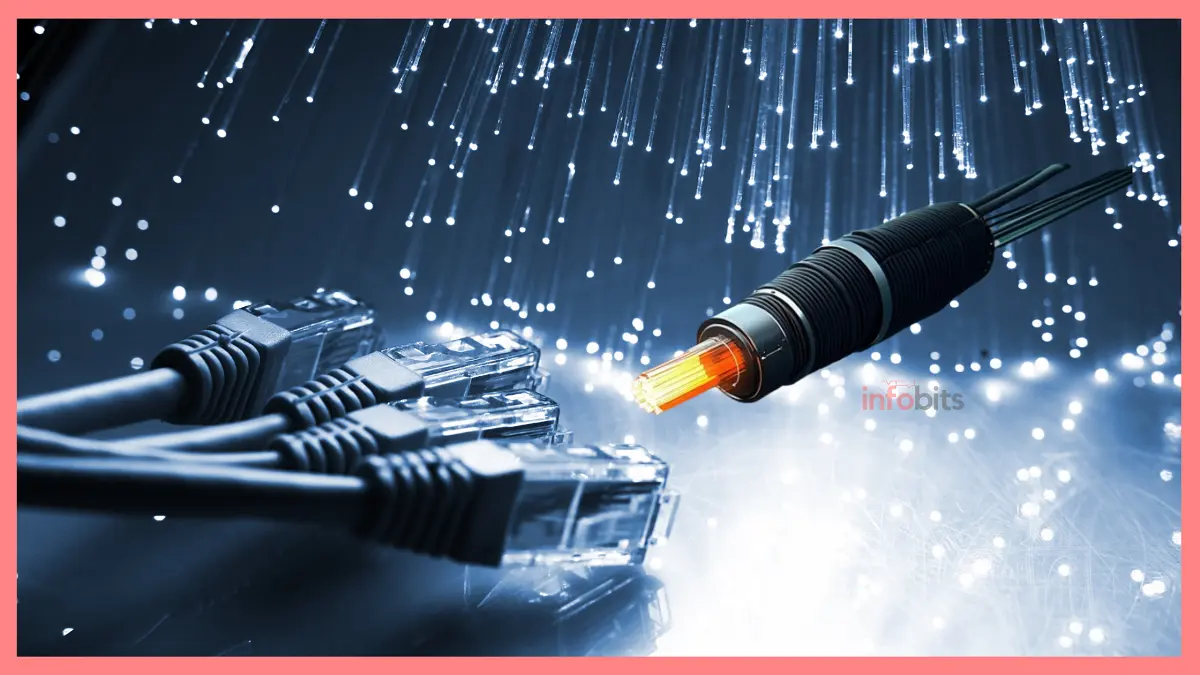
Undersea cables are fibre-optic cables laid directly on (or buried just under) the seabed to carry data between continents. Picture a cable roughly as thick as a garden hose in shallow water, and barely thicker than a finger in the deep ocean, packed with a few dozen strands of glass fibre, each one capable of carrying enormous volumes of data.
They’re not a backup system. They are the internet’s backbone. Satellite internet gets a lot of attention, but it still carries only a tiny fraction of global data traffic compared to what flows beneath the waves.
How Do Undersea Cables Actually Work?
This is the part most articles skip, so let’s actually get into it.
1. Data becomes light. When you send a WhatsApp message or stream a video, that data gets converted into pulses of laser light at a cable landing station.
2. Light travels through glass fibre. Each cable contains multiple fibre pairs, and each pair can carry several wavelengths of light simultaneously, using a technique called Dense Wavelength Division Multiplexing (DWDM). This is how a single cable can carry 200+ terabits per second, equivalent to millions of HD video streams at once.
3. Repeaters keep the signal alive. Light weakens over long distances, so cables include repeaters (signal boosters) roughly every 60-100 km along the route. These are powered by electricity sent through the cable itself, all the way from the landing stations on each end.
4. The cable is armoured for protection. Near the shore, where ship anchors and fishing trawlers are the biggest threat, cables are buried and wrapped in thick steel and polymer armour. In the deep ocean, where such risks are rare, the cable is much thinner and lighter.
5. It surfaces at a Cable Landing Station (CLS). This is a secure facility on land, usually near a coastal city, where the undersea cable connects to terrestrial fibre networks and equipment like Submarine Line Terminal Equipment (SLTE) and Power Feeding Equipment (PFE) that “light up” the cable. From here, your data continues its journey to a data centre, an ISP, or straight to your phone.
In India, most cables land near Mumbai (specifically around Versova), with Chennai, Kochi, Tuticorin, and Trivandrum forming secondary hubs.
How Are Undersea Cables Laid and Repaired?
Cable-laying is a genuinely massive engineering project. Specialised cable ships slowly sail the planned route, laying cable at a controlled pace while route planners try to avoid known fishing grounds, shipping lanes, undersea fault lines, and anchor zones.
Repairs are a different story, and this is where India has a real gap. When a cable breaks (which happens more often than most people realise, mostly due to fishing trawlers and ship anchors), a specialised repair ship has to locate the fault, haul the cable to the surface, splice it, and re-lay it.
India currently doesn’t own a dedicated cable repair ship of its own; operators depend on shared repair contracts with vessels based out of Dubai or Singapore, which can mean weeks of delay if a ship isn’t immediately available.
Expert tip: This repair gap is one of the biggest reasons policy experts and telecom bodies like TRAI have been pushing for India to invest in its own cable maintenance capacity, not just new cables.
India’s Undersea Cable Network: The Current Picture
India currently has around 17 international submarine cable systems landing at roughly 14 cable landing stations across five coastal cities: Mumbai, Chennai, Kochi, Tuticorin, and Trivandrum. By the end of 2022, these cables had a lit capacity of about 138.6 Tbps, with around 111 Tbps actually activated and in use.
That number has grown fast since. Mumbai alone now hosts around 15 major cable systems, including 2Africa, AAE-1, IMEWE, and SEA-ME-WE 4, making it India’s single biggest, and most concentrated, digital gateway. Chennai is the second-largest hub, with nine active systems and several more on the way.
That concentration is actually a concern experts keep flagging: if something disrupts Mumbai’s cluster of landing stations, a disproportionate share of India’s international connectivity takes a hit at once. More on that in the risks section below.
The Big New Cable Projects Connecting India
Three cable systems dominated headlines between 2024 and 2026, and it’s worth understanding what each one actually does:
2Africa Pearls: The 2Africa system is the longest undersea cable ever built, stretching about 45,000 km and connecting 33 countries across Africa, Europe, and Asia. Its “Pearls” extension brings it into the Arabian Gulf, Pakistan, and India, landing at Bharti Airtel’s Mumbai station. Meta announced the completion of the core 2Africa system in November 2025, with the Pearls segment following through 2026. Design capacity across the system runs up to 180 Tbps.
India-Asia-Xpress (IAX): Built with backing from Reliance Jio, IAX is a roughly 16,000 km cable linking Mumbai to Singapore, Malaysia, Thailand, and Sri Lanka, with a design capacity above 200 Tbps.
India-Europe-Xpress (IEX), also backed by Jio, runs about 9,775 km from Mumbai through Oman, Djibouti, Saudi Arabia, and Egypt into the Mediterranean, landing in France, Italy, and Greece, and interconnecting with IAX in Mumbai. IEX is expected to enter full service in 2026.
Beyond these three, several other projects are reshaping India’s cable map:
- SEA-ME-WE 6, connecting Singapore to France via Chennai and Mumbai, is expected to be in service around 2027.
- Google’s Blue-Raman cable, part of Google’s reported $15 billion “America-India Connect” initiative, is centred on a new Visakhapatnam subsea gateway, with routes to Singapore, South Africa, Australia, and the US.
- Meta’s Project Waterworth is reportedly evaluating infrastructure along India’s east coast to better connect Hyderabad’s growing AI data-centre cluster.
- I-2SEA, a new 3,600 km cable backed by Lightstorm, Microsoft, Singtel, and Tata Communications (contracts signed July 2026), will link Hyderabad and Chennai’s data-centre corridor to Singapore and Kuala Lumpur, with service targeted for around Q4 2029.
Notice the pattern: nearly every new project is being driven by hyperscalers (Google, Meta, Microsoft) chasing AI and cloud demand, not just telecom operators. That’s a genuinely new phase for India’s cable story.
Diversifying Beyond Mumbai and Chennai
Because of the concentration risk mentioned earlier, India is actively trying to spread new landings across the east coast. Bharti Airtel is building a new landing station in Visakhapatnam. Emerging locations like Machilipatnam (Andhra Pradesh) and Digha (West Bengal) are also being positioned as future landing points, partly to bring cables closer to India’s fast-growing AI and data-centre clusters in Hyderabad and eastern India.
Regulation is catching up too. In early 2026, the Department of Telecommunications finalised the Telecommunications (Authorisation for Captive Telecommunication Services) Rules, 2025, which, for the first time, lets large enterprises and hyperscalers build and operate their own private subsea capacity between international landing points and their data centres, without needing a full telecom licence, as long as the network stays isolated from the public internet.
India’s Domestic Undersea Cables
Not every submarine cable in India goes international. Two domestic projects matter a lot for island connectivity:
- Chennai-Andaman-Nicobar Islands (CANI) cable connects Port Blair and seven other islands of the Andaman & Nicobar chain to mainland high-speed internet.
- Kochi-Lakshadweep Islands (KLI) cable links Kochi to 11 islands of Lakshadweep, replacing what used to be slow, weather-dependent satellite links.
Both were long-overdue upgrades for regions that previously had some of the poorest connectivity in the country.
Why Undersea Cables Actually Matter for India
It’s easy to treat this as abstract infrastructure talk, but the numbers make the stakes pretty concrete:
- Undersea cables carry an estimated 95–99% of the world’s international internet traffic, far more than satellites.
- Around $10 trillion in financial transactions move through these cables every single day, globally.
- India’s services exports touched roughly $341 billion in 2023-24, almost entirely dependent on this connectivity; think IT outsourcing, BPOs, and SaaS companies serving global clients.
- India already accounts for roughly 20% of global internet traffic, and its bandwidth demand is projected to grow around 38% annually through 2028, driven by data centres, cloud adoption, and AI workloads.
In short: every UPI transaction, every export invoice sent to a US client, every AI model being trained in a Hyderabad data centre, depends on this invisible undersea network staying intact.
Related: Importance of the Internet in Modern Life: Uses, Impact & Statistics
The Risks: Why Cable Cuts Keep Making Headlines
Undersea cables are surprisingly fragile for something so critical. Most damage isn’t dramatic sabotage; it’s fishing trawlers and ship anchors snagging cables in shallow coastal waters. But geopolitical risk has become a real factor too.
In September 2025, multiple Red Sea cable failures, affecting systems like SEA-ME-WE 4, disrupted internet in India, Pakistan, Saudi Arabia, and the UAE. Indian telecom operators said domestic networks weren’t badly affected thanks to redundancy, but the event was a wake-up call.
Around the same period, security researchers pointed to more than 11 suspected cable-sabotage incidents in the Baltic Sea over 15 months, and to China’s development of deep-sea cable-cutting tools capable of operating at extreme depths, raising fresh concerns about undersea infrastructure as a geopolitical pressure point in the Indo-Pacific.
Common mistakes people make when thinking about this risk:
- Assuming a cable cut always means the internet goes down. In reality, well-connected regions like Mumbai usually reroute traffic through other cables within hours.
- Ignoring the difference between an accidental cut (trawler, anchor) and a coordinated disruption (multiple cables cut close together).
- Forgetting that satellite internet (like Starlink) is a backup layer, not a full replacement, because its total capacity is a fraction of what undersea cables carry.
What India Is Doing About It
The regulatory and policy response has been picking up real momentum since 2023:
- TRAI’s 2023 recommendations proposed splitting cable landing stations into a “Main CLS” and a “CLS Point of Presence,” making it easier to extend capacity beyond Mumbai, and recommended that damage to subsea cables be legally treated as damage to critical national infrastructure.
- Geographic diversification is being pushed through incentives for landings at Visakhapatnam, Machilipatnam, and Digha, reducing overdependence on Mumbai.
- The Captive Telecommunication Services Rules, 2025 opened the door for hyperscalers to build private subsea capacity directly to their data centres.
- International cooperation is growing too. The US, India, Australia, and Japan (the Quad) have held forums specifically on undersea cable resilience in the Indo-Pacific, given India’s outsized share of global internet traffic.
- Industry voices, including TRAI’s own leadership, have publicly called for roughly a 10x expansion of India’s subsea cable capacity to keep pace with future demand.
If you’re someone who works from home and can’t afford downtime during these disruptions, it’s worth keeping a 4G SIM backup router like TP-Link TL-MR100 (available on Amazon) on hand.
When one ISP’s upstream cable capacity gets congested during an outage, having a router that can automatically fail over to a mobile network can be the difference between a stalled video call and a smooth one.
Related: BSNL APN Settings: Correct Internet APN for 4G & 5G (Step-by-Step)
Undersea Cables vs. Satellite Internet: What’s the Difference?
With Starlink’s India entry generating buzz, this comparison comes up a lot.
| Factor | Undersea Cables | Satellite Internet (e.g., Starlink) |
|---|---|---|
| Total global capacity | Extremely high (hundreds of Tbps per cable) | Much lower, shared across a region |
| Latency | Very low (light through glass) | Higher, though LEO satellites have improved this |
| Best for | Bulk international data, cloud, streaming, finance | Remote areas, ships, disaster backup |
| Weather dependency | None | Can be affected by heavy rain/storms |
| Cost to build | Very high, but cost per GB is low at scale | Lower upfront per user, but costlier per GB at scale |
| Repair time after damage | Days to weeks (needs a ship) | Minimal; satellites are already in orbit |
The honest takeaway: satellite internet is a great complement for remote regions and emergencies, but it isn’t going to replace undersea cables as India’s primary data highway anytime soon.
Related: How to Check BSNL 4G Coverage in Your Area: 3 Easy Methods
Myth vs. Fact
Myth: “India’s internet runs mostly on satellites.” Fact: Even with growing satellite internet options, well over 90% of India’s international data still moves through undersea cables.
Myth: “A single cable cut will take down the whole country’s internet.” Fact: Thanks to redundancy across multiple cable systems, a single cut usually causes slower speeds or higher latency for some users, not a total blackout, unless multiple systems near a single hub are affected together.
Myth: “Cable cuts are always intentional sabotage.” Fact: The overwhelming majority of cable faults are accidental, caused by fishing trawlers and ship anchors in shallow coastal waters, though geopolitical incidents have become more common in recent years.
Myth: “More cables means India’s connectivity problem is basically solved.” Fact: More capacity helps, but experts still flag the concentration of landing stations around Mumbai, and India’s lack of a dedicated repair ship, as unresolved structural risks.
Warning Signs of a Cable-Related Disruption
If your internet suddenly gets patchy, it’s not always your Wi-Fi router’s fault. Here’s how to tell if it might be a bigger, cable-level issue:
- Slowdowns affecting international sites and apps (foreign servers, global cloud services) while domestic sites work fine.
- Widespread reports on social media or on outage-tracking sites like NetBlocks around the same time.
- ISPs issuing public statements about “international capacity constraints” or “undersea cable faults.”
- The slowdown lasts days rather than minutes, since cable repairs genuinely take time.
What This Means for You as an Internet User
Most of this plays out far above the average user’s radar, but there are a few practical takeaways:
- Choose an ISP with multiple upstream cable partnerships where possible. Larger players like Jio and Airtel, who co-own capacity on several cable systems, tend to handle disruptions more gracefully than smaller resellers.
- Don’t panic during reported cable cuts. Indian operators have gotten noticeably better at rerouting traffic since the 2025 Red Sea incidents.
- If you run a business that depends on constant uptime (trading, customer support, streaming), redundancy at your end matters too.
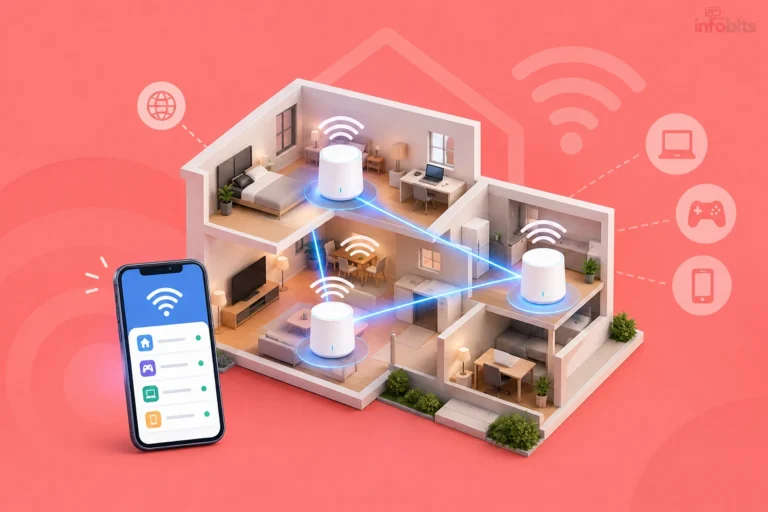
For home offices or small businesses that can’t tolerate downtime, pairing your primary broadband with a good mesh Wi-Fi system like TP-Link Deco X50 (available on Amazon)also helps you get the most out of the extra bandwidth these new cables are bringing online, especially in larger homes where a single router leaves dead zones.
Related: Jio AirFiber vs Airtel Xstream AirFiber: Full Comparison
Conclusion
India’s undersea internet cables are the backbone of the country’s international internet connectivity. Every day, they carry huge amounts of data used for streaming, online payments, cloud services, video calls, business communication, and AI applications. Around 95–99% of India’s international internet and data traffic depends on these submarine cables, making them far more important than most people realise.
The good news is that India’s submarine cable network is expanding quickly. Projects such as 2Africa Pearls, IAX and IEX, along with new cable landing points on the east coast, are adding capacity and reducing India’s dependence on a few major coastal hubs. This is particularly important as cloud computing, data centres, streaming and AI continue to increase India’s demand for international bandwidth.
However, more cables alone will not remove every risk. Cable cuts, the concentration of landing stations around Mumbai, and the lack of a dedicated Indian cable repair ship remain important concerns. India needs more geographic diversity, faster repair capabilities and stronger protection of this critical infrastructure.
For ordinary internet users, the takeaway is simple: your internet connection depends on infrastructure far beyond your home router. India’s investment in new undersea cables should bring greater capacity, better international connectivity and improved resilience in the years ahead. Satellite internet will provide useful backup connectivity, but undersea cables will remain India’s main digital highway for a long time.
Frequently Asked Questions
They’re fibre-optic cables laid on the ocean floor that carry internet data as pulses of light between countries and continents.
Roughly 95–99% of India’s international internet and data traffic travels through undersea cables rather than satellites.
India has around 17 international submarine cable systems landing at about 14 cable landing stations across Mumbai, Chennai, Kochi, Tuticorin, and Trivandrum, with several more under construction.
Mumbai and Chennai are India’s two primary hubs, with Kochi, Tuticorin, and Trivandrum as secondary landing points, and Visakhapatnam emerging as a new gateway.
It’s an extension of the 45,000 km 2Africa cable system, the longest undersea cable ever built, bringing connectivity from Africa and Europe into the Arabian Gulf, Pakistan, and India via Mumbai.
IAX (India-Asia-Xpress) and IEX (India-Europe-Xpress) are Reliance Jio-backed cables connecting Mumbai to Southeast Asia and Europe, respectively, each carrying over 200 Tbps of capacity.
Depths vary hugely, from a few metres near the shore (where cables are buried for protection) to several thousand metres in the open ocean.
Light travels through the glass fibre at roughly two-thirds the speed of light in a vacuum, making it far faster than satellite round-trips for most routes.
A specialised repair ship locates the fault, hauls the cable to the surface, splices the broken section, and re-lays it, a process that can take days to several weeks.
No. India currently depends on shared repair contracts with vessels based in Dubai or Singapore, which is considered a major vulnerability by telecom policy experts.
Multiple undersea cables in the Red Sea, including SEA-ME-WE 4, were damaged, disrupting connectivity across India, Pakistan, the UAE, and Saudi Arabia, though most Indian domestic networks stayed largely stable due to redundancy.
Yes, incidents like suspected Baltic Sea cable sabotage and reports of Chinese deep-sea cable-cutting technology have raised genuine geopolitical concerns, alongside the far more common accidental damage from fishing and anchors.
No. Satellite internet like Starlink complements undersea cables for remote or emergency connectivity, but its total capacity is a small fraction of what cables carry, so it can’t realistically replace them.
Hyperscalers like Google (Blue-Raman) and Meta (Project Waterworth, 2Africa) need massive dedicated bandwidth for cloud services and AI workloads, and are increasingly funding their own subsea infrastructure instead of relying only on telecom operators.
A 2026 regulation that allows large enterprises and hyperscalers to build and operate their own private subsea cable capacity to their data centres without needing a full telecom licence.
The Chennai-Andaman-Nicobar Islands (CANI) cable and the Kochi-Lakshadweep Islands (KLI) cable, both connecting India’s island territories to mainland high-speed internet.
Because roughly 15 major cable systems land in and around Mumbai, any large-scale disruption there could affect a disproportionate share of India’s total international connectivity at once.
Encouraging new landing points at Visakhapatnam, Machilipatnam, and Digha, alongside TRAI recommendations to treat cable infrastructure as critical national infrastructure and diversify landing station licensing.
Industry leaders, including TRAI’s own chief, have called for roughly a 10x expansion in subsea cable capacity to keep up with projected data demand through 2028 and beyond.
A mix of Indian telecom operators (Bharti Airtel, Reliance Jio, Tata Communications, Sify, BSNL) and global consortiums that include hyperscalers like Meta, Google, and Microsoft, who co-invest in specific cable systems.
We hope you are interested in our articles and consider following our Facebook, Instagram, and Twitter pages for regular updates.
Also, share this article with your friends and relatives. Bookmark this page for future reference.
Subscribe to our free newsletter to get similar articles and regular updates directly in your Email Inbox.
Subscribe to be the first to learn about new information
Disclosure: If you follow our links to a retailer’s website and make a purchase, we will get an affiliate commission on some, but not all, of the items or services we promote. This will cause no price change for you.
You May Be Interested in Reading:
- A Complete Guide to Optimising BSNL APN Settings for High-Speed Internet
- Importance of the Internet in Modern Life
- How to Increase BSNL Internet Speed? New BSNL Speed Test Tool
- How To Find Out If BSNL 4G Coverage Is Near You? Easy Way
- The Double-Edged Sword: Investigating the Uses and Misuses of Mobile Phones!