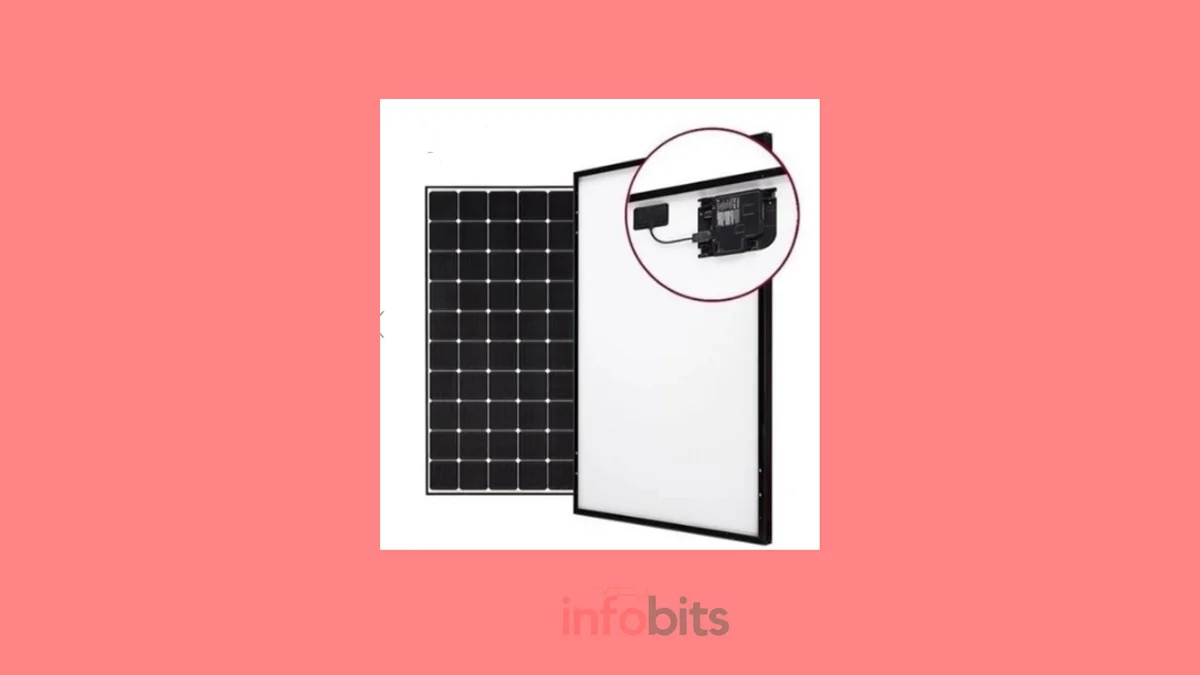
AC Solar Panels (Solar AC Modules): Are They Worth It?
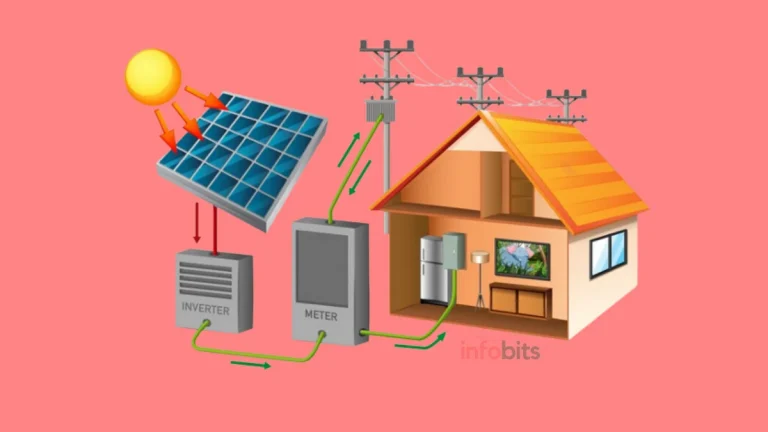
Most solar panels hand off their power to one big central inverter that does all the DC-to-AC conversion. An AC solar panel skips that step entirely. The inverter is already built into the panel itself.
It sounds like a small design change, but it changes how you shop, install, and expand your solar setup. Here’s exactly what an AC solar panel is, how it differs from a regular panel-plus-inverter setup, and whether it’s actually the right call for your home or business.
Quick answer: An AC solar panel (also called an AC module) is a standard solar panel with a small microinverter pre-attached to its back, so it outputs ready-to-use AC power directly rather than DC. It’s worth it if you have a modest power need (roughly up to 2–3kW), want a simple plug-and-play setup, and don’t need backup power during outages. For larger systems or anyone wanting battery backup, a conventional panel-plus-central-inverter setup is usually the better and cheaper choice.
What Is an AC Solar Panel?
An AC solar panel ( also called a solar AC module) is a regular solar panel with a small microinverter attached directly to its backside. Instead of sending raw DC power down to a central inverter somewhere else in your building, the panel converts DC to AC right where it’s generated.
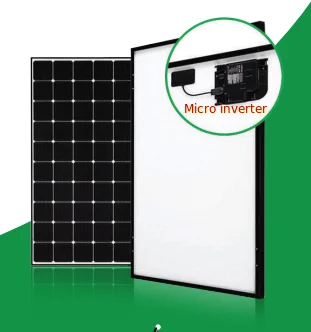
That’s the entire concept: same solar cells, same panel technology, but with the conversion step moved onto the panel itself. This is why they’re often marketed as “plug and play”. Each panel is a self-contained, grid-ready power source the moment it’s mounted and wired in.
It’s worth being clear about one thing upfront: this is not a fundamentally different solar technology. It’s a packaging and system-design choice, where the inverter physically lives, and how many of them your system uses.
How an AC Solar Panel Works
- Sunlight hits the panel and generates DC electricity, exactly like any standard solar panel.
- That DC output feeds directly into the microinverter mounted on the back of the same panel. It never travels anywhere as DC.
- The microinverter converts it to AC power on the spot, typically including a built-in MPPT (Maximum Power Point Tracking) controller to extract the maximum available power from that specific panel.
- The AC output from each panel connects into your home’s or building’s electrical system, ready to use or feed to the grid.
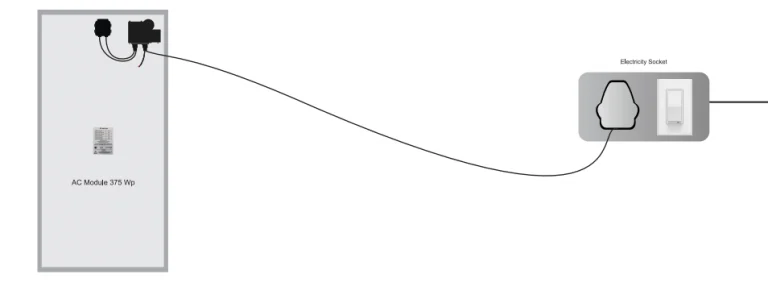
Because each panel converts and optimises its own output independently, one panel’s performance doesn’t drag down the others.
If a tree casts a shadow over one panel in your array, the rest keep producing at full capacity, unlike a shared central-inverter setup, where the weakest panel in a string can pull down the output of the entire group.
Related: How To Convert A Normal Inverter To A Solar Inverter
AC Solar Panels vs Regular Panels + Central Inverter
| AC Solar Panel (Built-in Microinverter) | Regular Panel + Central Inverter | |
|---|---|---|
| Where DC-to-AC conversion happens | At each panel | At one shared inverter for the whole array |
| Impact of shading on one panel | Minimal; other panels keep producing normally | Can drag down the output of the entire string |
| Installation | Simpler, less DC wiring, often faster | More DC cabling and a central inverter to mount |
| Expansion | Add more panels anytime, no system redesign | May require rebalancing or a larger central inverter |
| Typical system size fit | Small to modest (up to ~2–3kW) | Small to very large, including industrial scale |
| Cost per watt | Generally higher | Generally lower, especially at scale |
| Backup during power cuts | No; shuts down like any grid-tied system | No, unless paired with a hybrid inverter and battery |
Advantages of AC Solar Panels
- No separate central inverter to buy or wire. The conversion hardware ships with the panel, which cuts both equipment cost at the panel level and installation complexity.
- Lower DC transmission losses. Because conversion happens right at the panel, there’s very little DC cable run where energy can be lost before it becomes usable AC power.
- Shading resilience. Each panel operates independently, so a shaded or underperforming panel doesn’t reduce the output of your whole array. A real advantage on rooftops with partial shade from trees, water tanks, or nearby buildings.
- Easy to expand. Adding more capacity later is as simple as adding more AC panels. No redesigning or replacing a central inverter to accommodate the new load.
- Long, matched warranties. Many AC solar panels carry warranties of around 25 years on the panel itself, with the microinverter typically covered separately (commonly 10–15 years). Still a meaningful improvement over standalone inverters, which often carry only 2–5-year warranties.
- Reduced panel mismatch loss. Because each panel is independently optimised via its own MPPT, differences in orientation, age, or specification between panels matter far less than in a shared-inverter setup.
Disadvantages of AC Solar Panels
- Higher upfront cost. Because every panel includes its own inverter, AC modules generally cost more per watt than buying separate panels and a central inverter, especially at larger system sizes.
- A fault takes out that whole unit. If either the panel or its attached microinverter fails, that entire module is out of action until it’s repaired or replaced. You can’t easily swap just the panel or just the inverter.
- DISCOM approval is still required. Because these are grid-connected systems, you still need your local power distribution authority’s inspection and approval before switching one on, same as any other grid-tied solar setup.
- No power during outages. Like standard grid-tied systems, AC solar panels shut down automatically when grid power fails. This is a safety feature (anti-islanding protection), not a fault, but it does mean no backup power unless paired with a battery-based hybrid setup.
- Not built for high-power needs. AC solar panels are generally suited to smaller systems, typically up to around 2–3kW; for larger commercial or high-consumption setups, a central-inverter system is usually more practical and cost-effective.
- Repairs need roof access. Since the microinverter lives on the roof with the panel, diagnosing or replacing a faulty unit is more labour-intensive than servicing a single centrally located inverter.
Related: What Is Net Metering in Solar? Meaning, Process & Rules in India
Cost of AC Solar Panels in India
As a rough guide, a 1kW AC module system in India typically runs somewhere in the ₹25,000–₹30,000 range, with larger kits (3kW, 5kW, 10kW) scaling up accordingly.
Prices vary by brand, panel wattage, and whether monitoring hardware is included, so treat this as a starting point for comparison rather than a firm quote.
If you’re comparing AC module kits against a conventional panel-plus-inverter setup for your specific power needs, it’s worth getting quotes for both from a local installer before deciding. The cost gap narrows considerably for smaller systems, and can even favour AC modules once installation labour is factored in.
For context, a 1kW AC module system generates roughly 4–5 units of electricity a day under typical conditions, generally enough to run one 1.5-ton AC unit alongside a refrigerator, television, fans, and lighting for a small home during daylight hours.
Who Should Actually Buy an AC Solar Panel?
A good fit if:
- Your power requirement is modest, roughly up to 2–3kW.
- You want the simplest possible installation, with minimal DC wiring.
- Your roof has some shading from trees, water tanks, or nearby structures.
- You plan to expand your system gradually, panel by panel, over time.
- You don’t need backup power during grid outages.
Probably not the right fit if:
- You need a larger system. Commercial-scale or high-consumption homes are usually better served by a central-inverter setup.
- You want the lowest possible cost per watt, since central-inverter systems are typically more economical at scale.
- You want a hybrid system with battery backup for power cuts, since AC modules aren’t designed around that use case.
AC Solar Modules in India: Brands to Know
Loom Solar is one of the most recognised names offering AC solar modules in India, with panels built around Enphase microinverter technology. Enphase is one of the most established microinverter manufacturers globally.
Their AC module range typically spans from small 1kW kits up to larger 10kW systems, aimed at homes, small offices, and shops.
Waaree Energies, one of India’s largest solar panel manufacturers, has also partnered with Enphase to offer AC-integrated panels, giving buyers another established brand to compare against.
Beyond these two, several regional installers and distributors resell AC module kits from the same underlying microinverter technology, so it’s worth comparing warranty terms and after-sales support as closely as the headline price when you shop.
AC Solar Panel vs Microinverter: What’s the Difference?
It’s easy to mix these two terms up, so here’s the distinction in one line: a microinverter is the small conversion device itself, while an AC solar panel is a complete product, a standard panel with a microinverter already attached to it at the factory.
You can also buy microinverters and regular panels separately and combine them yourself on-site, which achieves essentially the same outcome as buying a pre-integrated AC module, just with more installation flexibility and typically a lower combined cost.
If you’re trying to decide between a microinverter-based setup and a traditional string (central) inverter setup more broadly, independent of whether you buy pre-integrated AC panels or assemble the components yourself.
Our detailed comparison on string inverters vs microinverters covers that decision in depth, including cost, performance, and maintenance trade-offs.
Conclusion
An AC solar panel is a genuinely convenient option for smaller, straightforward installations. You get simpler wiring, better shade tolerance, and easy expansion, in exchange for a higher cost per watt and a hard ceiling on how much power the format comfortably supports.
For a small home with modest daytime power needs and no interest in backup power, it’s a solid, low-hassle choice.
For anything larger, or if backup power during outages matters to you, it’s worth comparing against a conventional panel-and-central-inverter setup, or a hybrid system with battery storage, before you commit.
Our guide on how to select solar panels for your home is a good next read if you’re still finalising your overall system design.
Frequently Asked Questions
It’s a standard solar panel with a small microinverter pre-attached to its back, so it outputs ready-to-use AC electricity directly, instead of sending DC power to a separate central inverter.
For smaller systems (roughly up to 2–3kW) where simplicity and shading resilience matter more than cost per watt, yes. For larger systems, a conventional panel-plus-central-inverter setup is usually more cost-effective.
A 1kW AC module system typically costs around ₹25,000–₹30,000, with pricing scaling up for larger kits, varying by brand and included components.
No. Like standard grid-tied solar systems, they shut down automatically during a grid outage as a safety feature, unless paired with a separate battery-based hybrid setup.
A microinverter is the small conversion device itself. An AC solar panel is a complete product; a regular panel with a microinverter already factory-attached to it.
Yes. This is one of their biggest advantages. You can add more AC panels incrementally without redesigning your system or upgrading a central inverter.
Yes. Since they’re grid-connected devices, you still need inspection and approval from your local power distribution authority before switching the system on, the same as any other grid-tied solar installation.
Loom Solar and Waaree Energies are two of the most established names, both offering AC modules built around Enphase microinverter technology.
Individual AC solar panels commonly range from around 340W to 375W or more, depending on the model, with a typical 1kW system (roughly 3 panels) generating about 4–5 units of electricity per day.
The entire module, panel and inverter together, is out of action until it’s repaired or replaced, since the two components aren’t designed to be serviced separately.
Yes, generally. Because each AC panel converts and optimises its own output independently, shading on one panel doesn’t reduce the output of the rest of the array, unlike a shared central-inverter string.
Yes, within limits. A typical 1kW AC module system can generate enough daytime power to run one 1.5-ton AC alongside basic home loads like a refrigerator, fans, and lighting.
Not by default. Most AC solar panel setups are grid-tied without storage. If you want backup power during outages, you’d need a separate battery-based hybrid arrangement, which isn’t the typical AC module use case.
Panels typically carry around a 25-year performance warranty, with the attached microinverter commonly covered separately for 10–15 years, depending on brand.
Both achieve a similar outcome. Buying components separately usually costs less and offers more flexibility, while pre-integrated AC modules offer simpler, factory-matched installation.
We hope you find this information useful, and please share it with your friends and relatives.
Also, consider following our Facebook and Twitter pages for regular updates.
Subscribe to our free newsletter so that you will get similar articles and regular updates directly in your Email.
Subscribe to be the first to learn about new information
Disclosure: If you follow our links to a retailer’s website and make a purchase, we will get an affiliate commission on some, but not all, of the items or services we promote. This will cause no price change for you.