
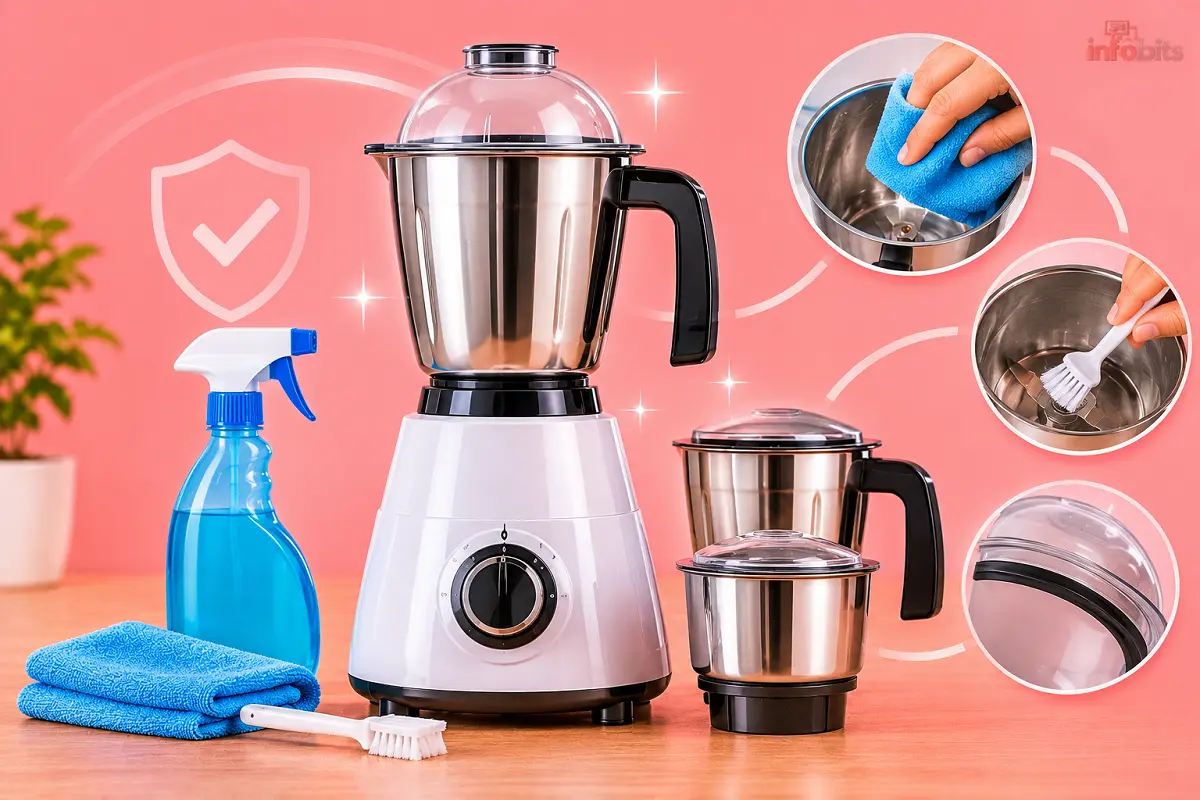
How to Clean and Maintain a Mixer Grinder Properly
Your mixer grinder works harder than almost any other appliance in your kitchen. It grinds masala, whips up chutney and turns rice and dal into dosa batter, often before breakfast. But most of us give it a quick rinse and move on.
That is where the trouble starts. Old masala, oil and batter collect under the blades and inside the gasket. They cause bad smells, stains and a motor that works harder than it should.
This guide shows you how to clean every part safely and how to keep the motor healthy for years. It also covers what to do when something goes wrong.
Quick Answer: How Do You Clean a Mixer Grinder?
Unplug it first. Wash the jar, lid and gasket with lukewarm water and a few drops of dish soap after every use. Clean under the blades with a soft brush. Wipe the motor base with a barely damp cloth. Dry every part completely before you store it.
That is the whole routine. The rest of this guide explains each step and the deeper fixes for stains, smell and noise.
Why Proper Cleaning and Maintenance Matter
Food left in the jar goes stale quickly. It can spoil the taste of your next batch and attract insects. Wet batter and coconut residue are the worst offenders.
A dirty gasket can also leak and make the jar wobble. A wobbling jar puts extra strain on the coupler and motor. Small habits protect the expensive part of the machine.
Clean blades also cut better. When residue builds up around them, the motor has to push harder for the same result.
What You Need Before You Start
You do not need fancy products. A short checklist is enough:
- Lukewarm water and mild dishwashing liquid
- A soft bottle brush or an old toothbrush
- A clean, dry cloth for the motor base
- Baking soda and a lemon or white vinegar for deep cleaning
- A soft, dry paintbrush for the ventilation slots
A narrow jar brush makes the biggest difference. It reaches under the blade hub where fingers and sponges cannot go. If you do not have one yet, a basic bottle and jar brush set from Amazon costs very little and saves you from nicking your fingers on the blades.
Safety Rules Before You Clean
These four rules prevent most kitchen accidents:
- Unplug the mixer first. Never clean it while it is connected to the socket.
- Never dip the motor base in water. Water inside the base can damage the motor and cause a shock.
- Do not touch blades with bare hands. Use a brush and hold the jar by its body.
- Do not use boiling water in plastic jars. Heat can warp the jar and loosen the blade seal.
Also, do not mix bleach and vinegar. The mixture releases a toxic gas.
How to Clean a Mixer Grinder: Step-by-Step Daily Routine
Do this after every use. It takes about three minutes.
- Empty the jar right away. Scrape out the last bits with a spatula.
- Fill the jar one-third full with lukewarm water. Add two or three drops of dishwashing liquid.
- Close the lid and lock the jar. Run the mixer for 20 to 30 seconds. This loosens most of the residue.
- Pour out the soapy water. Rinse the jar under the tap.
- Scrub under the blades. Use a soft brush on the blade hub and the jar base.
- Remove and wash the lid and gasket. Lift the rubber ring out and clean the groove behind it.
- Dry everything. Keep the jar upside down on a rack so water drains out of the blade area.
A quick tip from experience: wash the jar while the food is still wet. Dried masala and batter can take much longer to clean.
How to Clean Each Part of Your Mixer Grinder
Every part collects a different kind of dirt. This table shows what works best:
| Part | What collects there | How to clean it | Do not |
|---|---|---|---|
| Jar | Oil, masala, batter | Warm soapy water, soft brush | Use steel scrubbers on plastic |
| Blades | Fibres, paste, grease | Brush between and under blades | Touch with bare fingers |
| Lid | Splashes, odour | Sponge with soapy water | Leave wet and closed |
| Rubber gasket | Trapped paste, moisture | Remove, wash, dry fully | Soak for a long time in vinegar |
| Motor base | Spills, dust, grease | Wring out damp cloth, then dry cloth | Pour water over it |
| Ventilation slots | Dust, food bits | Dry soft brush | Spray liquid into them |
| Power cord | Kitchen grease | Dry or barely damp cloth | Wash under the tap |
How to clean the blades safely
If your blade assembly is fixed to the jar, do not try to unscrew it. Brush it clean in place with soapy water. If it is removable and your manual allows it, soak it for 10 minutes and brush each side.
Always rinse well. Leftover soap can foam up in your next batter.
How to clean the rubber gasket and washer
This is the most skipped step. Pull the ring out gently and wash it with soap. Dry it before you put it back.
If the gasket is cracked, hardened or stretched, replace it. A bad seal is the most common reason for jar leaks. Spare gasket and washer sets are easy to find on Amazon for most popular brands, so search with your mixer’s exact model number before you order.
How to clean the motor base
Wipe it with a cloth wrung out until it is barely damp. Follow with a dry cloth. Pay attention to the area around the coupler, where the jar sits.
Then brush the ventilation slots with a dry, soft brush. Blocked vents cause the motor to heat up faster. A small, soft paintbrush or a vent cleaning brush works well for this and costs less on Amazon than a cup of tea at a good restaurant.
Deep Cleaning: Stains, Smells and Cloudy Jars
Do a deeper clean once a week, or whenever the jar looks dull or smells off. Choose the method that matches the problem.
| Problem | Method | How to do it | Watch out for |
|---|---|---|---|
| Yellow turmeric stains | Baking soda paste | Rub a paste of baking soda and water on the stain. Leave for 15 minutes, then wash. | Do not scrub hard on plastic |
| Yellow stains (persistent) | Sunlight | Wash the jar and keep it in indirect sunlight for a few hours. | Long, harsh sun can weaken plastic |
| Sour or stale smell | Lemon peel | Run a few lemon peels with water in the jar for 30 seconds. Rinse. | Rinse well to remove acid |
| Strong garlic or onion smell | White vinegar | Fill the jar with one part vinegar and three parts water. Wait 10 minutes. Rinse. | Do not leave on rubber gaskets |
| Stuck masala in dry jar | Dry rice | Grind a small handful of uncooked rice for 30 seconds. Shake out. | Use only in a dry jar |
| Greasy film | Dish soap and warm water | Run the self-clean method twice. | Do not use boiling water |
| Cloudy plastic jar | Accept it | Tiny scratches cause this. It is cosmetic. | Avoid abrasive pads going forward |
Some people run rock salt in the jar to sharpen blades. The effect is mild at best. If grinding feels slow, dull or damaged blades usually need a proper replacement instead.
Plastic Jars vs Stainless Steel Jars
Plastic jars stain and scratch more easily. They also absorb smells from garlic, onion and strong spices. Use soft brushes and avoid hot water.
Stainless steel jars resist stains and odours. They can dent if dropped, and a loose blade assembly can still leak. Both types need the same drying care.
Can You Put a Mixer Grinder Jar in the Dishwasher?
In most cases, hand washing is safer. Heat and strong detergents can dull blades, cloud plastic, and loosen seals. Some brands approve certain steel jars for dishwashers, so check your manual before you try.
How to Maintain Your Mixer Grinder for Years
Cleaning keeps it hygienic. These habits keep the motor alive:
- Grind in short bursts. Run it for 30 to 60 seconds, then pause. Long, continuous runs overheat the motor.
- Do not overfill. Keep the jar at the level your manual suggests, usually no more than about two-thirds full.
- Start on low, then increase. Jumping straight to the highest speed strains the motor.
- Cut big pieces first. Chop ginger, coconut and hard ingredients into small bits.
- Use the right jar. Wet jar for liquids and batter, dry jar for masalas, chutney jar for small batches.
- Lock the jar properly. A badly seated jar causes vibration and leaks.
- Let it rest. Give the motor a few minutes between heavy batches.
If your area has frequent voltage fluctuations, a voltage stabiliser or surge protector can protect higher-wattage mixers. A compact surge-protected extension board is a simple, low-cost safety net for kitchen appliances, which is easily available on Amazon.
Maintenance schedule at a glance
| How often | What to do |
|---|---|
| After every use | Self-clean, wash jar, lid and gasket, dry fully |
| Weekly | Deep clean jar, check gasket, wipe motor base, brush vents |
| Monthly | Check blade sharpness and jar lock, inspect cord and plug |
| Every 6 months | Check the coupler for wear, look for cracks in jars |
| Every 3 to 5 years | Carbon brush check on conventional motors, or service visit |
If your mixer uses a BLDC motor, there are no carbon brushes to replace. We explain how these motors differ in our BLDC mixer grinder guide.
Common Mistakes That Damage Mixer Grinders
- Leaving food in the jar overnight
- Washing the jar with other greasy utensils, which traps particles in the blade area
- Using steel wool or harsh scrubbers on plastic jars
- Soaking or washing the motor base
- Storing the jar sealed while it is still damp
- Running the mixer continuously for several minutes
- Grinding very hard items like large ice blocks or whole dry spices in large quantities, unless your manual allows it
- Ignoring a leaking gasket or a loose jar
Myth vs Fact
| Myth | Fact |
|---|---|
| A mixer grinder cleans itself completely with soap and water | The self-clean run helps, but you still need to brush under the blades and dry the gasket. |
| A burning smell is always a dead motor | It is often an overloaded motor, a worn coupler or blocked vents. First-time use can also give off a mild smell from the motor varnish. |
| Hot water cleans better | Very hot water can warp plastic jars and loosen seals. Lukewarm is enough. |
| Cloudy jars are unsafe | Cloudiness comes from tiny scratches. It is cosmetic. |
| Dishwashers are always safe for jars | Many brands advise hand washing. Check your manual. |
Warning Signs: When Your Mixer Needs Attention
Stop using the mixer and unplug it if you notice any of these:
- A strong, persistent burning smell
- Sparks or smoke from the motor base
- A jar that wobbles or will not lock
- Water or batter leaking out of the base
- A cracked jar or handle
- Motor humming but the blades not turning
- Repeated tripping of the overload protector
Troubleshooting Common Problems
| Problem | Likely cause | What to try |
|---|---|---|
| Mixer will not start | Jar not locked, overload protector tripped | Lock the jar properly. Let the motor cool. Press the reset button under the base, as your manual describes. |
| Stops while grinding | Overload protector cutting power | Reduce the quantity. Use short runs. Let it rest. |
| Burning smell | Overload, blocked vents, worn coupler, carbon brush wear | Stop. Unplug. Clean vents. Reduce the load. If it continues, visit a service centre. |
| Jar leaks | Worn gasket, loose blade assembly | Replace the gasket. Check the blade assembly for tightness. |
| Loud noise or vibration | Jar not seated, worn coupler, uneven load | Re-lock the jar. Check the coupler. Do not run it empty. |
| Motor runs, jar does not turn | Worn coupler | Replace the coupler or ask a technician. |
| Slow, poor grinding | Dull blades, overfull jar | Reduce the quantity. Consider replacing the blade unit. |
Note that motor, coupler and carbon brush repairs should be done by a trained technician. Opening the motor base yourself can void your warranty and is unsafe. We explain how coverage works in our guide to what on-site warranty means.
Repair or Replace? A Simple Decision Guide
Use this rule of thumb:
- Repair when the fault is small: a new gasket, jar, coupler or carbon brushes, and the motor is otherwise healthy.
- Replace when the motor has burnt out, the repair estimate comes close to half the price of a new one, or the machine is more than 8 to 10 years old and failing often.
When shopping for a replacement, look at the motor type, jar quality and service network, not only the wattage. Our guide to price history on Amazon can help you time the purchase.
Storage and Monsoon Care
Humidity speeds up rust, mould and smell. Store the jars dry, with the lid slightly open or off. Keep the motor base away from the gas stove and sink splashes.
During monsoon, dry the jar with a cloth and leave it in a dry spot for a while. A small dish-drying rack with a jar holder (available on Amazon) keeps blades facing down and drains water properly.
Expert Tips for a Longer Mixer Life
- Wash the jar before the food dries.
- Rinse masala jars immediately. Turmeric and chilli stain permanently if left.
- Replace the gasket once a year if you grind daily.
- Keep a separate jar for sweet items and strongly flavoured spices, if your set has more than one.
- Read your manual once. Duty cycle and maximum load vary by brand.
- Do not run the mixer empty.
- Do not ignore small noises. They usually announce bigger faults.
Conclusion
A clean mixer grinder is about small, regular habits. Wash right after use, brush under the blades, dry the gasket and give the motor rest breaks.
Do those four things, and you avoid most smells, stains and breakdowns.
If something does go wrong, stop, unplug and check the simple causes first. For motor problems, use a service centre rather than a screwdriver.
Frequently Asked Questions
Rinse and wash the jar, lid and gasket after every use. Do a deeper clean weekly. Wipe the motor base and brush the vents at least once a week.
It is better not to. Washing it with other utensils lets food particles stay trapped under the blades and in the gasket. Clean the jar separately with a brush.
Use a thin bottle brush or an old toothbrush with soapy water. Keep the jar upside down afterwards so water drains from the blade area.
Yes. Fill the jar one-third with lukewarm water, add a few drops of dish soap and run it for 20 to 30 seconds. Then rinse and brush for a full clean.
Rub a baking soda paste on the stain, leave it for 15 minutes and wash. Drying the clean jar in indirect sunlight for a few hours also helps lighten the colour.
Run lemon peels with water in the jar, or soak it in one part white vinegar and three parts water for 10 minutes. Rinse well and dry fully.
No. Never pour water on or dip the motor base. Unplug it and wipe it with a barely damp cloth, then dry it with a clean cloth.
Hand washing is safer for most jars and blades. Some brands approve specific steel jars, so check your user manual first.
Common causes are overloading, long continuous use, blocked vents, a worn coupler or worn carbon brushes. A brand-new mixer can also smell mildly during first use. If it persists, stop and visit a service centre.
The overload protector is likely cutting power because the motor is hot or overloaded. Let it cool, reduce the quantity and reset it as your manual describes.
A worn or cracked rubber gasket, or a loose blade assembly, is the usual cause. Replace the gasket first and check that the blade unit is tight.
The coupler between the motor and the jar is probably worn. Have it replaced by a technician or an authorised service centre.
Keep each run to around 30 to 60 seconds, then pause. Check your manual for the exact duty cycle of your model.
Home tricks such as running rock salt have only a mild effect. If grinding is slow even with a clean jar, replacing the blade unit is the reliable fix.
Tiny scratches from grinding hard items and abrasive scrubbing cause the cloudiness. It does not affect function, but avoid steel scrubbers to slow it down.
Replace it when it cracks, hardens, stretches or starts leaking. If you grind daily, checking it every few months and replacing it about once a year is a sensible habit.
No. BLDC motors do not use carbon brushes. Conventional motors may need brushes checked or replaced after several years of regular use.
It can help if your area has frequent voltage swings, especially with higher-wattage mixers. A surge protector adds some extra safety.
Dry every part, store jars with the lid slightly open, and keep the base away from sink splashes and the stove. This limits mould, rust and smell.
Replace it if the motor has burnt out, repair costs approach about half the price of a new one, or an old unit keeps failing. Small parts like gaskets, jars and couplers are usually worth repairing.
We hope you are interested in our articles and consider following our Facebook, Instagram, and Twitter pages for regular updates.
Also, share this article with your friends and relatives. Bookmark this page for future reference.
Subscribe to our free newsletter to get similar articles and regular updates directly in your Email Inbox.
Subscribe to be the first to learn about new information
Disclosure: If you follow our links to a retailer’s website and make a purchase, we will get an affiliate commission on some, but not all, of the items or services we promote. This will cause no price change for you.
You May Be Interested in Reading:
- Does Your Smart TV Need a Voltage Stabiliser?
- Do You Need a 1000W Mixer Grinder? Wattage Explained (500W vs 750W vs 1000W)
- Type 1 vs Type 2 vs Type 3 Surge Protectors: Which Does Your Indian Home Need?
- Induction vs Infrared Cooktop: Which Is Better for Indian Kitchens?
- Best Mixer Grinders in India: Tested Picks for Every Kitchen