IPTV vs Cable TV in India: Which Should You Actually Choose?
If you’ve searched “IPTV vs cable TV,” chances are you’ve landed on a dozen articles written for American or European readers, comparing $100/month cable bills to $15 IPTV subscriptions.
None of that maps cleanly onto how television actually works in India.
Here’s the part most articles miss: in India, “IPTV” usually isn’t a separate subscription you buy from a random website. It’s a live-TV feature bundled into your BSNL, Jio or Airtel fibre broadband connection.
Meanwhile, “cable TV” today often means a local cable operator (LCO) feeding digital signals through an MSO like Hathway, Den, or GTPL, not the analogue cable of 15 years ago.
And then there’s a third category nobody asks about directly, but everyone eventually runs into: pirated “IPTV” boxes sold on Telegram and Instagram promising every channel and Netflix for ₹500 a year, which is illegal and has gotten people in serious legal trouble in 2025–26.
This guide untangles all three, with real Indian pricing, real provider names, and a straight answer on which one actually fits your situation.
Quick Answer: IPTV in India feels fresher, flexible, and works well if you’ve got strong internet; it’s like carrying your TV in your pocket. Cable TV is more stable, especially in areas with patchy internet, but less customizable. If you value variety and on-demand shows, IPTV wins; for reliability, cable still holds ground.
Quick Verdict: IPTV or Cable TV in India?
Choose IPTV (via Jio Fiber, Airtel Xstream, or BSNL) if you already have or plan to get fibre broadband, want a single bill for internet + TV + OTT apps, and want catch-up TV, on-demand content, and the ability to watch on your phone or laptop too.
Choose Cable TV / DTH if your area lacks reliable fibre broadband, you want TV that works even when the internet is down, or you’re in a rural or semi-urban area where Tata Play, Dish TV, or a local cable operator (LCO) is more consistently available than Jio/Airtel fibre.
Avoid unlicensed “IPTV” boxes and apps sold outside official telecom channels. Indian and international agencies have been actively raiding and prosecuting these networks since 2021, with major actions continuing through 2025 and 2026.
Related: IPTV vs DTH: Which Is Better for Your Home TV Needs
What “IPTV” Actually Means in India (And Why It Confuses People)
Internet Protocol Television (IPTV) is technically just a delivery method: TV channels sent to your screen as internet data instead of a broadcast signal travelling through a coaxial cable or satellite dish.
That’s the textbook definition, and it’s accurate. But it doesn’t tell you what to actually do as an Indian consumer, because “IPTV” gets used for three very different things here:
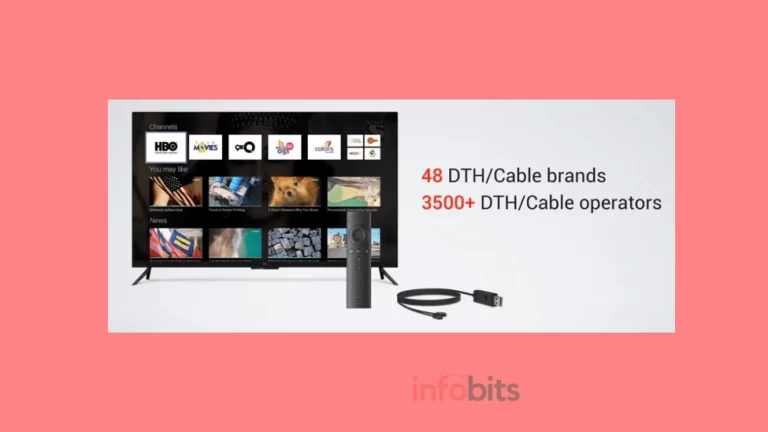
- Telco IPTV (legal, mainstream): Jio Fiber and Airtel Xstream Fiber bundle live TV channels into their broadband plans, delivered through a set-top box (Jio Set Top Box / Airtel Xstream Box) connected to your TV via HDMI. BSNL offers something similar in select circles. This is what most people should mean when they say “switching to IPTV.”
- OTT live-TV apps: Apps like JioHotstar, Sony LIV, and Zee5 increasingly bundle live channels with on-demand content, blurring the line between IPTV and regular streaming. These don’t need a set-top box at all, just a smart TV or streaming stick.
- Unlicensed “IPTV” services (illegal): Resellers, often operating through Telegram, Instagram, or YouTube ads, sell pirated access to hundreds of premium channels and OTT platforms for a flat annual fee, using cracked Android boxes or apps. This is piracy, not a legitimate alternative to cable, and is covered in detail further down.
This article focuses on comparing option 1 (legal telco IPTV) against traditional cable TV / DTH, since that’s the genuine, like-for-like decision most households are actually weighing.
Related: Best DTH Services in India: Which DTH is Best For You?
Key Differences Between IPTV and Cable TV
| Factor | IPTV (Jio Fiber / Airtel Xstream) | Cable TV / DTH |
|---|---|---|
| How it’s delivered | Over your broadband fibre connection | Coaxial cable (local MSO) or satellite dish (DTH) |
| Requires internet? | Yes, TV stops if broadband goes down | No, works independently of the internet |
| Typical setup | Bundled with a fibre broadband plan | Standalone subscription, own hardware |
| Channel count | 350–800+, depending on provider and plan | Pick-and-choose channels under TRAI’s NTO framework |
| On-demand / catch-up | Yes, built-in via OTT apps | Limited; varies by DTH operator |
| Multi-device access | Yes, via companion apps (Xstream Play, JioTV+) | Mostly TV-only unless the operator offers an app |
| Monthly cost (approx.) | ₹599–₹1,500+ as part of a fibre bundle | ₹200–₹500+ (NCF + pay channels) for cable/DTH alone |
| Availability | Limited to fibre/FTTH coverage areas | Wider rural and semi-urban reach |
| Weather/outage resilience | Affected by internet outages | Cable can be affected by physical line damage; DTH by heavy rain/storms |
| Contract/installation | Tied to broadband plan; usually free installation | One-time installation; security deposit common with DTH |
How IPTV Actually Works on Jio and Airtel in India
Jio Fiber: Jio bundles live TV through JioTV+ and its set-top box as part of broadband plans, with provider materials citing access to 800+ channels depending on the plan and region.
You get a mix of free-to-air channels, premium add-ons, and bundled OTT apps like Sony LIV, Zee5, and SonyLIV-style regional content.
Airtel Xstream Fiber: Airtel’s IPTV plans start around ₹699/month and scale up to roughly ₹3,999/month, bundling 350+ TV channels with 26+ OTT apps, including SonyLIV, Hoichoi, and FanCode through the Airtel Xstream Box.
Airtel recommends at least a 40 Mbps connection for a lag-free 4K viewing experience. A new TV connection on an existing Airtel broadband line typically adds a modest monthly charge for the additional set-top box.
BSNL: Offers a similar bundled IPTV experience in select circles, generally priced more aggressively than private players but with more limited channel selection and regional availability.
Related: Know About BSNL IPTV Plans and How to Get Them
If you’re setting up IPTV for the first time, pairing it with a dual-band Wi-Fi router rated for at least 100 Mbps, like the TP-Link Archer series (see on Amazon), makes a noticeable difference in reducing buffering when multiple people in the house are streaming at once.
Important: none of these is “pick any internet connection and add IPTV”. Airtel’s IPTV add-on, for instance, requires the TV connection to be at the same address as an active Airtel broadband line. You can’t mix Jio broadband with an Airtel IPTV box, or vice versa.
How Cable TV Works in India Today (Post-NTO)
Cable TV in India isn’t analogue anymore for most urban households.
It runs through Digital Addressable Systems (DAS), where a local cable operator (LCO) receives signals from a Multi-System Operator (MSO) like Hathway, Den Networks, GTPL, or Siti Networks, then distributes them digitally to your set-top box.
Pricing is governed by TRAI’s New Tariff Order (NTO) framework, under which you pay two separate components:
- Network Capacity Fee (NCF): A base fee for the cable/DTH connection itself, historically capped around ₹130–₹160 for the first 100–200 SD channels (before GST), though TRAI has periodically revised this cap and given operators more pricing flexibility in different consultation rounds. Always check your operator’s current published NCF rather than relying on an old number, since this has changed more than once.
- Pay channel charges: Additional cost for channels and bouquets you select beyond the free-to-air tier, billed per TRAI’s à la carte and bouquet pricing rules.
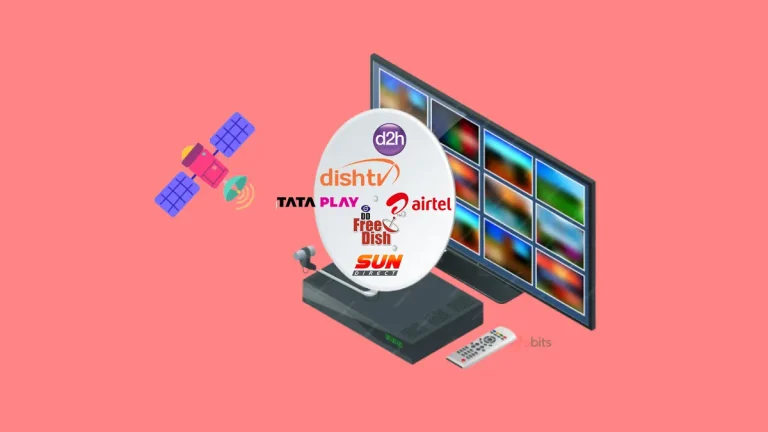
DTH operators, Tata Play, Dish TV, Airtel Digital TV (the satellite version, distinct from Airtel’s fibre IPTV), work on the same NTO pricing logic but deliver the signal via satellite dish instead of a cable line, which matters for households in areas without cable infrastructure.
IPTV vs Cable TV: Side-by-Side Comparison
| IPTV (Telco-bundled) | Cable TV / DTH | |
|---|---|---|
| Best for | Households with fibre broadband already, or planning to get it | Households without reliable fibre, or wanting an internet-independent backup |
| Picture quality | Excellent on a stable connection (HD/4K); degrades if bandwidth drops | Consistent HD; 4K availability is more limited across DTH operators |
| Reliability during outages | TV goes down with your internet | Keeps working through internet/power-router issues (cable/DTH signal is separate) |
| Flexibility | High, watch on phone, laptop, smart TV via apps | Low to moderate, mostly tied to the TV with the set-top box |
| Setup complexity | Simple if you already have fibre; box ships with the connection | Technician visit for new dish/cable line; security deposit common |
| Cost transparency | Bundled pricing can make it hard to isolate “TV cost” from “internet cost” | NTO mandates published NCF + per-channel pricing, so the cost is itemised |
| Rural availability | Limited to fibre/FTTH footprint | Much wider, DTH in particular reaches almost anywhere with a clear sky view |
Advantages of IPTV
- One bill, multiple services: broadband, live TV, and bundled OTT apps often come under a single monthly payment.
- Catch-up and on-demand viewing: missed the 9 PM news? Most IPTV platforms let you scroll back and watch it later.
- Multi-device access: Xstream Play and JioTV+ apps extend your subscription to phones, tablets, and laptops at no extra cost in most plans.
- Easier upgrades: adding 4K support or more channels is usually a plan change, not a hardware swap.
- Voice search and smart features: many telco set-top boxes now support voice remotes (“Play IPL match”) and personalised recommendations.
Disadvantages of IPTV
- Total dependency on your internet connection: if your fibre goes down, so does your TV, unlike with cable or DTH.
- Bandwidth competition: 4K streaming while someone else in the house is on a video call or downloading a large file can cause buffering.
- Provider lock-in: your IPTV box is generally tied to that specific telco’s broadband connection; switching ISPs usually means losing the bundled TV setup too.
- Limited rural coverage: only available where fibre/FTTH has actually been laid.
Advantages of Cable TV / DTH
- Independent of your internet connection: works during broadband outages, which matters more in India.
- Wider geographic reach: DTH in particular can serve areas where laying fibre isn’t commercially viable yet.
- Transparent, regulated pricing: TRAI’s NTO framework requires operators to publish NCF and channel pricing, so you know what you’re paying for.
- No dependency on broadband speed: a slow or congested internet connection has zero effect on your cable/DTH picture quality.
Disadvantages of Cable TV / DTH
- Weather and physical-line sensitivity: DTH signal can degrade in heavy rain or storms; cable lines can be damaged or degrade over the years of outdoor exposure.
- Less on-demand flexibility: catch-up and on-demand libraries are generally smaller than what IPTV/OTT platforms offer.
- Mostly single-device: without a companion app from your specific operator, you’re watching on the TV with the set-top box, full stop.
- Hardware costs and deposits: new connections often involve installation charges and a refundable security deposit for the set-top box/dish.
Related: How to Turn Your Old PC into a Media Centre
The Part Most Comparisons Skip: Legal IPTV vs. Pirated “IPTV” Services
This is genuinely the most important section for Indian readers, and it’s almost entirely missing from most IPTV-vs-cable content online (most of which is written to sell IPTV subscriptions, not to inform you).
Over the past few years, Indian and international law enforcement have dismantled large pirated IPTV networks operating under various rebranded names, often run through Telegram channels, Instagram ads, and YouTube promotions offering “all channels + Netflix + Prime for ₹500/year.”
Following a complaint from licensed broadcaster YuppTV, the Faridabad Cyber Crime Branch raided one such network in 2021, leading to the arrest of six individuals.
More recently, the Gandhinagar Cyber Crime Unit arrested an individual in Gujarat accused of running a piracy network that drew over five million subscribers and generated close to ₹700 crore in annual revenue by illegally rebroadcasting channels from major Indian broadcasters and global streaming platforms.
Why this matters beyond the legal risk: these pirated services are frequently reported to harvest user payment and personal data, and have been linked to phishing scams.
You’re not just risking a copyright notice; you’re potentially handing your card details to an unregulated operator with no accountability.
How to tell the difference between legal IPTV and a pirated service:
- Legal IPTV comes from your actual broadband provider (Jio, Airtel, BSNL) or a licensed aggregator like YuppTV, and is billed through your regular telecom account or a verifiable company.
- Pirated services are typically sold through informal channels, WhatsApp/Telegram groups, Instagram DMs, or third-party resellers, with no GST invoice, no company website with verifiable contact details, and prices that seem implausibly low for the channel count promised (genuinely “everything for ₹500/year” is not how broadcaster licensing economics work).
- If a “deal” requires you to install an APK from outside the Play Store/App Store, or asks for upfront payment via a personal UPI ID rather than a registered business, treat that as a red flag.
If you’re tempted by a cheap all-in-one streaming box deal, stick to your telecom provider’s own IPTV plan or a licensed app like YuppTV for diaspora/NRI access to Indian content. The savings from a pirated box aren’t worth the legal and data-security exposure.
Decision Framework: Which One Should You Actually Pick?
Answer these honestly, in order:
1. Do you already have, or are you getting, fibre broadband from Jio, Airtel, or BSNL? If yes, adding their IPTV plan is usually the path of least resistance and often cheaper than running cable TV and broadband as two separate services.
2. Does your area have reliable fibre coverage, or does your internet drop frequently? If your broadband is patchy, IPTV will inherit that unreliability for your TV too. Cable or DTH is the safer bet here.
3. Do you live in a rural or semi-urban area? DTH (Tata Play, Dish TV, Airtel Digital TV) generally has the widest reach in India, since it only needs a clear line of sight to the satellite, not physical fibre infrastructure.
4. How much do you value watching TV on your phone/laptop, not just the living room TV? If multi-device access matters, IPTV’s companion apps are a clear advantage over most standalone cable/DTH setups.
5. Do you need a TV to keep working during internet or power router outages? If yes, say, you live somewhere with frequent broadband downtime, cable or DTH’s independence from your internet connection is a genuine, underrated advantage.
If you’re going the IPTV route and plan to stream a lot of 4K content, it’s worth checking whether your existing smart TV supports HDR10 properly.
Many budget smart TVs under ₹25,000 advertise 4K but don’t fully support HDR, and a quick spec check before switching plans can save a disappointing first night of streaming. You can check good HDR smart TV options on Amazon.
How Much Data Does IPTV Actually Use?
Since IPTV runs over your broadband connection, data consumption matters if you’re on a capped plan (less common now, but still relevant for some BSNL and rural broadband plans):
| Streaming Quality | Approximate Data Use |
|---|---|
| SD (Standard Definition) | ~0.7–1 GB per hour |
| HD (720p–1080p) | ~1.5–3 GB per hour |
| 4K Ultra HD | ~7 GB per hour |
For a household watching 4–5 hours of HD content daily, that’s roughly 300–450 GB a month just for TV, worth checking against your broadband plan’s fair-usage policy (most modern Jio/Airtel fibre plans are unlimited, but older or rural plans sometimes aren’t).
Common Mistakes to Avoid
- Assuming “IPTV” always means a separate paid subscription you sign up for online. In India, it’s almost always a feature of your broadband plan from Jio, Airtel, or BSNL, not a third-party service you Google and pay separately.
- Switching to IPTV without checking your actual broadband speed and stability first. A 4K-advertised plan is meaningless if your fibre connection drops every evening during peak hours.
- Buying a cheap “all channels for life” IPTV box from an Instagram ad. As covered above, this is very likely a pirated service with real legal and data-security risk, not a legitimate budget alternative.
- Forgetting to check NCF and channel pricing transparency when picking a cable/DTH operator. Under TRAI’s NTO, operators must publish their NCF and channel rates, compare these before committing, since they vary by operator and region.
- Not checking regional channel availability before switching. Some regional-language channels are stronger on specific DTH platforms or local cable operators than on telco IPTV bundles. Confirm your must-watch channels are actually included before cancelling your old service.
Myth vs. Fact
Myth: IPTV is always illegal or “the piracy thing.” Fact: IPTV is simply a delivery technology. Jio Fiber and Airtel Xstream’s IPTV services are completely legal, licensed offerings. Piracy exists in the IPTV space (as covered above), but the technology itself is not inherently illegal; the unlicensed redistribution of copyrighted channels is.
Myth: Cable TV is obsolete and being phased out. Fact: Cable TV and DTH remain the primary TV access method for a large share of Indian households, especially outside fibre-covered metro areas, and TRAI continues to actively regulate and update pricing frameworks for the sector, not the behaviour of a dying industry.
Myth: IPTV always gives better picture quality than cable. Fact: On a stable, sufficiently fast connection, yes. But IPTV quality is only as good as your weakest broadband moment. A congested evening can drop your “4K” stream to noticeably worse quality, something that doesn’t happen with a dedicated cable or satellite signal.
Myth: You need a smart TV for IPTV. Fact: You don’t. Telco IPTV plans include a dedicated set-top box (Jio Set Top Box, Airtel Xstream Box) that connects to any TV with an HDMI port, turning even an older LED/LCD TV into a smart-TV-equivalent for live channels and apps.
Related: The Ultimate Guide to Choosing the Best 32 Inch Smart TV in India
Expert Tips
- Test your actual broadband speed at peak hours (7–10 PM) before switching to IPTV, not just during the day when network load is lower; that evening window is when buffering issues actually show up.
- If you’re bundling IPTV with broadband, ask specifically what happens to your TV service if you ever downgrade your internet plan; some bundled TV access requires a minimum broadband tier to remain active.
- For DTH users in heavy-rain regions, ask your installer about signal strength margin, not just initial signal lock; a dish that “works fine” on a clear day can still drop signal in monsoon conditions if it’s installed with minimal margin.
- If you maintain both a cable/DTH connection and broadband separately, periodically compare combined costs against a single telco IPTV bundle; bundled pricing has gotten more competitive in 2025–26, and many households end up overpaying by keeping two separate legacy subscriptions out of habit.
Conclusion
The honest answer to “IPTV vs cable TV” in India isn’t a universal winner. It’s a question of what you already have and what your area supports.
If you’ve got solid fibre broadband from Jio or Airtel, bundling in their IPTV service is usually the more modern, flexible, and often cheaper path, especially if you value catch-up TV and watching on multiple devices.
If your internet isn’t reliable, or you’re outside fibre coverage, cable TV or DTH remains a genuinely sound choice, not a relic, but a different trade-off that prioritises independence from your internet connection over flexibility.
Whichever you choose, stick to your telecom provider’s own bundled IPTV plan or a licensed DTH/cable operator.
The pirated “IPTV box” deals circulating on social media aren’t a clever workaround. They’re an active target of police action in India, and the data-security risk alone makes them a bad trade for whatever you’d save monthly.
Related: How to Set Up a Budget Home Theatre System in India
Frequently Asked Questions
Yes, IPTV providers often provide a selection of live sports channels, allowing customers to watch their favourite events and tournaments.
Most new smart TVs are IPTV application-compatible, allowing you to quickly access IPTV services on your screen.
The ability to watch IPTV on many devices at the same time is frequently dependent on individual IPTV subscription plans and provider rules. For more information about multi-device access, contact your IPTV provider.
If you want to switch from cable TV to IPTV, you must first subscribe to an IPTV service provider, have a suitable device and a dependable high-speed internet connection, and, if you want, terminate your cable TV subscription.
Yes, you may use both IPTV and cable TV at the same time. This may necessitate different subscriptions and equipment for each service.
To ensure seamless streaming and an ideal watching experience, a reliable and high-speed internet connection is essential for IPTV.
Local channel availability on IPTV may vary based on your area and service provider.
The cost-effectiveness of IPTV vs. cable TV is determined by a variety of factors, including your location, channel selection choices, and personal preferences. IPTV generally provides more reasonable subscription options, even though the additional expenditures for high-speed internet connections are there. Before making a selection, compare the exact pricing and the channel package details.
It depends on your situation, not a universal “better.” IPTV is generally the better fit if you already have reliable fibre broadband and want a single bundled bill with on-demand content and multi-device access. Cable TV or DTH is the better fit if you want TV that works independently of your internet connection, or if you’re in an area without solid fibre coverage.
Yes, IPTV itself is a completely legal technology, and services from Jio, Airtel, and BSNL are fully licensed. What’s illegal is unauthorised redistribution of copyrighted channels through unlicensed “IPTV” boxes or apps sold outside official telecom or licensed-aggregator channels. Several such networks have been raided and prosecuted in India in recent years.
Generally, no, Jio’s and Airtel’s IPTV services require an active broadband connection from that same provider at the same address. You can’t add Airtel’s IPTV box to a Jio Fiber connection, for instance.
No. Since IPTV delivers TV content as internet data, your live TV service stops working if your broadband connection goes down, even briefly.
It depends on whether you already pay for broadband separately. If you need internet anyway, a bundled IPTV plan from Jio or Airtel can work out cheaper overall than paying for broadband and cable/DTH as two separate bills. If you don’t need or want home broadband, standalone cable or DTH avoids that cost entirely.
Airtel recommends at least 40 Mbps for a smooth 4K experience on its Xstream IPTV service. For HD content alone, 15–25 Mbps is generally sufficient, though more bandwidth helps if multiple devices are streaming simultaneously in the same household.
Yes, both Jio (via JioTV+/JioFiber apps) and Airtel (via Xstream Play) offer companion apps that extend your subscription to phones, tablets, and laptops, which standalone cable or DTH connections generally don’t offer unless the operator has its own app.
Any TV with an HDMI port works. The telco’s set-top box (Jio Set Top Box or Airtel Xstream Box) handles all the smart functionality, so you don’t need a smart TV specifically.
Mostly yes, but exact availability varies by provider, region, and plan. If specific regional channels matter to you, check the live channel list for your shortlisted provider before switching, since coverage isn’t identical across Jio, Airtel, BSNL, Tata Play, and local cable operators.
Not directly, IPTV travels over fibre, which isn’t affected by rain the way a satellite dish signal can be. However, if a storm causes a broader internet/power outage in your area, your IPTV service goes down along with your broadband, which is a different but related vulnerability.
NCF (Network Capacity Fee) is the base charge your cable or DTH operator levies for providing the connection and basic channel capacity, separate from the cost of any pay channels or bouquets you select. It’s mandated and regulated under TRAI’s New Tariff Order framework, and operators are required to publish their NCF rates transparently.
You can switch between à la carte channels and bouquets to optimise cost (bouquets are often cheaper per-channel if you genuinely watch most of the included channels), and TRAI’s framework allows operators to offer discounts on longer-term subscriptions. Comparing your current channel list against what you actually watch is the most reliable way to trim costs.
Yes, YuppTV is a licensed platform offering legal access to Indian television content internationally, and has been the petitioner in multiple legal actions against pirated IPTV networks specifically because it operates as the licensed alternative.
Generally, yes, for full live-TV functionality on each screen, most telco IPTV plans charge an additional (usually modest) monthly fee for each extra TV connection/box beyond the first.
There’s typically no long-term lock-in contract for either cable/DTH or telco IPTV in India beyond the security deposit/installation arrangement, so switching is usually straightforward, though you may forfeit any installation discount or promotional pricing tied to your original sign-up.
4K support is expanding on telco IPTV platforms, but still depends on both your plan tier and whether the specific channel/content broadcasts in 4K. Don’t assume every channel will be 4K just because your box supports it.
No, free-to-air channels mandated by the government remain available across IPTV, cable, and DTH platforms, generally outside your selected channel bouquet.
We hope you are interested in our articles and consider following our Facebook, Instagram, and Twitter pages for regular updates.
Subscribe to our free newsletter to get similar articles and regular updates directly in your Email Inbox.
Also, share this article with your friends and relatives. Bookmark this page for future reference.
Subscribe to be the first to learn about new information
You May Be Interested in Reading:
- IPTV vs DTH: Which Is Better for Your Home TV Needs
- Best DTH Services in India: Which DTH is Best For You?
- Know About BSNL IPTV Services and How to Get Them
- Exploring the Rise of Community Radio in India: A Voice for the Voiceless
- Best 32-Inch Smart TV in India: What Should You Look for in a Good Smart TV?