
IPTV vs DTH in India: Which One Should You Buy in 2026?
Quick answer: If you have a stable broadband connection above 15 Mbps, IPTV usually works out cheaper and more flexible. If your internet is patchy or you live in a smaller town, DTH is still the safer, more dependable bet. Read on for the full picture, including a mistake that a lot of people are making right now with “cheap IPTV” subscriptions.
Choosing between IPTV and DTH used to be simple; you either had a dish on your roof, or you didn’t. That’s not true anymore.
Between Jio, Airtel, and dozens of regional fibre players pushing broadband into small towns, and DTH operators quietly adding OTT apps into their boxes, the line between the two has gotten blurry. So the real question isn’t “which technology is better.” It’s “which one fits your home, your internet, and your budget.”
We’ll go through both, factor in what’s actually changed in India’s TV market recently, including a pricing rule most comparison articles skip, and help you land on an answer you won’t regret in six months.
What Is IPTV?
IPTV stands for Internet Protocol Television. Instead of a satellite beaming signals to a dish on your roof, TV channels travel to your screen as data over your existing broadband connection.
Think of it like this: your electricity bill and your water bill both reach your house through pipes and wires you already have. IPTV works the same way. It rides on the internet connection you’re already paying for, rather than needing its own separate infrastructure.
You’ll typically watch IPTV through a set-top box (like Airtel Xstream Box or Jio Set Top Box), a smart TV app, or a streaming stick plugged into your TV’s HDMI port.
What makes IPTV genuinely different from just watching Hotstar or Netflix:
- Live TV channels delivered in real time, not just on-demand shows
- Catch-up TV and pause/rewind on live channels
- One interface that mixes live channels with OTT apps
- No dish, no line-of-sight requirement, no weather-related dropouts
Related: IPTV vs Cable TV in India: Which Should You Actually Choose?
What Is DTH?
DTH, or Direct-to-Home, sends TV signals from a broadcast satellite straight to a small dish installed at your home. That signal gets decoded by a set-top box and shown on your TV.
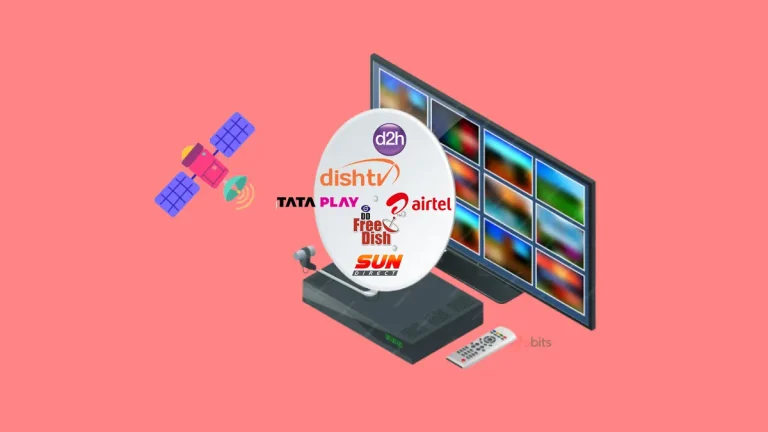
This is the model most Indian households have grown up with. Tata Play (formerly Tata Sky), Airtel Digital TV, Dish TV, d2h, and Sun Direct all work this way. It doesn’t need the internet to function at all, which is exactly why it became the backbone of Indian television for two decades, especially outside big cities.
What makes DTH reliable in a country like India:
- Works even where broadband hasn’t reached yet
- One-time dish and box cost, then a monthly recharge
- Not affected by your Wi-Fi router restarting or your ISP having a bad day
- Long-standing network of local installers and technicians in almost every town
IPTV vs DTH: Quick Comparison Table
| Factor | IPTV | DTH |
|---|---|---|
| Needs internet? | Yes; a stable broadband connection is mandatory | No; works independently of the internet |
| Typical monthly cost | ₹199–₹900 (channel-only plans; free with many broadband bundles) | ₹200–₹450 depending on channel bouquet |
| Setup cost | Low to zero if you already have a smart TV or broadband router | ₹1,500–₹3,000 for dish + set-top box |
| Weather sensitivity | Not weather-dependent, but affected by internet load | Can be affected by heavy rain or storms |
| On-demand content | Strong; built around apps and catch-up | Limited to what the DTH operator bundles in |
| Best suited for | Urban homes with fibre broadband, multi-device households | Rural/semi-urban homes, weak or no broadband |
| Number of channels | Varies by app/provider bundle | Regulated bouquets, usually 200+ SD channel slots |
| Legal risk | High if you pick an unlicensed “cheap IPTV” reseller | Low; DTH operators are TRAI-licensed by default |
The Real Cost Comparison (With Actual Numbers)
Most articles compare IPTV and DTH on features and stop there. But for Indian households, the deciding factor is almost always price. So let’s actually do the math.
DTH, year one: A mid-range DTH connection with dish and set-top box costs roughly ₹1,500–₹2,500 upfront. Add a monthly recharge of ₹250–₹400 for a decent channel bouquet under TRAI’s pricing rules, and you’re looking at roughly ₹4,500–₹7,000 for the first year, hardware included.
IPTV, year one: If you already have broadband at home, which most urban households do, a standalone IPTV app or set-top box adds ₹199–₹500 a month on top of what you’re already paying for internet. Several ISPs like Airtel and JioFiber now throw in live TV channels for free or at a small add-on cost with their higher-tier broadband plans, which can bring your additional yearly cost close to zero.
The catch is that if you don’t already have broadband, you’re paying for the internet connection and the IPTV subscription, which can make it more expensive than DTH in year one, not less.
If your home Wi-Fi struggles to keep up with a smart TV, a phone, and a laptop all streaming at once, upgrading to a dual-band mesh Wi-Fi router like TP-Link Deco X50 (available on Amazon) can be a smarter one-time investment than switching your entire TV setup. It’s often the actual fix behind constant IPTV buffering complaints.
One Rule TRAI Has That Most Comparison Articles Miss
Here’s something almost no other IPTV vs DTH article in India mentions: your DTH bill isn’t random. It’s shaped by TRAI’s tariff order (NTO). Under the current rules, DTH and cable operators must offer a base package of channels for a fixed Network Capacity Fee, and individual channels within a bundle are capped at a set MRP.
Why this matters to you: it means your DTH bill has a regulatory floor and ceiling, so wild price swings are less likely. IPTV pricing has no such regulation. A provider can raise or drop prices anytime, since it isn’t governed by the same broadcasting tariff order.
Is IPTV Legal in India? (Read This Before You Subscribe)
This is genuinely the most important section in this article, and it’s the one gap in almost every other “IPTV vs DTH” guide online.
Search for “cheap IPTV India”, and you’ll find dozens of resellers offering 500+ channels, including premium sports and movie channels, for a flat ₹1,000–₹2,000 a year. That price should set off alarm bells.
Legitimate, licensed IPTV in India includes services like:
- Airtel Xstream
- JioTV / JioFiber’s bundled live TV
- Tata Play Binge
- ACT Fibernet’s TV add-ons
These operate with proper content licensing from broadcasters and are regulated the same way DTH is.
Unlicensed IPTV resellers, on the other hand, stream copyrighted channels like Star, Zee, Sony, Sun Network, and international platforms like Netflix and Amazon Prime, without paying for the rights.
Indian cyber cells have already made arrests in cases involving exactly this kind of piracy operation, and industry estimates put the annual losses from South Asian IPTV piracy in the hundreds of millions of dollars.
Users of these services also carry real risk: service shutdowns without warning, no customer support, exposure to malware-laden apps, and in some jurisdictions, legal consequences for viewers, not just operators.
How to tell if an IPTV service is legitimate before you pay:
- It’s from a known telecom or DTH brand (Airtel, Jio, Tata Play, ACT) – OK
- It has GST-compliant billing and a real customer support number – OK
- Pricing is in line with what licensed content actually costs – OK
- It’s advertised through Telegram, WhatsApp groups, or “resellers” on social media – Not OK
- It asks for payment via UPI to a personal account or crypto – Not OK
- It promises every premium channel and international OTT app for an unrealistically low annual fee – Not OK
- It requires you to sideload an APK from outside the Play Store – Not OK
If a deal looks too good to be true here, it almost certainly is, and it’s not the kind of shortcut that’s worth the risk to your money or your data.
Related: BSNL IPTV & IFTV: Plans, Free Channels, and How to Register
Which One Has Better Picture Quality?
This one genuinely depends on your circumstances, more than any spec sheet will tell you.
DTH delivers a technically consistent signal because it’s a dedicated satellite feed; as long as your dish has a clear line of sight, quality is stable regardless of what else is happening on your network.
IPTV’s picture quality is only as good as your internet connection at that exact moment. On a strong fibre connection (25 Mbps+), IPTV can actually look sharper than DTH, since it isn’t compressed as heavily to fit into limited satellite bandwidth.
But the moment your Wi-Fi gets crowded, someone starts a video call, or a phone starts backing up photos, IPTV picture quality can dip immediately, while DTH stays unaffected.
Expert tip: If you’re choosing IPTV specifically for sports or live news, connect your set-top box via Ethernet cable instead of Wi-Fi wherever possible. It removes the single biggest cause of mid-match buffering.
Advantages and Disadvantages of IPTV
Benefits of IPTV
- On-demand library alongside live channels, all in one interface
- Watch on TV, phone, tablet, or laptop with the same subscription
- Pause, rewind, and catch up on live TV
- Often bundled free or cheap with your existing broadband plan
- Personalised channel selection instead of rigid regional bundles
Drawbacks of IPTV
- Completely dependent on a stable, fast internet connection
- Buffering during network congestion, especially in shared apartment buildings
- Data caps on some broadband plans can make heavy streaming costly
- Higher risk of running into an unlicensed, unreliable provider
- Setup and troubleshooting can be more technical for less tech-savvy users
Advantages and Disadvantages of DTH
Benefits of DTH
- No dependency on internet or broadband quality
- Reaches rural and remote areas cable and fibre haven’t gotten to yet
- Consistent picture quality once the dish is properly installed
- Regulated pricing under TRAI’s tariff order gives some price predictability
- Decades of installer networks and after-sales service across India
Drawbacks of DTH
- Upfront hardware cost for dish and set-top box
- Signal can drop during heavy rain or storms (rain fade)
- Needs unobstructed line-of-sight to the satellite, which is tricky in dense apartment blocks
- Limited on-demand content compared to IPTV or OTT apps
- Adding OTT apps separately means juggling multiple remotes and subscriptions
Related: Best DTH Services in India: Which DTH is Best For You?
Myth vs Fact
| Myth | Fact |
|---|---|
| “IPTV is always cheaper than DTH.” | Only if you already have broadband. Add internet costs, and DTH can work out cheaper for basic viewing. |
| “DTH always has better picture quality.” | Only true when your internet is weak. On strong fibre, IPTV can match or beat DTH quality. |
| “All IPTV services in India are illegal.” | False; Airtel Xstream, JioTV, and Tata Play Binge are fully licensed. Only unregulated resellers are the problem. |
| “You can’t get OTT apps with DTH.” | Hybrid boxes like Tata Play Binge+ and Airtel Xstream Box combine satellite channels and OTT apps on one remote. |
| “Rain always kills DTH signal.” | Modern dish technology has reduced rain fade significantly; short dropouts during very heavy storms are still possible. |
Common Mistakes People Make While Choosing
- Not checking actual internet speed before switching to IPTV. A plan advertised as “100 Mbps” can drop well below that during peak evening hours, exactly when you want to watch TV.
- Falling for “unlimited channels at ₹999/year” IPTV deals. If it’s not from a recognised telecom or DTH brand, treat it as a red flag, not a bargain.
- Ignoring the DTH bouquet fine print. Many DTH complaints about “missing channels” actually come from not customising the channel pack after installation.
- Assuming a hybrid box means you’re locked in. Hybrid boxes like Binge+ and Xstream Box let you use satellite TV and OTT independently. You’re not forced to subscribe to both.
- Not accounting for multi-room viewing. DTH multi-TV connections usually cost extra per additional TV, while IPTV apps often allow multiple simultaneous streams under one plan. Check this before committing either way.
Troubleshooting: Common Problems and Fixes
IPTV keeps buffering:
- Switch from Wi-Fi to a wired Ethernet connection for your set-top box
- Restart your router and check if other devices are hogging bandwidth
- Confirm your ISP’s actual upload/download speed with a quick speed test rather than trusting the plan name
DTH signal keeps dropping:
- Check if tree branches, buildings, or monsoon debris are blocking the dish’s line of sight
- Ask your operator to re-align the dish if the issue started suddenly
- During heavy storms, some signal loss is expected. It usually resolves once the rain eases.
Set-top box is stuck or lagging (hybrid boxes especially):
- Clear cache from the box settings menu periodically
- Avoid running too many background apps on Android-based hybrid boxes
- A factory reset resolves most persistent lag issues on older hybrid boxes
For households in areas with frequent power fluctuations or short outages during storms, a compact UPS or power backup unit like Cuzor Mini UPS PRO for your Wi-Fi router and set-top box can prevent the box from repeatedly rebooting mid-show. It is a small, one-time fix for a recurring annoyance and is available on Amazon.
The Middle Path: Hybrid Set-Top Boxes
If you’re stuck between the two, it’s worth knowing that you may not have to choose at all. Airtel Xstream Box and Tata Play Binge+ are Android-powered hybrid boxes that connect to both your satellite dish and your Wi-Fi network, letting you flip between live DTH channels and OTT apps like Netflix or Prime Video on a single remote.
This is increasingly the direction India’s TV market is heading: rather than IPTV replacing DTH outright, the two are converging into single devices. If your household genuinely can’t decide, a hybrid box might be the most future-proof ₹2,000–₹3,000 you spend on your entertainment setup this year.
If you’re leaning toward a pure streaming setup without a satellite dish at all, a reliable streaming stick, the Amazon Fire TV Stick 4K Select, with a strong processor and enough storage for multiple apps makes the switch smoother, especially on older “smart” TVs whose built-in apps tend to slow down after a couple of years.
Related: Top Streaming Devices in India: Turn Any TV into a Smart TV
Decision Guide: Which One Should You Actually Choose?
Choose IPTV if:
- You have broadband above 15 Mbps that’s stable during evening peak hours
- You live in a city or town with good fibre coverage
- You want on-demand content and live TV in one place
- You’re comfortable troubleshooting basic tech issues yourself
Choose DTH if:
- Your internet connection is unreliable, capped, or unavailable
- You live in a rural or remote area
- You want a “set it up once and forget it” experience
- You mainly watch live TV and don’t need heavy on-demand content
Choose a hybrid box if:
- You have decent broadband but still want the reliability of satellite TV as backup
- You want OTT apps and live channels without juggling multiple remotes
- You’re setting up a new connection and want to avoid choosing wrong
Checklist Before You Switch
- [1] Tested your actual internet speed during peak hours (7–11 PM), not just the plan’s advertised speed
- [2] Confirmed the IPTV provider is a recognised telecom/DTH brand, not an unlicensed reseller
- [3] Checked if your existing broadband plan already bundles live TV channels
- [4] Compared DTH channel bouquet pricing against your actual viewing habits
- [5] Considered a hybrid box if you’re unsure which way to go
- [6] Checked multi-room/multi-device viewing costs for your shortlisted option
Conclusion: Our Verdict
There’s no universal winner here, and anyone claiming otherwise probably hasn’t accounted for your specific internet situation.
If you’ve got dependable, fast broadband and want flexibility, IPTV is the more modern, often cheaper choice. But just make sure you’re subscribing through a licensed provider, not a bargain reseller that could vanish overnight.
If your internet is inconsistent, or you’re in an area where broadband hasn’t fully arrived yet, DTH remains the steadier option, and TRAI’s tariff rules give you at least some protection against runaway pricing.
And if you genuinely can’t pick a side, a hybrid box like Tata Play Binge+ or Airtel Xstream Box lets you get both without betting your entire TV setup on one technology.
Whichever way you go, the smartest move is to check your actual internet speed first. That one number will tell you more about which option suits you than any spec comparison ever will.
Frequently Asked Questions
It depends on your internet connection. IPTV is generally better for households with stable broadband above 15 Mbps, while DTH is more reliable where internet access is weak or unavailable.
Yes, when subscribed through a licensed provider like Airtel Xstream, JioTV, or Tata Play Binge. Unlicensed resellers offering very cheap “all-channel” packages are operating illegally and carry real risk.
No. DTH works entirely through a satellite dish and doesn’t need an internet connection to deliver live TV channels.
If you already have broadband, IPTV is usually cheaper since many ISPs bundle live TV for free or a small add-on fee. If you don’t have broadband yet, DTH can work out cheaper since you avoid paying for a separate internet connection.
DTH is more affected by heavy rain and storms since it depends on an unobstructed satellite signal. IPTV isn’t directly affected by weather, though your broadband connection could still be disrupted separately.
Yes, through hybrid set-top boxes like Tata Play Binge+ or Airtel Xstream Box, which combine satellite channels with OTT apps on one device.
At least 10–15 Mbps for HD channels, and 25 Mbps or higher if you’re streaming 4K content or have multiple devices connected at once.
It’s expanding, but coverage is still limited to areas with fibre broadband. In many rural pockets, DTH remains the only practical option.
DTH operators offer regulated bouquets, typically 200+ SD channel slots under TRAI rules. IPTV channel counts vary by provider and are often paired with on-demand apps rather than large fixed bouquets.
Yes, most licensed IPTV services offer companion apps for smartphones and tablets, letting you watch live TV outside your living room.
Both DTH and IPTV set-top boxes need power to function, so a power cut will stop live viewing in both cases unless you have a backup power source.
DTH always requires a set-top box connected to the dish. IPTV can work through a set-top box, a smart TV app, or a streaming device, depending on the provider.
Advertised broadband speeds often drop during peak evening hours when many households in your area are online simultaneously. A wired Ethernet connection to your set-top box usually helps.
DTH tends to be more dependable for live sports since it isn’t affected by internet congestion, though a strong, wired IPTV connection can perform just as well.
Yes. In fact, that’s the whole point. IPTV runs on top of your existing broadband connection, so you don’t need to change or cancel your internet plan.
For households unsure which technology suits them long-term, hybrid boxes like Binge+ or Xstream Box are a practical middle ground, offering both satellite channels and OTT apps on one device.
No. DTH and cable pricing fall under TRAI’s tariff order, which sets pricing rules for channel bouquets. Standalone IPTV subscriptions from ISPs aren’t governed by the same broadcasting tariff structure.
Unlicensed IPTV resellers can vanish without warning, offer no real customer support, and may expose your device to unsafe apps, beyond the legal risk of using unauthorised content.
Yes, many households keep a DTH connection as a reliable backup while using IPTV or OTT apps as their primary source for on-demand content.
As broadband penetration grows, IPTV and hybrid boxes are becoming more common, especially in urban India. DTH is expected to remain relevant for years, particularly in rural and semi-urban markets where broadband access is still catching up.
We hope you are interested in our articles and consider following our Facebook, Instagram, and Twitter pages for regular updates. Also, share this article with your friends and relatives. Bookmark this page for future reference.
Subscribe to our free newsletter to get similar articles and regular updates directly in your Email Inbox.
Subscribe to be the first to learn about new information
Disclosure: If you follow our links to a retailer’s website and make a purchase, we will get an affiliate commission on some, but not all, of the items or services we promote. This will cause no price change for you.
You May Be Interested in Reading:
- Budget Home Theatre Setup Guide for India: TV, Soundbar & Projector Picks
- Exploring the Rise of Community Radio in India: A Voice for the Voiceless
- WebOS vs Fire TV: Which Smart TV Platform Is Right for You?
- Configure Mi TV Remote with Any Cable/DTH Set-Top Box
- Difference Between BSNL IPTV and BSNL IFTV Services