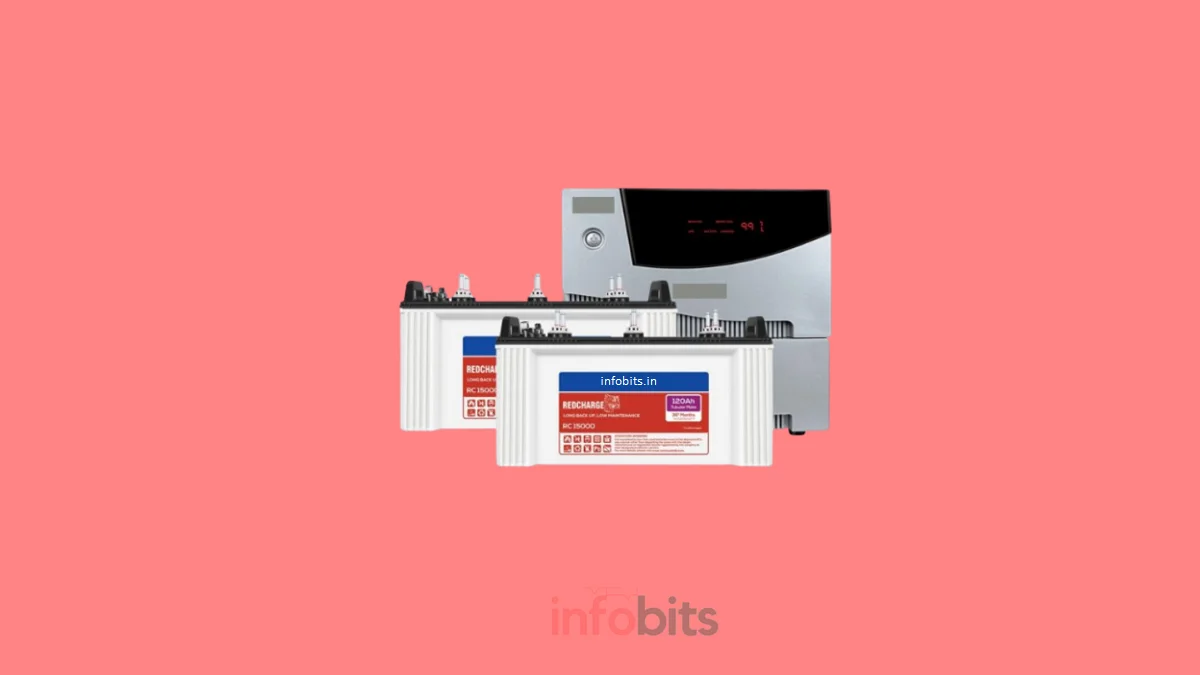
How to Choose the Right Inverter and Battery for Your Home in India (2026 Guide)
Power cuts are still a fact of life in most Indian cities and villages. Whether it’s a two-hour evening outage in a metro suburb or unpredictable load-shedding in a smaller town, a good inverter and battery combo is what keeps your fans, lights, Wi-Fi router, and TV running when the grid fails.
The tricky part isn’t buying an inverter. It’s buying the right one. Get the sizing wrong and you’ll either overpay for capacity you never use, or end up with a system that trips every time you switch on the kettle.
This guide walks you through the entire decision, from calculating your actual power load to picking between lead-acid and lithium batteries, the same way an electrical engineer would explain it to a friend shopping for their first inverter.
Quick answer: For a typical Indian home with fans, lights, a TV, and a router, an 850–1100 VA sine wave inverter paired with a 150 Ah tubular battery covers 2–3 hours of backup. Larger homes running a fridge or extra devices should look at 1500 VA and above, or a dual-battery setup.
Step 1: Calculate Your Actual Power Load
Before you look at a single inverter model, sit down and list every appliance you want to run during a power cut. This is the single most important step, and it’s the one most buyers skip, which is exactly why so many end up with an underpowered or wildly oversized system.
Write down the wattage of each device and how many of each you have. Most appliances have their wattage printed on a label near the plug or in the user manual.
Example load list for a typical 2BHK home:
| Appliance | Quantity | Watts Each | Total Watts |
|---|---|---|---|
| LED bulbs | 10 | 9W | 90W |
| LED tube lights | 3 | 20W | 60W |
| Ceiling fans | 4 | 60W | 240W |
| Television | 1 | 80W | 80W |
| Wi-Fi router | 1 | 20W | 20W |
| Desktop computer | 1 | 200W | 200W |
| Other small loads | — | — | 50W |
| Total | 740W |
Once you have the total in watts, you need to convert it to VA (Volt-Amps), because that’s how inverters are rated, not in watts. Divide your total wattage by the standard power factor of 0.8:
VA required = Total Watts ÷ 0.8
For our example: 740 ÷ 0.8 = 925 VA
Inverters also lose some power internally, so add a safety margin of 20–25% to account for that loss and to leave room for future appliances:
Final VA = VA required × 1.2
925 × 1.2 = 1,110 VA, so you’d round up to the next available size: an 1100 VA inverter.
If manual calculation feels tedious, most major brands like Luminous and Microtek now offer free online load calculators on their websites where you simply tick off your appliances and get a recommended VA rating instantly.
Step 2: Pick the Right Inverter Type
Inverters differ based on the shape of the electrical output they produce, called the waveform. This matters more than most first-time buyers realise, because it directly affects how safely and efficiently your appliances run.
There are three types:
- Square wave – the oldest and cheapest technology. Rarely sold today because it’s rough on sensitive electronics.
- Modified sine wave – a step up from square wave, more affordable, but can cause humming in fans and reduced efficiency in motors.
- Pure sine wave – mimics the smooth AC power that comes from the grid. It’s the safest choice for laptops, TVs, refrigerators, and any appliance with a motor or microprocessor.
Always choose a pure sine wave inverter. It costs a bit more upfront, but it protects your appliances from the electrical noise that modified sine wave inverters introduce, and most sine wave inverters run quieter too.
Related reading: What Is an Inverter and How Does It Work?
Step 3: Choose the Inverter Capacity (VA Rating)
You already calculated your required VA in Step 1. Now match that number to what’s actually available in the market. Indian brands typically sell inverters in these standard sizes:
| Household Type | Typical Load | Recommended Inverter Capacity |
|---|---|---|
| 1BHK / small home | 400–600W | 700–850 VA |
| 2BHK, no fridge/AC | 700–900W | 1000–1100 VA |
| 2BHK with fridge | 900–1200W | 1500 VA |
| 3BHK+ or work-from-home setup | 1200–1800W | 2000–2500 VA |
| Home office / small shop | 1800W+ | 2500 VA and above |
A quick rule that electricians in India commonly use: never buy an inverter that’s exactly sized to your current load. Loads grow; you’ll add a new appliance, a second fridge, or a work-from-home monitor setup within a couple of years.
Going one size up now avoids an expensive replacement later, and it also protects your inverter from overload-related damage.
Standalone vs Solar vs Hybrid Inverters
Once you’ve settled on capacity, decide how the battery should be charged.
- Standalone inverter – charges only from grid electricity. Simplest and cheapest option.
- Solar inverter – draws power directly from solar panels, bypassing the grid when sunlight is available.
- Solar hybrid inverter – intelligently switches between solar panels and grid power, whichever is available or cheaper at the time.
For most Indian homes today, a solar hybrid inverter is the smarter long-term choice. Electricity tariffs keep rising, and a hybrid system lets you start saving on your power bill immediately while keeping grid backup as a fallback during monsoon months or cloudy days.
Related reading: How Do You Convert a Normal Inverter to a Solar Inverter?
Best Inverters for Home Use in India (By Capacity)
Here are well-regarded models across different capacity brackets. Prices and availability change frequently, so always check the live listing before buying.
| Brand | Model | Capacity (VA) | Best For |
|---|---|---|---|
| V-Guard | Prime 1150 | 1000 | Reliable mid-range pick |
| Genus | Genus MaxiLion | 1000 | With Lithium-Ion Battery for Home Office & Shop |
| UTL | Gamma Plus rMPPT Solar | 1000 | Small homes wanting solar-ready hybrid |
| Luminous | Zelio+ 1100 | 900 | Most popular 2BHK choice |
| Luminous | Zolt 1100 | 1100 | Budget-friendly sine wave option |
| Okaya | ATSW 1400 | 1150 | Reliable Power Backup for a small home |
| UTL | Heliac | 1200 | Homes planning to add solar later |
| UTL | Heliac Solar | 2550 | Larger homes with fridge + AC-free loads |
The Luminous Zelio+ 1100 with a Rc18000 150 Ah tubular battery and trolley is a popular ready-made combo for 2BHK homes because it removes the guesswork of matching inverter and battery capacities separately. But worth checking current pricing on Amazon before you shop for the two parts individually.
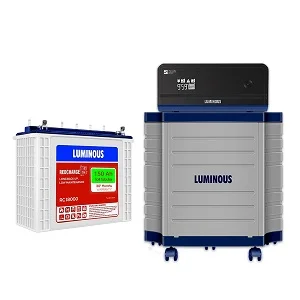
Luminous Zelio 1100 inverter + Rc18000 150 Ah Tubular Battery+ Trolley (Black)
Step 4: Choose the Right Inverter Battery
An expensive inverter paired with a mismatched or weak battery will still leave you in the dark sooner than expected. The battery is what actually stores and delivers the energy. The inverter just converts it.
Two battery chemistries dominate the Indian market: lead-acid (the traditional choice) and lithium-ion / LiFePO4 (the newer, pricier, longer-lasting option).
Related reading: Best Inverter Battery for Home Use in India: An Ultimate Guide
Battery Voltage and How to Calculate Ah Capacity
Battery voltage depends on your inverter’s rating. Small home inverters run on a single 12V battery. Higher-capacity systems need 24V, which means connecting two 12V batteries in series, and both batteries in that series must have identical Ah ratings, or you’ll damage them.
Battery capacity (Ah) tells you how much current a battery can deliver over time. A 150 Ah battery can theoretically supply 150A for one hour, or a lower current for a longer stretch.
To find the battery size you need, use this formula:
Battery Capacity (Ah) = (Total Load in VA × Backup Hours) ÷ Battery Voltage
Using our earlier example, a 1,110 VA load and 2 hours of backup on a 12V battery:
(1,110 × 2) ÷ 12 = 185 Ah, so you’d round up to a 200 Ah battery.
If you want longer backup without upgrading the battery size, connect two batteries of the same voltage and Ah rating in parallel; this adds their capacities together.
Indian households commonly settle on 100 Ah, 150 Ah, 180 Ah, or 200 Ah batteries, with 150 Ah being the sweet spot for most 2–3BHK homes.
Quick answer: Is a 150 Ah battery enough for a home? Yes, for standard loads like fans, lights, TV, and a router, a 150 Ah battery typically gives 3–5 hours of backup. For heavier loads or longer outages, step up to 180–200 Ah or add a second battery in parallel.
Types of Inverter Batteries Compared
| Battery Type | Maintenance | Lifespan | Best For | Relative Cost |
|---|---|---|---|---|
| Flat plate (lead-acid) | High; needs regular water top-up | 3–4 years | Budget buyers, light usage | Low |
| Tubular (lead-acid) | Moderate; periodic water top-up | 5–7 years | Most Indian homes, frequent outages | Medium |
| SMF / Gel (sealed, maintenance-free) | None | 5–6 years | Homes wanting zero upkeep | Medium-high |
| Lithium (LiFePO4) | Virtually none | 8–20 years | Long-term investment, frequent cycling | High |
Flat plate batteries use flat lead electrodes and are the cheapest option, commonly seen in cars and basic UPS systems. They release fumes during charging, so they need ventilated spaces and shouldn’t be installed in a closed cupboard.
Tubular batteries use tube-shaped electrodes wrapped in a protective sleeve, which lets them handle deeper discharges without wearing out as fast. This is the type most electricians recommend for Indian homes, especially where power cuts are frequent and long.
Related reading: Short Tubular vs Tall Tubular Battery: Differences, Uses & Which Is Right for You
SMF (Sealed Maintenance-Free) batteries use a gel electrolyte and are fully sealed, so there’s no water top-up required, ever. They cost more than tubular batteries, and high-capacity SMF units can be harder to find at your local dealer.
Lead-Acid vs Lithium (LiFePO4): Which Should You Buy?
This is the question more Indian homeowners are asking as lithium prices have started coming down. Here’s the honest comparison:
| Factor | Lead-Acid (Tubular) | Lithium (LiFePO4) |
|---|---|---|
| Upfront cost | Lower | 2–3x higher |
| Lifespan | 5–7 years | 8–20 years |
| Maintenance | Regular water top-ups | None |
| Weight | Heavy | Roughly half the weight |
| Charging speed | Slower | Significantly faster |
| Fumes/ventilation needed | Yes | No |
| Best suited for | Budget-conscious buyers, occasional outages | Frequent outages, long-term value, solar setups |
If your budget is tight and you just need reliable backup for a few hours during occasional cuts, a tubular lead-acid battery remains a sound, cost-effective choice.
If you experience power cuts often, run a solar hybrid setup, or simply want to avoid dealing with maintenance for the next decade, the higher upfront cost of lithium (LiFePO4) pays off over its much longer working life.
Related reading: Benefits of Lithium Batteries
One more thing worth checking before you buy a lithium battery: make sure it has a proper Battery Management System (BMS) built in, since this is what protects the cells from overcharging, overheating, and short circuits.
Related reading: Lead Acid Battery BMS Explained
Understanding Battery ‘C’ Rating
The ‘C’ rating tells you the safe discharge speed of a battery, and it’s often overlooked by first-time buyers. You’ll usually see it written as C5, C10, or C20. The number indicates the minimum number of hours over which that battery is designed to discharge safely.
Take two 100 Ah batteries, one rated C10 and one C20. The C10 battery can safely discharge at 10A over 10 hours, while the C20 battery discharges at a gentler 5A over 20 hours. That makes the C10 battery faster-draining but generally better suited to solar applications where quick bursts of stored energy are needed.
For solar setups, always prefer a C10 or C5 battery over a C20. C10 batteries cost more than C20, but the faster, more reliable discharge is usually worth the difference for solar users.
Related reading: C10 vs C20 Battery Comparison
Common Mistakes That Ruin Inverter Batteries
- Overloading the system. Running a fridge, washing machine, or water heater on an inverter sized for lights and fans strains both the inverter and the battery.
- Letting the battery fully discharge before recharging. Deep discharges, done repeatedly, shorten battery life significantly. Recharge as soon as you reasonably can after an outage.
- Skipping electrolyte checks. Flat plate and tubular batteries need their water levels checked periodically; letting plates dry out permanently damages capacity.
- Ignoring terminal corrosion. Dust and acid fumes build up on terminals over time and restrict current flow. A quick wipe-down every few months prevents this.
- Mixing battery brands or ages in a series/parallel setup. Batteries connected must match in voltage and Ah rating, or the weaker one will drag down the whole bank.
- Buying inverter and battery from two different, incompatible ecosystems. Mismatched charging profiles between brands can reduce charging efficiency and battery lifespan.
Maintenance Checklist for Longer Battery Life
- [1] Check electrolyte/water levels every 1–2 months (lead-acid and tubular batteries only)
- [2] Keep the battery in a dry, ventilated space; never a sealed cupboard
- [3] Clean terminals of dust and corrosion every few months
- [4] Avoid connecting heavy appliances like fridges or geysers unless the system is sized for them
- [5] Recharge promptly after a full discharge rather than leaving it drained
- [6] For lithium batteries, keep the charge roughly between 20–90% for daily use to maximise cycle life
- [7] Get a professional check-up once a year, especially before peak summer outage season
Myth vs Fact
Myth: A bigger VA rating always means better performance. Fact: Oversizing wastes money and doesn’t improve backup time. Backup time depends on battery Ah capacity, not inverter VA.
Myth: Lithium batteries are always the better choice. Fact: For occasional, short power cuts, a well-maintained tubular battery is often more cost-effective across its lifespan.
Myth: You can top up a sealed (SMF) battery with water like a normal lead-acid battery. Fact: SMF batteries are sealed for a reason. Attempting to add water can damage or void the warranty.
Myth: Any 12V battery will work with any inverter. Fact: Voltage and Ah ratings must match the inverter’s specifications and, in multi-battery setups, match each other too.
Inverter + Battery Combo Decision Guide
- Tight budget, occasional short power cuts: 850–1000 VA inverter + 100–150 Ah flat plate or tubular battery.
- Frequent 2–4 hour outages, standard 2BHK home: 1100 VA sine wave inverter + 150 Ah tubular battery.
- Larger home, fridge included, longer outages: 1500–2000 VA inverter + 180–200 Ah tubular battery, or two batteries in parallel.
- Want to cut electricity bills and reduce maintenance long-term: Solar hybrid inverter + lithium (LiFePO4) battery with BMS.
- Home office or small shop with computers/printers: Pure sine wave inverter rated 2000 VA+, sized with a 20–25% safety margin above calculated load.
Troubleshooting Common Inverter Problems
Inverter shuts down or trips frequently: This usually means you’ve exceeded its rated load. Unplug heavy appliances and recheck your total wattage against the inverter’s VA rating.
Backup time has dropped noticeably over the past year: Check electrolyte levels first, since low water levels are one of the most common causes of reduced backup on lead-acid batteries. If levels are fine, the battery may simply be nearing the end of its typical lifespan.
Battery takes unusually long to charge: This can point to a weak or failing battery, a mismatched charging current setting, or terminal corrosion restricting current flow. Clean the terminals first before assuming the battery itself is faulty.
Fans hum or run slower than usual on inverter power: This is a classic sign of a modified sine wave inverter struggling with motor-based appliances. Switching to a pure sine wave inverter usually resolves it.
Conclusion
Choosing the right inverter and battery isn’t about picking the biggest or most expensive option on the shelf. It’s about matching capacity to your actual load, picking a battery type that suits how often you lose power, and maintaining the system so it keeps performing years down the line.
Work through the load calculation honestly, add a reasonable safety margin, and choose your battery chemistry based on your budget and how frequently you’ll rely on it.
If you found this guide useful, feel free to share it with anyone shopping for their first inverter setup, and reach out if you’d like help picking a specific combo for your home.
Frequently Asked Questions
VA stands for Volt-Amps and represents an inverter’s total power-handling capacity. It’s the standard unit inverters are rated in rather than watts.
Ah stands for Ampere-hour and measures how much current a battery can deliver over time. A 150 Ah battery can supply 150A for one hour, or a smaller current over more hours.
Add up the wattage of all appliances you want to run, divide by 0.8 to convert to VA, then add a 20–25% safety margin before rounding up to the nearest available inverter size.
For standard loads like fans, lights, a TV, and a router, a 150 Ah battery typically provides 3–5 hours of backup, which is sufficient for most Indian households.
Tubular batteries are generally recommended for Indian homes because they handle deeper discharges and last longer than flat plate batteries, especially where outages are frequent.
If you face frequent outages or want a maintenance-free system with a much longer lifespan, lithium (LiFePO4) is worth the higher upfront cost; for occasional short cuts, tubular lead-acid remains cost-effective.
A C10 battery is designed to discharge safely over 10 hours, while a C20 battery discharges over 20 hours. C10 is generally preferred for solar applications.
A solar hybrid inverter is the better long-term choice if you want to reduce electricity bills, since it can charge from solar panels while still using grid power as backup.
No. Batteries connected in series or parallel should have matching voltage and Ah ratings, ideally from the same brand and batch, to avoid uneven wear.
This typically means the appliance’s power draw, including its startup surge, exceeds your inverter’s rated capacity. Check the appliance’s wattage against your inverter’s VA rating.
Check flat plate and tubular battery electrolyte levels roughly every 1–2 months, more frequently during hot summer months when water evaporates faster.
Most Indian homes are comfortable with 3–5 hours of backup for essential loads, though this depends entirely on how long your typical power cuts last in your area.
The inverter itself doesn’t increase your bill significantly. It’s the battery charging process that draws grid power, and a solar hybrid setup can offset much of that cost.
A pure sine wave inverter produces smooth, grid-like power output that’s safer for motors, laptops, and sensitive electronics compared to modified sine wave inverters.
Flat plate batteries usually last 3–4 years, tubular batteries 5–7 years, SMF batteries 5–6 years, and lithium (LiFePO4) batteries 8–20 years with proper use.
Yes, as long as the new battery matches the voltage and Ah rating of your existing battery and is connected in parallel by a qualified technician.
Lead-acid batteries release fumes while charging and need proper ventilation, so avoid sealed cupboards; lithium batteries don’t have this restriction.
A 1100–1500 VA sine wave inverter is usually sufficient for a laptop or desktop, monitor, router, and a couple of lights and fans, depending on your total load.
Signs include noticeably shorter backup time, slower charging, unusual noise, swelling, or leakage. If backup time has dropped by more than half, replacement is usually the practical choice.
Add 20–25% above your calculated load to account for internal power losses and to leave room for appliances you might add in the future.
If you feel that this article about inverter basics is helpful, please share this information with your friends and family.
Don’t forget to like and follow us on Facebook and Twitter for the most up-to-date information.
Sign up for our free newsletter to stay up to date on the latest deals, offers, and ebooks.
Subscribe to be the first to learn about new information
Disclosure: If you follow our links to a retailer’s website and make a purchase, we will get an affiliate commission on some, but not all, of the items or services we promote. This will cause no price change for you.
You May Be Interested in Reading:
- How Do You Convert A Normal Inverter To A Solar Inverter?
- Comparing C10 vs C20 Batteries for Inverters: Which One Is Good?
- What Is an Inverter, and How Does It Work?
- AC Solar Panels: Things You Should Know
- What Is Net Metering in a Solar Power System and How Does It Work?
- How Do You Choose the Best Solar Panels in India?